The 28-year-old woman who discovered his body said he suffered cardiac arrest at his Colombes home. French prosecutors have opened...
Read More
International-News
The Bundibugyo Ebola Virus Naming Controversy Over Uganda Geographic Link
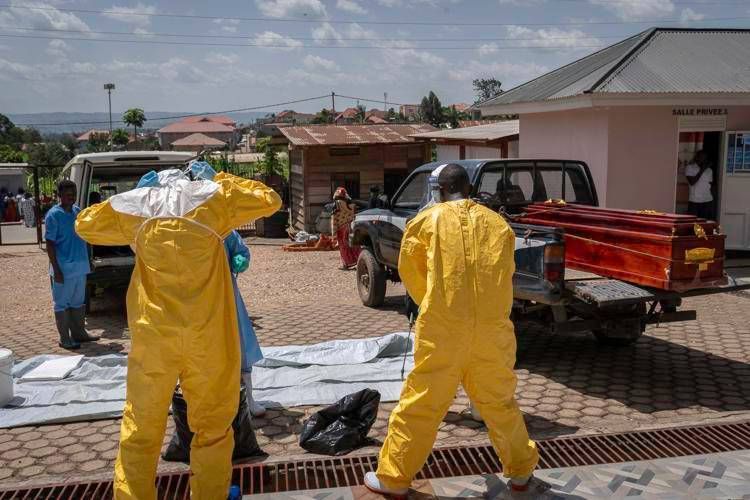
The naming of Bundibugyo Ebola virus has triggered criticism in Uganda over the use of a district name tied to a deadly outbreak and its global visibility
The Bundibugyo Ebola virus naming controversy has reignited debate over the practice of linking infectious diseases to geographic locations, after the virus was identified following a 2007 outbreak in western Uganda.
The strain was discovered by a joint team of scientists from the U.S. Centers for Disease Control and Prevention, Ugandan health authorities and Columbia University after an epidemic of hemorrhagic fever in Bundibugyo district caused dozens of deaths.
The origin of the name
After genetic sequencing confirmed a previously unknown Ebola species, the virus was provisionally named Bundibugyo ebolavirus, referencing the district where the outbreak occurred.
The name remained in use in subsequent scientific classification and international health literature.
Criticism in Uganda
The Bundibugyo Ebola virus naming controversy emerged as public figures and commentators in Uganda argued that the association between the district and a deadly virus risks creating stigma and overshadowing the region’s identity.
Some critics pointed out that Bundibugyo is known for its natural environment, including the Rwenzori Mountains, forests and tourist attractions, but is now frequently searched online in connection with Ebola.
Ugandan media executive Alan Kasujja argued that global health naming practices should avoid geographical references, citing World Health Organization guidelines introduced in 2015 designed to reduce unnecessary social and economic harm.
Other voices echoed concerns that the global visibility of disease names linked to specific regions can distort perceptions of those areas.
Broader naming debate
The controversy over Bundibugyo Ebola virus naming fits into a wider discussion in global health policy about how diseases are classified and labeled.
Earlier Ebola species names, such as Zaire ebolavirus and Sudan ebolavirus, also derive from geographic references, reflecting older naming conventions that predate current WHO recommendations.
Health authorities have since encouraged neutral naming systems to avoid linking diseases to specific countries or regions.
Scientific background
Bundibugyo Ebola virus was identified after researchers analyzed blood samples from the 2007 outbreak and confirmed genetic differences of more than 30% compared to known Ebola species at the time.
The outbreak itself was one of the first documented cases of this strain, later followed by a smaller occurrence in 2012.
THE LATEST NEWS

Two Straits, One Trap: How Iran and the Houthis Are Strangling Global Commerce
21 Luglio 2026
The Red Sea and the Persian Gulf have become a single chokepoint. Analysts who warned of this scenario from day...
Read More

Ann Widdecombe Killed With 21 Hammer Blows, Court Hears
21 Luglio 2026
Joshua Kerry, 28, appeared at Westminster Magistrates' Court charged with murdering the former Tory minister and Reform UK spokeswoman at...
Read More
Pentagon Names Two US Soldiers Killed in Iran’s Jordan Attack
20 Luglio 2026
Tyler James Feehan, 25, and Isabella Gonzales, 19, died in separate strikes on Friday and Saturday. A third service member...
Read More

Andy Burnham Becomes UK Prime Minister, Pledges Biggest Changes in 40 Years
20 Luglio 2026
The new Labour leader arrived at Downing Street to applause and immediately laid out a ten-year plan to reindustrialize Britain....
Read More

Prince William Could Strip Harry and Meghan of Titles Once He Is King
20 Luglio 2026
Royal correspondent Sarah Hewson believes the heir apparent may follow King Charles's playbook with Prince Andrew after he ascends the...
Read More

(Photo: © AndKronos)