
After helping Ukrainian forces target Russian positions responsible for more than 300 casualties, former communications officer Lev Stupnikov crossed the...
Read More
International-News
Russian Defector Who Aided Ukrainian Strikes Joins Anti-Putin Unit
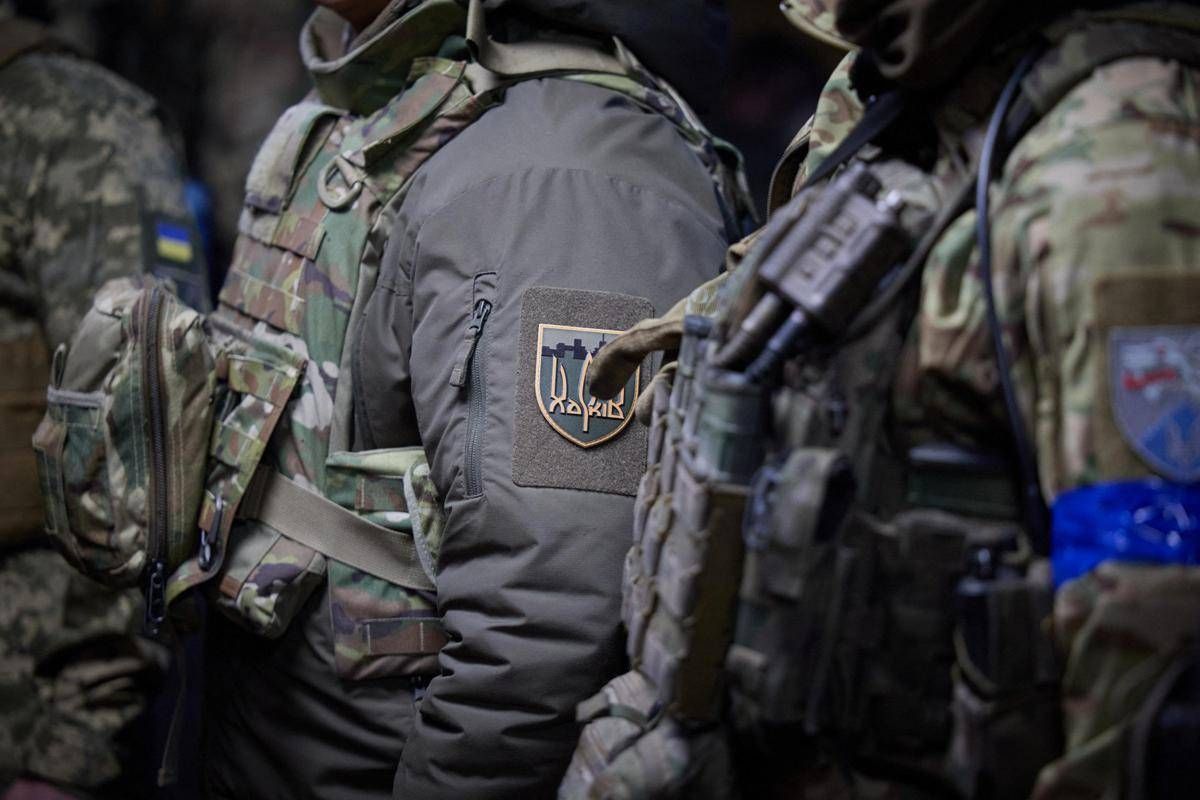
After helping Ukrainian forces target Russian positions responsible for more than 300 casualties, former communications officer Lev Stupnikov crossed the front line and enlisted in a Russian volunteer unit fighting alongside Kyiv
For months, Russian officer Lev Stupnikov occupied one of the most sensitive positions on the battlefield. As a communications specialist assigned to a battalion fighting near Vuhledar, he handled the flow of information linking commanders, reconnaissance drones, surveillance systems and frontline units. By July 2024, however, he had switched sides.
According to a Wall Street Journal account of his story, Stupnikov not only supplied Ukrainian forces with intelligence that contributed to the deaths of more than 300 Russian soldiers, but ultimately crossed the front line and joined the Russian Volunteer Corps, a formation composed of Russian citizens opposed to President Vladimir Putin and fighting alongside Ukraine.
His case is presented as part of a broader Ukrainian effort that extends beyond battlefield operations. The report says Ukrainian contacts maintain communication with thousands of Russians, ranging from military personnel at the front to civilians living near combat zones. Alongside efforts to resist Moscow’s invasion, Ukrainian organizers hope to cultivate a network of Russian defectors who could eventually form the nucleus of an armed challenge to Putin’s rule.
Stupnikov’s cooperation began early in 2024, shortly after Ukrainian contacts recruited him. One of his first significant contributions involved a Russian convoy of roughly 120 to 150 soldiers preparing for an assault on Vuhledar. He secretly photographed the formation and transmitted its location. Before the strike was carried out, his Ukrainian contact requested confirmation that he had already left the area to avoid being caught in the attack.
The subsequent operation inflicted heavy losses. Ukrainian forces killed 68 Russian servicemen and wounded another 60, according to the account. Among the dead were ten officers, including Colonel Gusein Musayev, commander of the 36th Motorized Rifle Brigade. The brigade had gained prominence after advancing toward Kyiv during the opening hours of the invasion and later became increasingly populated by former prisoners described as violent and inadequately trained.
Long before reaching the battlefield, Stupnikov had developed doubts about the military system he served. Raised with the message that “We are Russians. Our historical homeland is Russia,” he gradually became disillusioned after moving there. His mother, abandoned by her husband, opposed the idea of military service. At 17, he was denied admission to a pilot training school after refusing to pay for acceptance. The same culture, he later concluded, was deeply embedded within military education, where money could influence leave requests, vacation extensions and post-graduation assignments.
The atmosphere changed dramatically after Russia launched its full-scale invasion of Ukraine in February 2022. At the Budyonny Military Academy of Communications in St. Petersburg, where Stupnikov was studying, dissenting voices largely disappeared. Cadets who sought to leave the academy often waited months for a response. Careful to conceal his own views, he graduated that June and was assigned to a base in Russia’s Far East.
His deployment to Ukraine came in November 2023. Stationed near the village of Mykilske with the 36th Motorized Rifle Brigade, he served as chief communications officer for a battalion tasked with capturing Vuhledar in the Donbas. The position gave him access to key operational information and made him particularly valuable to Ukrainian intelligence.
“I’m ready to work with you and surrender,” he wrote during his first contact with the Ukrainian side. Weekly exchanges followed. Stupnikov imposed one condition: he would accept no payment. After the initial strike near Vuhledar, he discarded his phone and continued helping Ukrainian forces through other means, including sabotaging surveillance cameras and disabling batteries used in reconnaissance drones.
By June 2024, he was the last surviving officer in his unit. Fearful that his activities would be uncovered, he became increasingly determined to escape. The turning point came after he narrowly avoided death when he mistakenly provided Ukrainians with the coordinates of the cellar where he himself was sheltering.
A month later, he received instructions from a Ukrainian contact identified as Karpenko. The extraction point was located beyond the front line on the outskirts of Mykilske. Guided for about 40 minutes with assistance from a Ukrainian drone, Stupnikov moved through the area until he heard ducks near a pond, the designated signal that he had reached the rendezvous site. The password was “peanut store.”
After crossing into Ukrainian-controlled territory, he underwent a search and called his mother in Omsk. “I’ve arrived where I was supposed to arrive,” he told her. Following several days in isolation, he met Denis Kapustin, commander of the Russian Volunteer Corps.
Stupnikov then handed over his smartphone along with passwords granting access to several Russian military communication channels. Ukrainian forces subsequently used that access for months to monitor real-time feeds from approximately ten Russian drones and surveillance cameras. He accepted Kapustin’s offer to remain with the unit until the war’s end.
His wife, Liza, chose to stay in Russia. His mother, Tatiana, and his half-sister, Alisa, left the country in February 2025. After entering Ukraine on foot, they eventually settled in Moldova.
THE LATEST NEWS
Princess Diana’s Secret Nighttime Missions in London Revealed by Former Royal Aide
16 October 2026
Former royal press secretary Dickie Arbiter says Princess Diana regularly slipped away from Kensington Palace at night to check on...
Read More
America Doesn’t Need a Public Execution to Prove It Is Civilized
15 October 2026
The Fort Hood killer deserves punishment for the Fort Hood massacre. Broadcasting his execution, however, would have turned justice into...
Read More
Trump Says Iran War Could End “Very Soon” as Pentagon Weighs MOAB Option
15 October 2026
The president says the conflict would end whenever he decides, while reports indicate U.S. military planners have examined scenarios involving...
Read More
Katie Zacharia’s Lawyer Credentials Questioned After White House Appointment
15 October 2026
Wall Street Journal report finds the newly appointed White House press secretary was never licensed to practice law in the...
Read More

Trump Can’t Avoid Looking Ridiculous: Shares AI Video After Man Is Mauled by Tiger
14 October 2026
The president's latest social media stunt has drawn outrage from the family of a young British man killed by a...
Read More

(Photo: © AndKronos)







You must be logged in to post a comment Login