
International-News
Trump Urged Jensen Huang to Keep Nvidia Job Before His Resignation
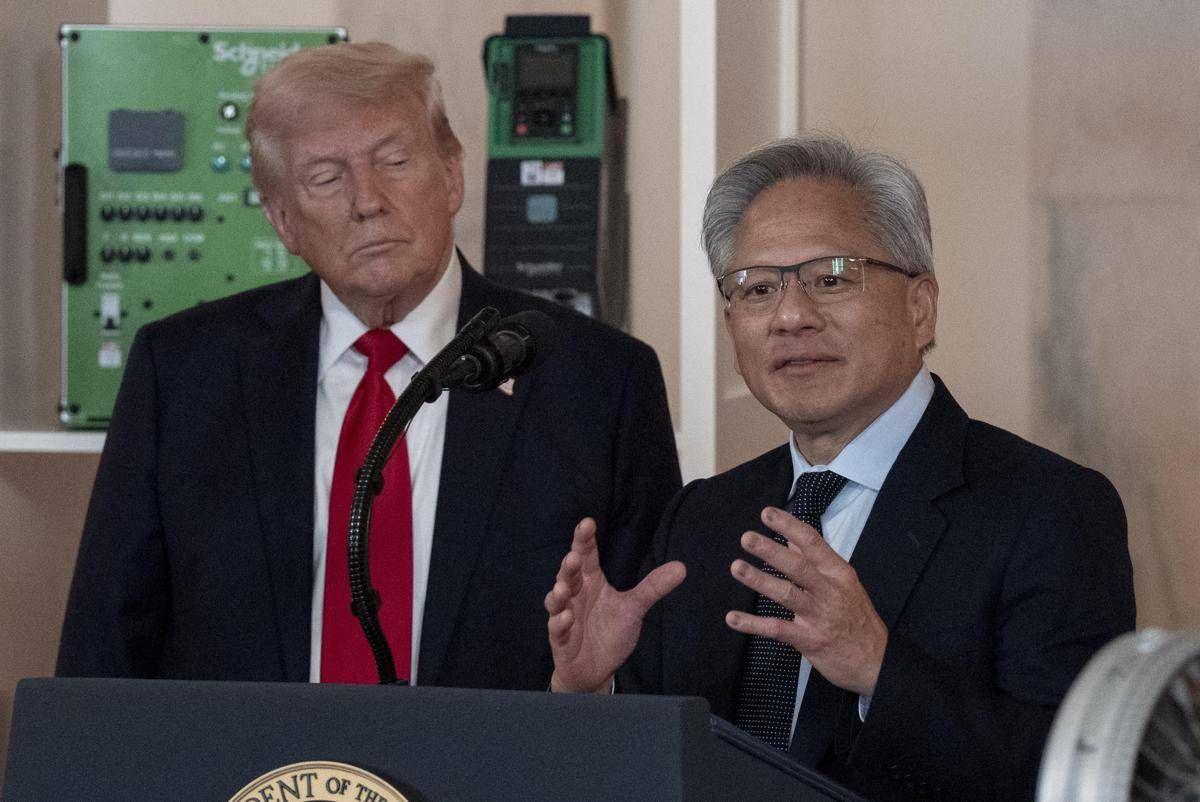
The president’s private appeal came as questions mounted over the former CEO’s relationship with a woman suspected by U.S. intelligence officials of working for China. Congress is now seeking testimony from Huang and Commerce Secretary Howard Lutnick
Donald Trump made a personal appeal to Jensen Huang to hold on to his position at Nvidia just two days before the chipmaker’s longtime chief executive resigned, according to a report by The New York Times. The call, made Tuesday and described by two people briefed on the conversation, adds a new dimension to questions about the president’s support for the technology executive as U.S. officials and lawmakers examine whether a suspected Chinese intelligence operation may have intersected with America’s most sensitive semiconductor industry.
Huang stepped down on Thursday, ending his 33-year tenure at the company he co-founded. Nvidia’s board appointed Chief Financial Officer Colette Kress as interim CEO while it searches for a permanent successor. His departure, however, has done little to contain the controversy. Congressional scrutiny is widening beyond Huang’s personal conduct to include the Trump administration’s handling of intelligence warnings and its oversight of advanced chip exports to China.
The president had been briefed at least twice about Huang’s relationship with Alice Huang, a Chinese businesswoman whom U.S. intelligence officials suspected of working for Beijing’s Ministry of State Security, according to reporting by The New York Times. One warning came in May, when Secretary of State Marco Rubio reportedly raised the intelligence with Trump aboard Air Force One as the president traveled to China. Huang subsequently joined the presidential delegation.
Trump has continued to defend the Nvidia executive. Earlier this week, he said Huang had told him he did not know the woman was allegedly working for Chinese intelligence, adding that he believed him. The president has also publicly praised Huang, describing him as a major figure in the technology industry. But the intelligence allegations remain unresolved: Attorney General Todd Blanche said the Justice Department had not reached a conclusion on whether Alice Huang was a Chinese spy, while the FBI was investigating the matter.
The political consequences are now moving toward Capitol Hill. Senate Banking Committee Chairman Tim Scott, a Republican from South Carolina, has asked Huang to appear voluntarily before the panel on Dec. 3. Scott has also invited Commerce Secretary Howard Lutnick to testify on Dec. 10 about the department’s role in overseeing Nvidia’s chip exports to China. The committee has warned that it could use subpoenas if witnesses decline to appear.
Scott said recent reports raised serious concerns about national security and the protection of sensitive American technology. The public, he added, deserves answers. Lutnick has agreed to appear voluntarily, according to a department spokesperson. Huang’s response to the Senate invitation has not been publicly confirmed.
The inquiry is not limited to the Senate. Republican lawmakers in the House are also seeking testimony from Huang, with several committees examining whether Chinese intelligence could have gained access to sensitive information or influenced decisions involving U.S. technology policy. The questions extend to the possibility that Nvidia chips were diverted to China through third-party companies, a concern that has intensified scrutiny of export-control enforcement.
Democrats have pressed the administration to explain what it knew and how it responded. Senate Minority Leader Chuck Schumer said Congress must demand answers from Huang, Nvidia and the White House, arguing that the administration should account for its actions after learning of the alleged relationship with a suspected Chinese intelligence asset. He has also questioned whether officials took appropriate steps to protect national security.
Sen. Elizabeth Warren of Massachusetts, the top Democrat on the Senate Banking Committee, has made clear that Huang’s resignation does not close the matter. His departure, she said, does not absolve him, other executives or Nvidia itself of responsibility for any threat to national security or potential violations of U.S. law. The company and its leadership still owe Congress answers about compliance with export controls, she said, while administration officials must explain whether advanced American technology could be reaching China’s military.
Warren and Sen. Chris Coons of Delaware have separately asked the Commerce Department, the State Department and the White House to preserve documents and communications concerning Nvidia’s advanced chip exports to China and the reported intelligence operation. Their request reflects a broader concern: whether government officials had information about potential security risks while decisions were being made about access to powerful American semiconductors.
The scrutiny places Lutnick’s department at the center of the dispute. The Commerce Department plays a critical role in administering and enforcing export controls, including restrictions on advanced artificial intelligence chips. Lawmakers want to know whether those safeguards were properly applied and whether warnings involving Huang, Alice Huang and companies connected to her were adequately investigated.
Huang’s resignation has therefore shifted the focus rather than ended the crisis. What began as questions about the former Nvidia chief’s private relationship has become a wider examination of the intersection between corporate influence, intelligence concerns and U.S. technology policy toward China. The hearings sought by lawmakers will test not only what Huang knew, but what the administration knew — and what it did with that information.
(Photo: © AndKronos)




You must be logged in to post a comment Login