
International-News
Mossad Chief Heads to Washington as Netanyahu Presses Trump on Iran
Trump Resists Netanyahu on Iran as Gulf Allies Urge Restraint
Israel is seeking to keep the option of renewed military action against Iran on the table even as President Donald Trump resists pressure to restart the fighting. The arrival of Mossad Director Roman Gofman in Washington underscores Benjamin Netanyahu’s effort to persuade the White House to change course, at a moment when the Israeli prime minister’s political future is also in jeopardy.
Gofman, one of Netanyahu’s closest confidants, is meeting with CIA Director John Ratcliffe, according to three sources familiar with the visit cited by Axios. He is also expected to travel to Miami for talks with White House envoy Steve Witkoff. The Mossad, CIA and White House declined to comment.
The discussions come against a widening divide over what should happen next in the war. Netanyahu wants the United States to resume military operations, but Trump has so far resisted, favoring a continued naval blockade and economic pressure on Tehran while leaving open the possibility of a negotiated agreement. The two leaders discussed Iran during a phone call on Nov. 5, according to a U.S. official cited by Axios.
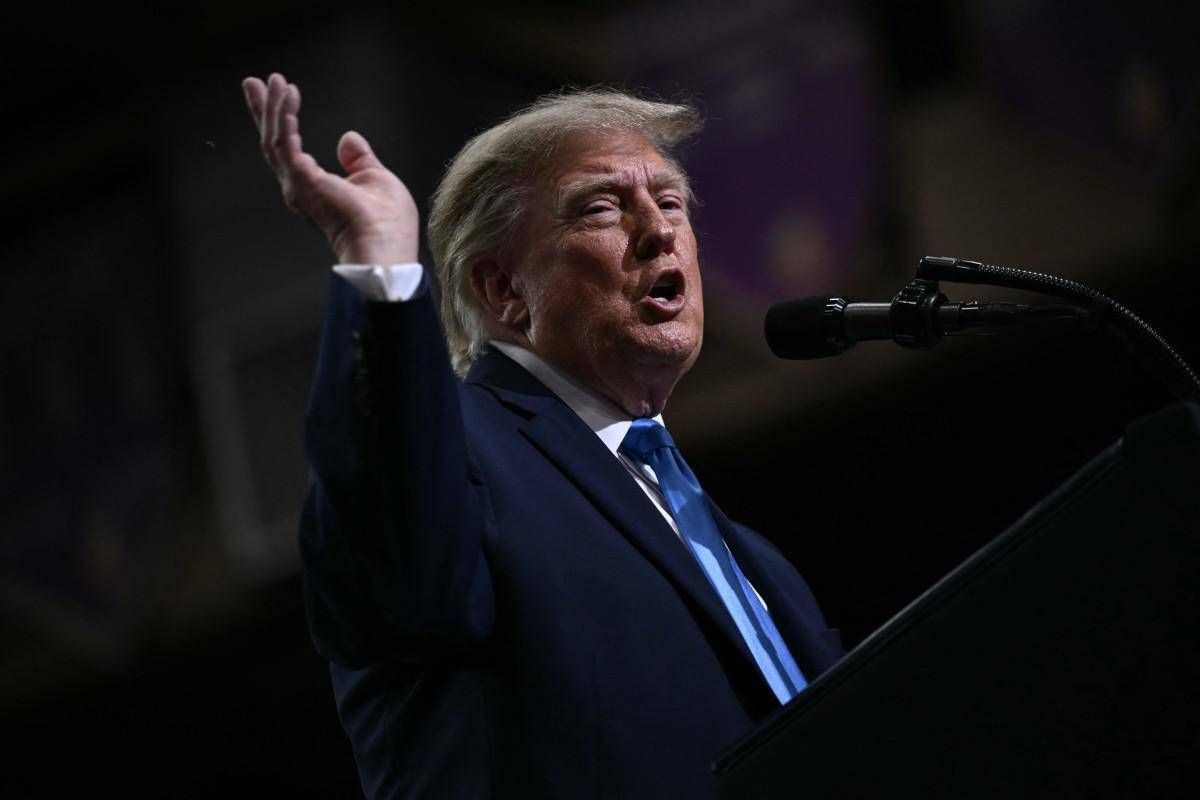
Trump has publicly explained his reluctance to escalate by pointing to requests from America’s Gulf partners. In an interview with Stephen A. Smith at the White House on Thursday, he said Saudi Arabia had asked him to leave the situation as it was for a while. Qatar, Kuwait, the United Arab Emirates and Bahrain, he added, also preferred the current pause in large-scale attacks.
“I’m not sure I agree with it,” Trump said, making clear that restraint was not necessarily his preferred option. He claimed the United States could devastate Iran’s energy infrastructure, bridges and manufacturing capacity within days. “In one day their energy is gone. In one day their bridges are gone. And in one day their manufacturing capability is gone. It would only take me three days,” he said.
The remarks highlight the competing pressures on the president: Netanyahu is pressing for renewed military action, while several Gulf governments are urging him to maintain the current approach. For now, Trump appears more inclined to preserve economic and military pressure than to launch another major offensive.
But the diplomatic dispute is unfolding alongside a political transition in Israel that could make the stakes even higher. Netanyahu’s bloc lost its parliamentary majority in the Oct. 27 election, and opposition leader Gadi Eisenkot has been given the first opportunity to form a new government. If successful, Eisenkot would replace Netanyahu as prime minister.
That prospect has fueled concern among opposition figures that Netanyahu could use a renewed confrontation with Iran to disrupt the transition. According to sources cited by Axios, they fear he might order an attack or provoke an Iranian response against Israel in an effort to undermine Eisenkot’s attempt to assemble a governing coalition. Those concerns remain allegations about Netanyahu’s possible intentions, not evidence that such a plan is underway.
The two men met Thursday for about two hours, during which Netanyahu briefed Eisenkot on the situation with Iran. A source close to the opposition leader told Axios that Eisenkot did not believe the circumstances required immediate military action against Tehran.
Eisenkot has also publicly warned against allowing the transition period to become a gap in political oversight. In a statement Friday, he said he had met Netanyahu and the prime minister’s military secretary during the week and had made clear that he would not tolerate a lack of scrutiny of the outgoing government’s actions. Israel’s security, he said, must never be used as political capital.
Gofman’s meetings in Washington therefore carry significance beyond the military relationship between Israel and the United States. They come as Netanyahu seeks to persuade Trump to return to combat, as Gulf allies press for restraint and as Israel faces the possibility of a new government. The question of whether the war resumes is now bound up with both regional diplomacy and the struggle over who will lead Israel.
(Photo: © AndKronos)





You must be logged in to post a comment Login