
International-News
Kaja Kallas Rejects U.S.-Style Envoys for Ukraine Peace Talks
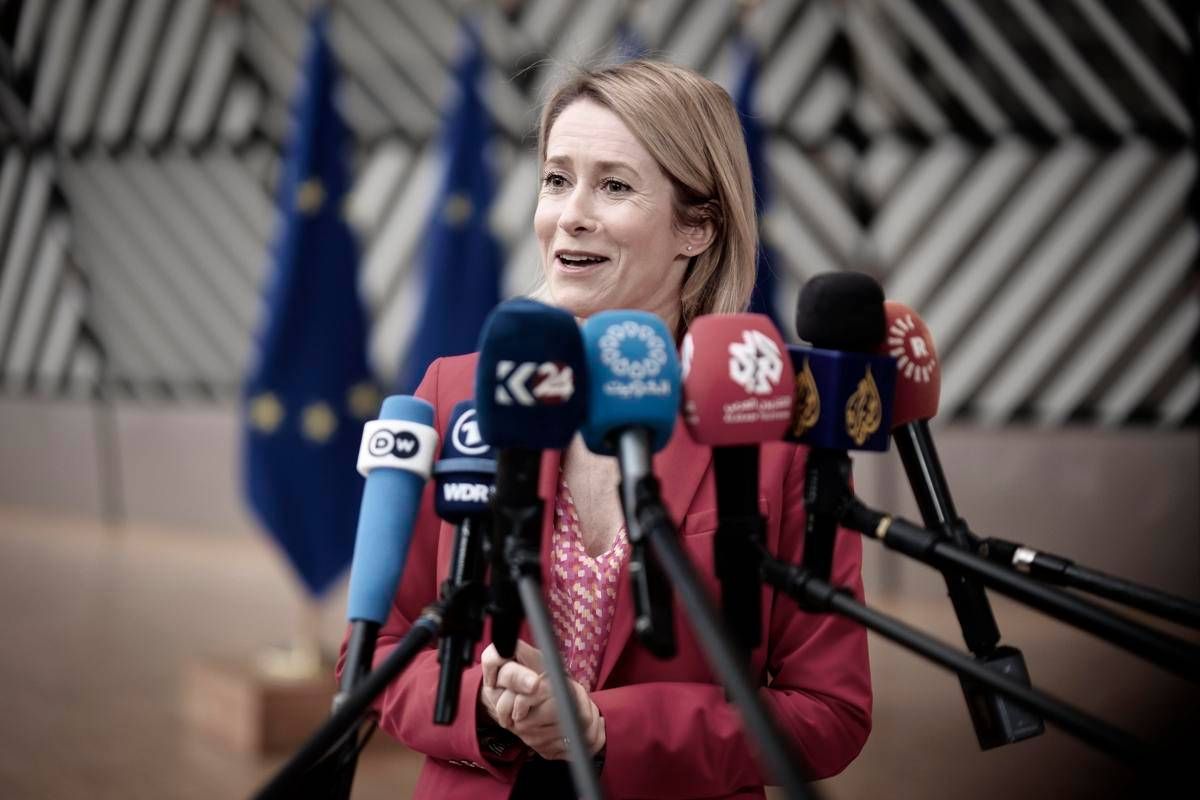
The EU foreign policy chief says Brussels needs an official mandate and a strong negotiating team, warning that Moscow wants to exploit divisions in the West to secure its demands
Europe cannot simply copy Washington’s approach to the Ukraine negotiations by sending politically connected individuals without formal institutional authority, European Union foreign policy chief Kaja Kallas said, as EU leaders wrestle with how to secure a place at the table in talks over Russia’s war.
Speaking in Dublin, Kallas drew a distinction between the American delegation — which includes President Donald Trump’s son-in-law Jared Kushner and longtime associate Steve Witkoff — and the system of institutional representation on which the European Union is built. The bloc, she argued, needs representatives with an established role, a clear mandate and the backing of its member states.
“We have established institutions, so we cannot simply send someone without an institutional role, as the Americans do,” Kallas said. The question, she added, is not just who sits across from Russia, but where the initiative comes from, what authority the representative carries and how negotiations are conducted. Choosing the people who will speak for Europe is ultimately a decision for its leaders; her own responsibility, she said, is to prepare the ground.
The debate has become increasingly urgent after Kushner and Witkoff met Russian President Vladimir Putin in Moscow before traveling to Dublin to brief Ukrainian President Volodymyr Zelenskyy. The American envoys have said Europe will be included in the next round of negotiations, and Zelenskyy has welcomed the prospect of European participation. But Moscow has not clearly confirmed that commitment, and EU governments have yet to agree on who should represent them.
Kallas is making the case for a strong European presence, while pointing to the responsibilities she already holds as the bloc’s foreign policy chief. She said all EU member states agree that she represents them on foreign policy, a role she has carried out for two years. Her argument comes as European leaders consider whether representation should rest with a single envoy, a team of officials or figures already holding senior institutional positions.
She also dismissed the idea that Moscow should have a say in deciding who represents Europe. “I know the Russians don’t want me,” said Kallas, a former Estonian prime minister. “But do we have a say in who represents Russia? No.”
For Kallas, the resistance is not incidental. She argued that Russia has little interest in facing a strong negotiating counterpart because its strategy is to press maximalist demands and extract concessions from a divided West. Allowing Moscow to influence the choice of European representatives, she warned, would hand the Kremlin leverage it should not have.
To explain what she sees as the pattern, Kallas invoked former Soviet foreign minister Andrei Gromyko, who served from 1957 to 1985 and was known as “Mr. Nyet” for his reputation as a formidable diplomatic negotiator. His approach, she said, was to begin with threats and ultimatums, resort to force and then wait for someone in the West to offer concessions that had not previously been on the table.
Each concession, in her account, encourages Moscow to push further. Negotiators naturally want the weakest possible counterpart, she said, but the decision over Europe’s representation must remain in European hands. Giving Russia influence over that choice would allow it to shape the negotiating balance before substantive talks had even begun.
The immediate challenge for the EU is therefore twofold: securing a meaningful role in the discussions and agreeing on a representative whose authority is recognized by all 27 member states. Kallas’s intervention makes clear that, for Brussels, the question is not simply who gets a seat at the table, but whether Europe arrives with the institutional weight and political unity needed to use it.
(Photo: © AdnKronos)




You must be logged in to post a comment Login