
International-News
Jensen Huang Resigns as Nvidia CEO as Scandal Engulfs AI Giant
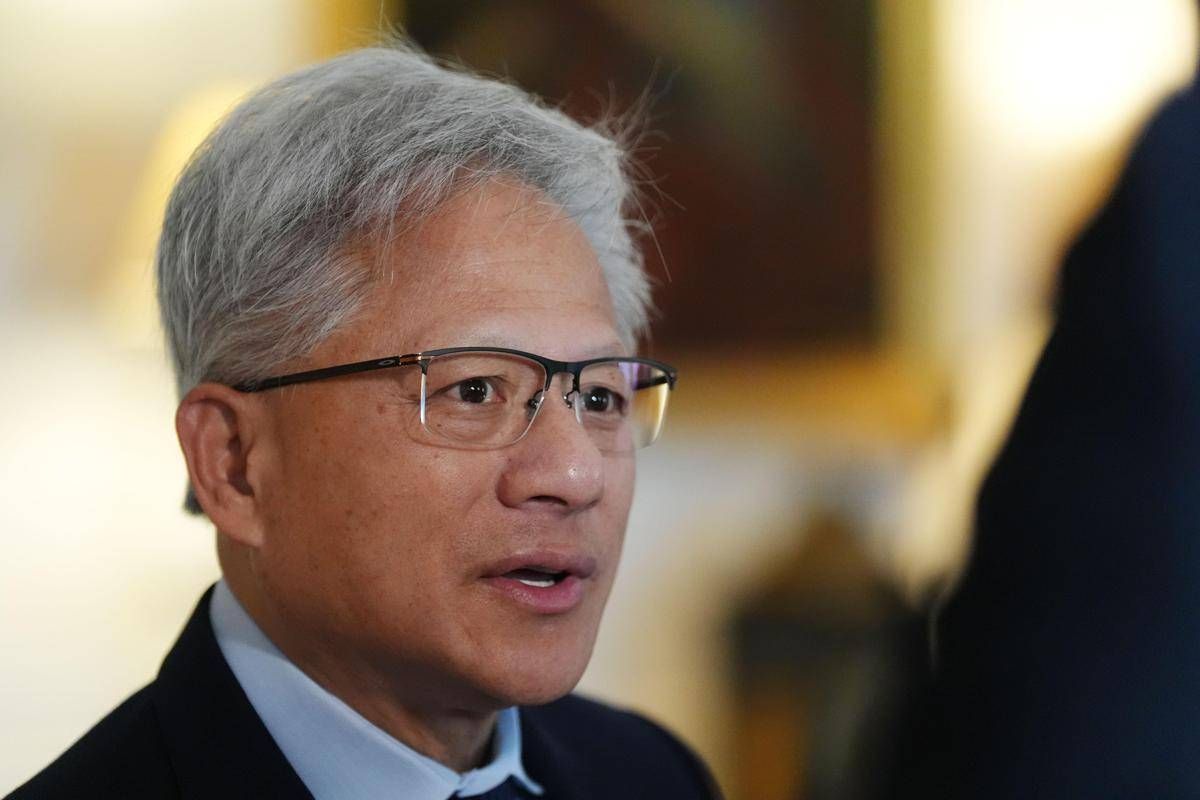
The 63-year-old co-founder is leaving the company he built after revelations of two alleged extramarital relationships, including one with a senior executive who reported directly to him. CFO Colette Kress has been named interim CEO as Nvidia searches for a permanent successor
Jensen Huang is leaving the company that made him one of the most powerful figures in the global technology industry. Nvidia announced Thursday that its co-founder has resigned as president, chief executive and a member of the board, effective immediately, following days of mounting pressure over two reported extramarital relationships and an investigation into possible foreign intelligence connections.
The departure marks an extraordinary turning point for the semiconductor giant. Huang, 63, had led Nvidia since its founding in 1993, transforming a graphics-chip manufacturer into the company at the center of the artificial intelligence boom. His exit leaves the board facing an immediate succession challenge at a business whose strategy, public identity and political influence have been closely associated with its founder.
Nvidia has appointed its chief financial officer, Colette Kress, as interim chief executive. She will retain her finance responsibilities while the board searches for a permanent replacement, considering both internal and external candidates. The board has also appointed Harvey C. Jones, a director since 1993, as its first-ever chairman.
The company’s announcement did not provide a reason for Huang’s resignation or explicitly connect the decision to the allegations surrounding his private life. The timing, however, follows a dramatic escalation in the reports about his relationships, including a new allegation involving a senior executive directly subordinate to him.
A second alleged relationship intensifies the crisis
The latest disclosure concerned Kimberly Powell, Nvidia’s vice president of healthcare and life sciences. The New York Times, citing five people who had worked at the company, reported that Huang had an extramarital relationship with Powell. Both are married to other people.
According to the newspaper’s sources, the two were seen being affectionate at a hotel in San Jose, California, during Nvidia’s GTC developer conference in March. The sources said the encounter had been recorded on video, although the Times did not independently view the footage.
The report added another dimension to an already serious corporate crisis: the alleged relationship involved an executive who reported directly to Huang. Questions about the relationship had reportedly circulated inside Nvidia for some time.
Powell leads the company’s healthcare and life sciences business, a division focused on applying accelerated computing and artificial intelligence to medical imaging, drug discovery and other healthcare technologies. Some accounts have raised questions about her qualifications for the senior position, although her professional biography lists a degree in electrical engineering and nearly two decades of experience working at the intersection of computing and healthcare.
Nvidia did not publicly confirm the alleged relationship.
The new report arrived only days after Huang had acknowledged being unfaithful to his wife in a message to employees. That earlier relationship involved Alice Huang, a former executive at Singapore-based Megaspeed International, a company whose business activities have attracted scrutiny from U.S. authorities over suspected attempts to circumvent semiconductor export restrictions to China.
Despite sharing a surname, Alice Huang and Jensen Huang are not related.
The investigation that raised national security concerns
The first controversy went far beyond questions of personal conduct. U.S. intelligence agencies reportedly suspected Alice Huang of acting as an agent for Beijing, raising concerns about the possibility of foreign influence involving the head of one of America’s most strategically important technology companies.
On November 8, Huang sent an apology to his family and colleagues, acknowledging that he had been unfaithful to his wife.
“I was unfaithful to my wife. My actions hurt her and our children. There is no excuse for what I did. I am deeply sorry,” he wrote.
He also addressed Nvidia employees, saying he had fallen short of the responsibility entrusted to him as the company’s leader and that he was committed to rebuilding their confidence.
The same day, Nvidia’s board announced an independent investigation into reports that its founder had been the target of a foreign intelligence effort. A committee of independent directors, supported by outside legal counsel, was appointed to oversee the inquiry.
The board said at the time that it had no reason to believe that either national security or Nvidia’s confidential information had been compromised. It also publicly expressed confidence in Huang and his leadership team.
The resignation came after that initial declaration of support, as the allegations surrounding the executive continued to expand.
There have also been important qualifications to the accusations involving Alice Huang. Singaporean authorities confirmed that they had questioned her and seized her passport during an investigation involving Megaspeed. They said they had found insufficient evidence that she had committed a crime, although they suspected she had provided inaccurate information to downplay her role in the company and barred her from returning to Singapore.
Megaspeed has denied violating U.S. export regulations and said it is prepared to cooperate with American authorities. China, meanwhile, has rejected allegations that it attempted to ensnare Nvidia’s chief executive.
The FBI is investigating the wider affair, while members of Congress have continued pressing to question Huang about his contacts with Alice Huang and the company’s safeguards against foreign interference. The chairman of the House Foreign Affairs Committee, Brian Mast, has said a subpoena could be issued if Huang does not agree to appear voluntarily.
The crisis communications firm hired a year ago
Another detail emerged from an investigation published by Wired, which reported that Huang had been working with Heller, a crisis communications firm, since at least October 2025 — months before he publicly acknowledged his first extramarital relationship.
The agency, founded by Risa Heller, has represented or advised several prominent figures involved in high-profile personal controversies. Among those mentioned by Wired were former congressman Anthony Weiner, celebrity chef Mario Batali and writer Jeffrey Toobin.
According to two people familiar with the arrangement, Heller had handled communications behind the scenes for Huang and his family. The firm was initially believed to have been engaged for matters involving his personal life, including philanthropic activities connected to his family.
However, Wired stressed that it was not clear whether the firm’s initial work for Huang was connected to his alleged relationship with Alice Huang. Heller also handles corporate communications and other matters unrelated to personal scandals.
Neither Nvidia nor the agency publicly commented on the report.
Nvidia faces its first major leadership transition
The consequences of Huang’s departure extend well beyond the company’s executive offices. Nvidia has become one of the central pillars of the global AI economy, and its founder has been a leading advocate for the commercial and strategic expansion of American artificial intelligence technology.
His resignation immediately raised questions about the continuity of the company’s leadership and the ability of its board to manage a transition that had not been publicly prepared.
Kress, who joined Nvidia as chief financial officer in 2013, now assumes responsibility for leading the company while the board looks for a permanent successor. She has overseen Nvidia’s global financial operations during much of its extraordinary expansion.
In her first statement as interim chief executive, Kress emphasized the strength of the organization rather than the departure of its founder.
“Nvidia’s strength has always come from its people,” she said, adding that she was committed to building on the foundation Huang had created over 33 years.
Harvey C. Jones, the newly appointed chairman, also praised Huang’s contribution to the company and expressed confidence in Kress and the existing management team. The board said it expected operations, customer commitments and the product roadmap to continue without interruption.
The financial markets reacted sharply to the announcement. Nvidia shares fell as much as 14% at the opening of trading on Thursday before recovering part of their losses, standing about 4.2% lower by midmorning, according to the Associated Press. The uncertainty surrounding the leadership transition also weighed on other companies connected to the artificial intelligence sector.
The board’s search for a permanent chief executive will now take place while the independent investigation continues and lawmakers maintain their demands for answers about the company’s exposure to possible foreign intelligence activity.
(Photo: © AndKronos)

Jensen Huang Resigns as Nvidia CEO as Scandal Engulfs AI Giant
The 63-year-old co-founder is leaving the company he built after revelations of two alleged extramarital relationships, including one with a...

Anthony Clark, ‘Yes, Dear’ Star and Boston Comic, Dies at 62
The comedian became a familiar face on CBS television as Greg Warner, but long before his sitcom success he was...

Randall England, ‘General Hospital’ Villain Jack Slater, Dies at 75
The actor also appeared in Dallas, The Young and the Restless and Baywatch, earned recognition on the American stage and...

U.S. Donbas Border Plan Could Give Putin a Paper Victory
American negotiators have reportedly proposed redrawing the administrative boundaries of Donetsk and Luhansk so Moscow could claim the entire region...

11-Month-Old Boy Found Alive Buried in Dog Crate in South Carolina
Koah Sharpe was believed to have been underground for 24 hours after disappearing with his 25-year-old father. Nearly 100 rescuers...


Trump-Netanyahu Iran Tensions Expose Rift Over Renewed War
A reportedly explosive phone call between the two leaders has highlighted disagreements over whether to resume military action against Tehran....
Stacy Keach, the Actor Behind Mike Hammer, Dies at 85
The American actor, who also held Polish citizenship, built a career spanning Broadway, Hollywood and television, earning a Golden Globe...
House Rejects Pete Hegseth Impeachment Bid; Trump Celebrates
The 211-204 vote defeats a resolution introduced by Republican Thomas Massie, who accused the defense secretary of abusing his authority...
“Delusional, Divisive and Shameful”: Eisenkot Turns on Netanyahu
The Yashar leader says the caretaker prime minister is unfit to remain in office and has called off a meeting...


“Your Ratings Are a Loser”: Trump Mocks CNN’s Kaitlan Collins VIDEO
The president lashed out at the CNN correspondent after she asked whether he would keep Defense Secretary Pete Hegseth if...

Thomas Markle Ordered to Undergo Mental Competency Exam
The 82-year-old father of Meghan, Duchess of Sussex, faces federal charges involving alleged possession of child sexual abuse material. A...
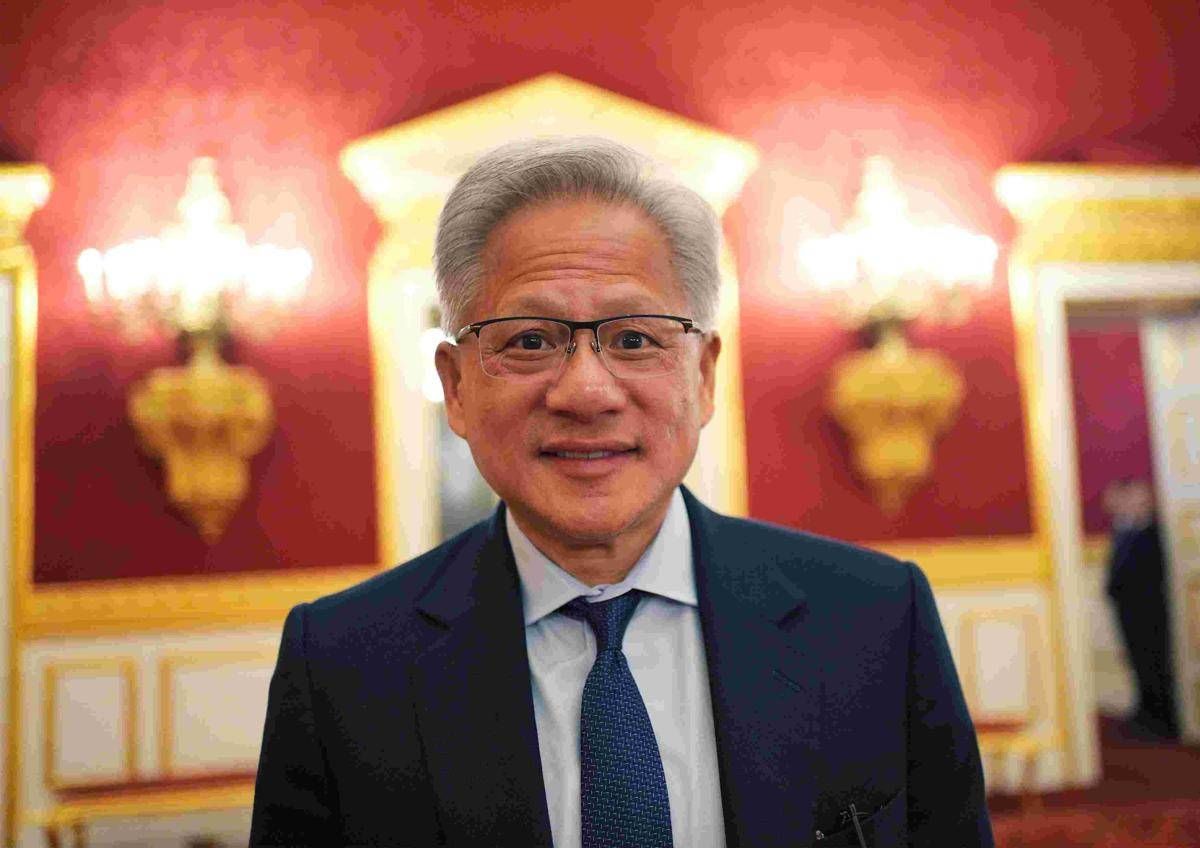
Jensen Huang Scandal Tests Nvidia’s Dependence on Its Founder
An affair involving a Singapore-based executive under scrutiny over Nvidia chip exports has collided with U.S.-China technology policy. The crisis...

Pete Hegseth Calls Impeachment Motion a “Farce” as House Weighs Vote
The defense secretary accuses the media of hating Donald Trump more than they love the country and the armed forces....

You must be logged in to post a comment Login