
International-News
Shenlong Space Plane Photo Reveals a New Front in the U.S.-China Rivalry
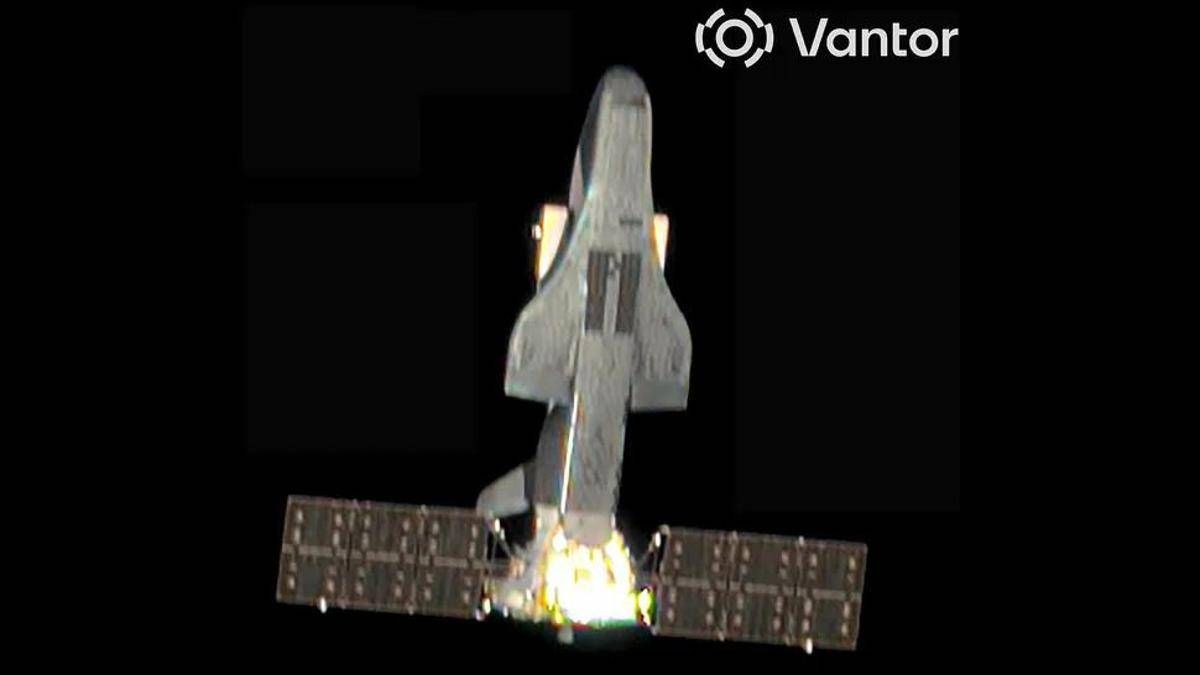
A newly released Pentagon intelligence image offers the clearest public view yet of China’s secretive reusable spacecraft, focusing attention on a rapidly evolving contest for control, surveillance and potential military advantage in orbit
For years, the most important evidence of China’s ambitions in space was found not in photographs but in behavior.
Objects appearing and disappearing in orbit. Unexplained maneuvers. Satellites approaching one another. Missions lasting far longer than expected. A steady accumulation of clues pointing toward capabilities Beijing was developing but rarely discussing in public.
Now, the Pentagon has unveiled a rare image to accompany those suspicions.
Buried within the Defense Intelligence Agency’s latest assessment of threats in space is a high-resolution photograph of the Shenlong space plane, one of the most secretive vehicles ever launched by China. Captured on May 28, 2024, by a commercial American satellite operating roughly 90 kilometers away, the image provides the clearest public look to date at a spacecraft that has become a symbol of Beijing’s increasingly sophisticated presence in orbit.
The vehicle, photographed with its cargo bay, triangular wing design and deployed solar panels visible, bears a striking resemblance to the U.S. military’s X-37B, the robotic Boeing-built space plane operated by the U.S. Space Force under a veil of secrecy of its own.
That parallel is not what most concerns military planners.
What matters is what the spacecraft appears capable of doing.
Since its debut flight in September 2020, China has conducted four known missions with the reusable vehicle. The first lasted only two days. The second remained in orbit for 276 days. The third lasted 268 days. The current mission, launched on Feb. 7, 2026, remains underway.
As mission durations expanded, so did evidence that the spacecraft was performing increasingly complex work in orbit.
During multiple flights, Shenlong released small objects into space and carried out rendezvous maneuvers. In June 2026, according to Reuters reporting based on orbital tracking data from LeoLabs, the spacecraft deployed a small satellite that maneuvered near another Chinese object before returning toward the vehicle. Subsequent orbital analyses suggested additional release-and-recovery activity in the months that followed.
Those operations sit at the center of growing concern in Washington.
The ability to approach, inspect, release, retrieve or manipulate objects in orbit represents one of the most strategically significant technologies in modern space operations. A vehicle capable of recovering a satellite can also, at least in theory, interfere with one. In a future conflict, temporarily disabling a satellite may prove more useful than destroying it outright.
The same technology, however, has legitimate civilian and commercial applications. Orbital servicing, refueling missions, equipment repair and debris removal all require spacecraft to perform many of the same maneuvers. The U.S.-based Secure World Foundation has emphasized that no public evidence indicates Shenlong has conducted offensive operations and that it has not been observed approaching non-Chinese satellites.
That distinction has become increasingly important as military competition moves beyond Earth’s surface.
The newly released image appears in a Defense Intelligence Agency report describing the rapid expansion of China’s military space architecture. According to Pentagon analysts, Beijing now operates more than 510 intelligence, surveillance and reconnaissance satellites, giving Chinese forces an expanding ability to monitor military activity, naval deployments and carrier strike groups, particularly across the Indo-Pacific.
The report’s most consequential warnings concern future weapons capabilities.
The DIA assessment states that China already possesses ground-based laser systems capable of interfering with or damaging satellites in low Earth orbit. Pentagon analysts further assess that Beijing could deploy direct-energy weapons in space before the end of the decade, extending military competition into domains that only recently belonged to science fiction.
Viewed through that lens, Shenlong becomes more than an experimental spacecraft.
For Washington, it represents one component of a broader ecosystem that includes anti-satellite missiles, electronic warfare capabilities and maneuverable satellites designed to operate in close proximity to other objects in orbit. Taken together, those systems suggest a future in which strategic advantage may depend as much on controlling space infrastructure as on controlling territory on Earth.
Beijing rejects the notion that reusable spacecraft are inherently military tools and maintains that such technologies serve peaceful purposes.
The skepticism, however, runs in both directions.
America’s X-37B remains largely classified, and Washington publicly acknowledged only last month that it has already deployed weapons in orbit. As both powers expand their activities beyond the atmosphere, transparency has become increasingly scarce precisely where the stakes are rising fastest.
The significance of that trend extends far beyond astronauts, rockets or national prestige.
Modern militaries rely on satellites for communications, navigation, intelligence gathering and the guidance of precision weapons. GPS networks, surveillance systems and military command structures increasingly depend on orbital infrastructure that can be monitored, challenged or potentially disrupted.
In any future confrontation over Taiwan or elsewhere in the Indo-Pacific, the first moves may not occur in the air, at sea or on land.
They may occur hundreds of miles above the planet.
The Pentagon’s newly released image ultimately reveals more than the outline of a mysterious Chinese spacecraft. It captures a deeper reality: as China learns how to maneuver, retrieve and operate with greater precision in orbit, the United States is becoming increasingly skilled at watching. In the emerging contest for strategic advantage in space, satellites are no longer just tools of surveillance.
They have begun watching one another.
(Photo: © AndKronos)


Jet Crashes Near Mar-a-Lago, Killing Nine in Seconds-Long Descent VIDEO
A private jet heading to the Bahamas plunged into a South Florida neighborhood after its crew reported severe weather, icing...

Private Jet Crash Near Mar-a-Lago Leaves Nine Dead After Crew’s Final Plea
A Learjet en route from Texas to the Bahamas plunged into a South Florida neighborhood after pilots reported severe weather,...

Calenda annuncia: «Azione correrà da sola alle prossime elezioni»
Esclusa l’adesione alle due coalizioni, il leader punta a costruire una lista centrista capace di incidere sulla formazione del governo...

Kherson, finita la tregua di Oleshky: un drone russo ferisce due civili
La pausa umanitaria, durata sei giorni, si è conclusa il 1° novembre. Colpita un’auto nel quartiere di Korabelny La ripresa...

Governors, Not Congress, May Hold the Biggest Prize of the Midterms
Thirty-six states are electing governors, and the results could shape far more than local politics. With Democrats eyeing gains in...

La trattativa tra Iran e Stati Uniti resta appesa alle richieste di Teheran
Nuovi attacchi in Iran, Trump rinvia ogni decisione dopo il voto del 3 novembre e lascia spazio ai negoziati. Netanyahu...

Spagna, identificate 2 italiane tra le vittime dell’incidente ferroviario
Ana Martina Conte Grand e Daniela Milan Parlanti risultavano disperse dopo lo scontro tra i due treni a Urda Il...

Juan Atkins, Architect of Detroit Techno and Electronic Music Pioneer, Dies at 64
From the industrial landscape of Detroit emerged a sound that would transform dance music worldwide. Juan Atkins, widely regarded as...

Trieste, due giovani migranti morti in un incendio al Porto Vecchio
Le vittime, un uomo e una donna, erano al primo piano del magazzino 18. Il solaio ha ceduto mentre le...


Criminalità giovanile, 644 arresti in due settimane: 69 sono minorenni
L’operazione della Polizia ha coinvolto tutte le province italiane. Identificati oltre 236mila ragazzi e sequestrati più di 244 chili di...
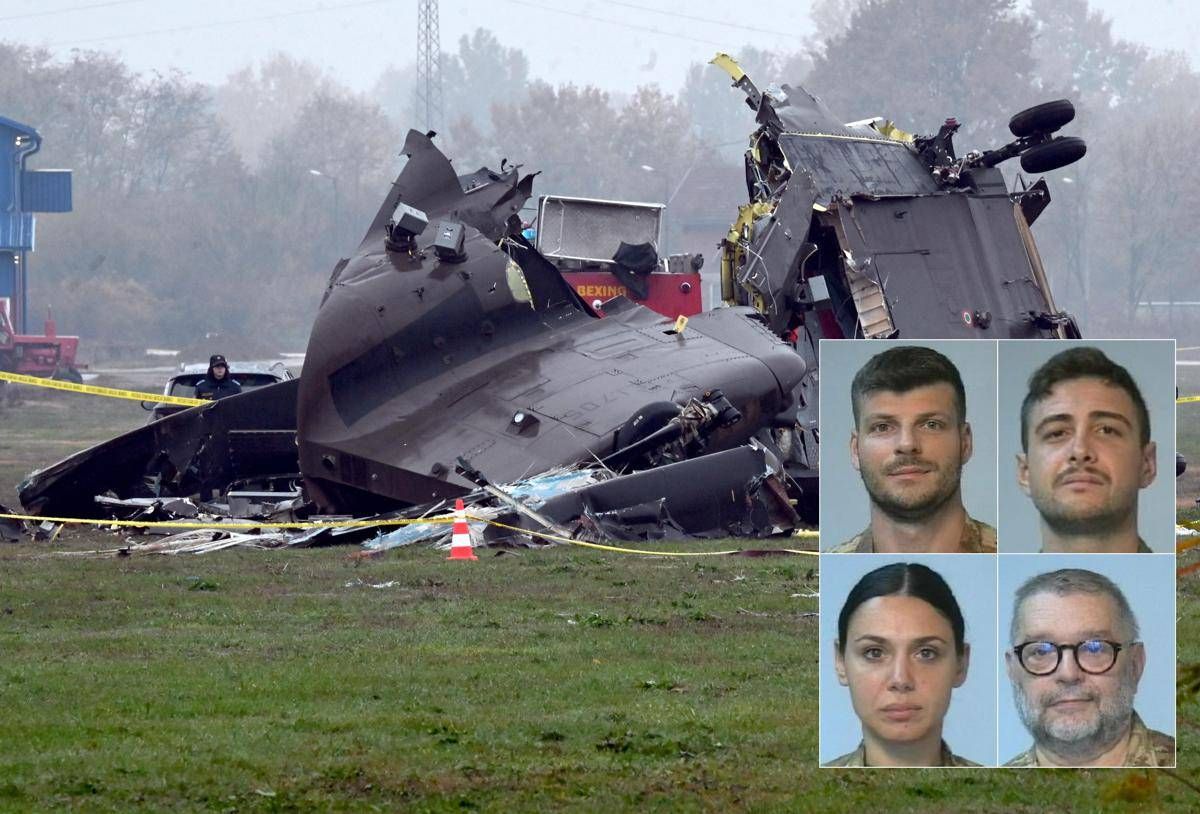
Quattro militari morti in Bosnia, le salme oggi in Italia: funerali martedì
I feretri arriveranno a Ciampino intorno alle 12. Meloni e Crosetto saranno presenti per accogliere i caduti dell’incidente del CH-47...


Roma, due persone trovate morte in casa dopo un incendio
Un uomo e una donna sono stati scoperti dai vigili del fuoco in un appartamento di via Spinoza, invaso dal...


Bora e Grecale fino a 70 km/h, mare agitato e neve sugli Appennini
Il vortice ciclonico sulle regioni meridionali porta un peggioramento al Centro-Sud, con precipitazioni localmente temporalesche e grandine Il termometro scende...

America’s Midterm Elections Keep Humbling Presidents. Trump Is Betting He Can Break the Pattern
Facing unfavorable polls and lukewarm enthusiasm within parts of his coalition, Donald Trump is asking Republicans to rally as if...

Ucraina, Rubio frena sulla pace: «Accordo difficile nei prossimi mesi»
Secondo fonti diplomatiche citate da Radio Free Europe, il segretario di Stato americano avrebbe espresso forti dubbi sulla possibilità di...
Palm Beach Plane Crash Kills Nine Aboard Learjet 60 Bound for Bahamas
Federal investigators are examining the sudden loss of altitude that preceded the crash of a private jet in a residential...