Flight-tracking data showed Russian government aircraft circling over the capital and diverting to St. Petersburg as airport operations were suspended...
Read More
International-News
Naza: How a Gaza War Documentary Became a Global Political Flashpoint
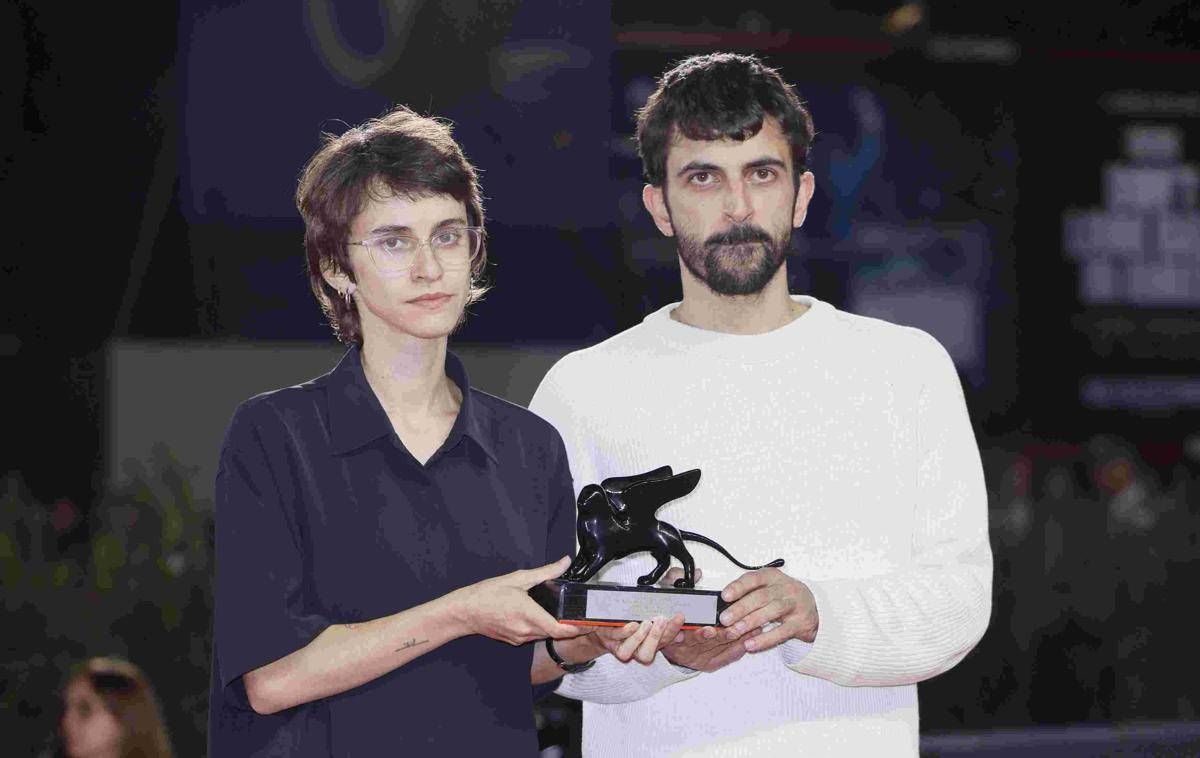
The documentary has grossed nearly €4 million in Italy, drawing fierce criticism from Netanyahu’s government and renewed scrutiny of the media and advocacy networks behind its international reach
The film has grossed nearly €4 million in Italy after winning a special jury prize in Venice and drawing fierce condemnation from Israel’s government. Its reach reflects a network of newsrooms, cultural organizations and international foundations whose connections are documented but do not establish coordinated control over the production.
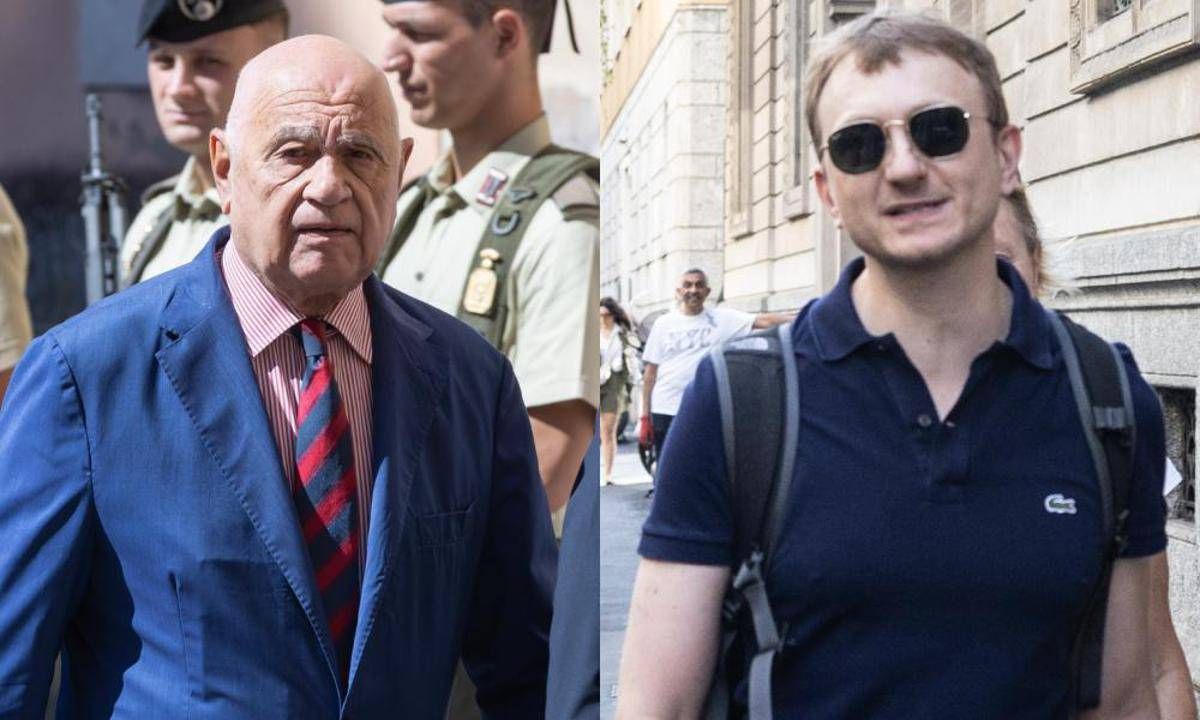
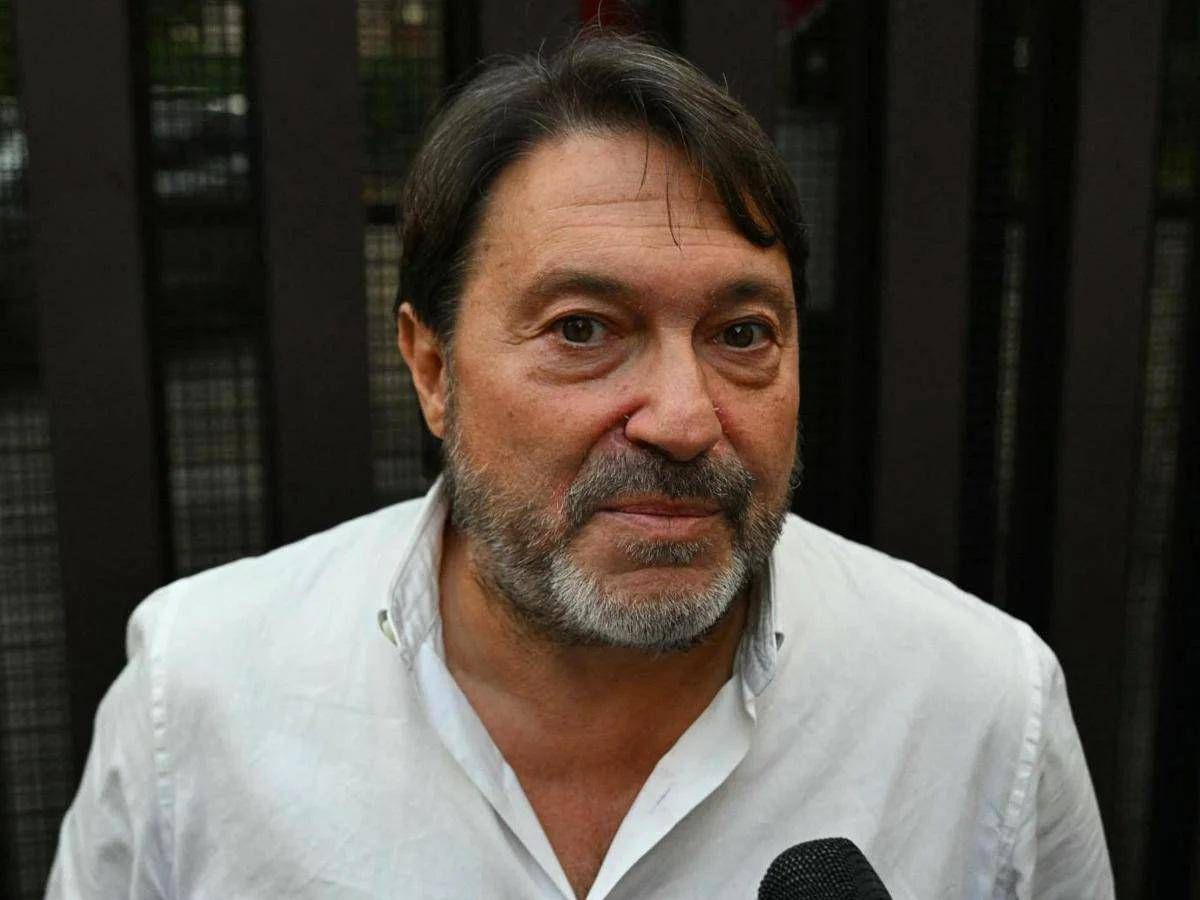
Nearly €4 million at the Italian box office, a special jury prize at the Venice Film Festival and a public confrontation with Benjamin Netanyahu’s government have turned Naza into more than a documentary about the war in Gaza. The film by Yuval Abraham and Rachel Szor has become a major media event, one whose reach extends beyond the screen into the overlapping worlds of investigative journalism, cultural advocacy and political campaigning.
Built around anonymous testimony from 24 members of Israel’s military and intelligence services, Naza examines how targets are identified in Gaza, how artificial intelligence is used in military operations and how the potential for civilian casualties factors into decisions. Its central allegation is that Israeli authorities knowingly accepted high levels of Palestinian civilian deaths.
Israel’s government rejects that account, arguing that the film misrepresents military operations. Netanyahu has publicly attacked the documentary and proposed legislation that would revoke the citizenship of people who defame Israeli soldiers.
The controversy has not limited the film’s circulation. It has helped propel it into the international spotlight. Behind that visibility lies a network of news organizations, foundations, cultural groups and organizations involved in the boycott of Israel. Their funding arrangements and professional ties are, in many cases, publicly documented and have been examined by Adnkronos. Those connections do not establish a central command directing the film, but they help explain the broader ecosystem through which Naza has reached a global audience.
Israel challenges the film’s account of military operations
The backlash extends beyond Netanyahu’s political statements. On Oct. 1, the Israel Defense Forces issued a detailed response accusing the documentary of containing substantial errors, presenting testimony without adequate context and giving a misleading account of the procedures used to select military targets.
One of the military’s principal objections concerns the film’s account of an attack allegedly authorized with an estimated civilian death toll of 500. The IDF disputes that such an operation was ever approved.
The military also rejects the suggestion that artificial intelligence systems independently determine whom to strike. Its position is that information generated by technological tools undergoes further review and remains subject to a chain of human authorization.
Israeli officials argue that Naza conflates preliminary estimates of potential collateral damage with final operational decisions and fails to account for measures intended to reduce civilian casualties. They also contend that the documentary’s focus on Israeli bombing leaves too little room for the Oct. 7, 2023, Hamas massacre, the fate of the hostages and the use of civilian infrastructure by Palestinian armed groups.
Abraham, Szor and the Guardian, the British newspaper that co-produced the film, have defended their reporting. They say they consulted more than 100 sources, including officers involved in decision-making, and cross-checked testimony against documents and independent corroboration.
The dispute has placed the documentary at the center of a wider argument over both the conduct of the war and the credibility of competing accounts of Israeli military operations.
The newsrooms behind Naza
Understanding how the film reached such a large audience requires looking at the journalism on which it draws and the organizations involved in bringing that reporting to the screen.
The Guardian, which co-produced Naza with James Wilson’s JW Films, has provided a major channel for its international visibility. A free streaming release on the newspaper’s website has also been discussed as a way to maximize the film’s reach. Among its executive producers is Jonathan Glazer, the Oscar-winning director of The Zone of Interest.
Another important source of reporting is +972 Magazine and its Hebrew-language sister publication, Local Call. Both have spent years documenting Israeli military actions.
Abraham works for Local Call, which was established and is jointly published by the U.S.-based organization Just Vision and 972 Advancement of Citizen Journalism, the Israeli nonprofit that publishes +972 Magazine.
Their institutional funding offers another view of the network surrounding the film. Records of grants awarded by the Open Society Foundations, established by financier George Soros and now led by his son Alexander, show that Just Vision has received $1.125 million over the years, while 972 Advancement of Citizen Journalism has received another $400,000. Some of that funding was explicitly intended to support the development of Local Call.
The Rockefeller Brothers Fund has also supported Just Vision, awarding two multiyear grants of $335,000 and $300,000 in 2021 and 2024, respectively.
The same foundations separately support other organizations working on Palestinian rights, including some that explicitly advocate boycotting Israel.
The distinction between those grants and the financing of the film itself is essential. The documented contributions went to journalism and cultural organizations; they are not evidence of direct funding for Naza. There is insufficient public evidence to conclude that the Open Society Foundations, the Rockefeller Brothers Fund or other donors commissioned the documentary or dictated its contents.
What the records do establish is that some of the journalistic organizations whose work fed into the project have operated with support from major international foundations, within a cultural environment strongly opposed to the policies of Israel’s government.
Where journalism and activism intersect
For some of the organizations involved, the relationship between reporting and political engagement is not a hidden feature of their work. It is an explicit part of their mission.
In an interview published by the Jewish Liberation Fund, Dana Mills, +972 Magazine’s head of development, described the publication’s goal as combining independent journalism with activism against occupation and apartheid.
“Our journalism itself is our activism,” Mills said.
She also emphasized the publication’s commitment to rigorous professional standards and editorial independence. The distinction, in her account, is not between having a political outlook and practicing journalism, but between openly acknowledging a position and maintaining the standards required to investigate and substantiate claims.
Just Vision similarly describes its mission in terms that combine journalism, documentary filmmaking and strategic public engagement, with the aim of influencing debate and perceptions of the Israeli-Palestinian conflict.
That integration of content production and audience mobilization is a defining feature of the wider network around Naza. It does not, by itself, demonstrate that the film’s reporting was directed by an advocacy organization. It does show how journalism, documentary work and political engagement can operate within the same institutional environment.
Professional ties link the project’s participants
The connections also run through individual careers and organizational roles.
Noa Yachot, a member of +972 Magazine’s board and a senior editor at the Guardian in the United States, is listed among the documentary’s co-producers.
Yousef Munayyer, who also sits on +972’s board, previously served as executive director of the U.S. Campaign for Palestinian Rights, an organization that supports the BDS movement — boycott, divestment and sanctions against Israel.
Executive producer Wendy vanden Heuvel is also connected to PalFest, a Palestinian cultural initiative that supports boycott campaigns targeting certain Israeli publishers.
Taken together, the funding records, institutional missions and professional relationships map a network of organizations whose work spans journalism, documentary production and advocacy on the Israeli-Palestinian conflict. They help explain the environment in which Naza was developed and promoted, without establishing that the documentary was commissioned or controlled by a single organization.
THE LATEST NEWS
Christa Pike Returns to Prison After Surviving Execution Attempt
10 October 2026
Christa Pike returns to prison after surviving a lethal injection attempt, leaving Tennessee officials facing unprecedented uncertainty over whether her...
Read More

Erie Shooting Leaves Eight Dead, Including Two Children, in Pennsylvania
10 October 2026
Authorities in northwestern Pennsylvania are investigating a mass killing that left eight people dead, including two children, after a gunman...
Read More

Hurricane Isaias Strengthens as Gulf Coast Braces for Landfall
9 October 2026
Evacuation orders are in effect in parts of the Southeast, with storm surge, torrential rain and possible tornadoes threatening coastal...
Read More
Naza: How a Gaza War Documentary Became a Global Political Flashpoint
9 October 2026
The documentary has grossed nearly €4 million in Italy, drawing fierce criticism from Netanyahu’s government and renewed scrutiny of the...
Read More
U.S. to Broadcast Nidal Hasan’s Firing-Squad Execution Live
9 October 2026
The Fort Hood mass shooter is scheduled to be executed on December 3. Defense Secretary Pete Hegseth says the public...
Read More
(Photo: © AndKronos)