
International-News
Blue Wave Poised to Reshape Senate Map as Democrats Lead Across Key Battlegrounds
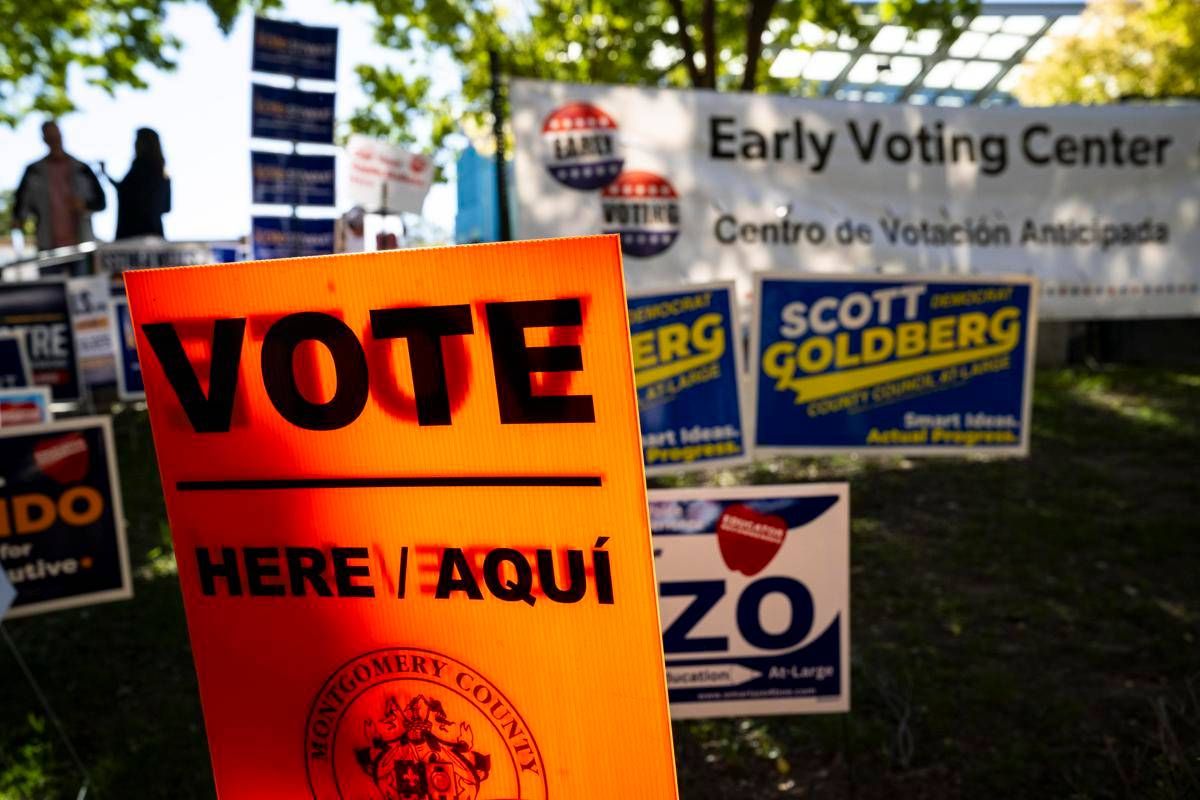
Final polling suggests Democrats are not merely competing for Senate control but threatening to expand the battlefield deep into Republican territory, from Texas to Kansas, in what could become the most significant midterm backlash of the Trump era
The most striking number heading into Election Day may not be any individual Senate race. It is the possibility that states long viewed as reliable Republican ground are suddenly part of the discussion.
According to final polling from The New York Times, Democrats hold advantages in all seven Senate contests expected to determine control of the chamber: Michigan, Kansas, Texas, Maine, Ohio, Alaska and Iowa. Some of those leads are narrow. Others are large enough to force a question that would have sounded implausible just months ago: Is the country heading toward a Democratic wave powerful enough to break through Republican strongholds?
The scale of the Democratic advantage is most evident in Michigan, where Abdul El-Sayed holds an 11-point lead over Mike Rogers in the Times survey. Similar results across the broader Senate map suggest a political climate that extends beyond the traditional battleground states that usually decide control of Congress.
Yet even as the polling points toward a possible Democratic surge, skepticism hangs over the numbers. The newspaper itself cautions that the final surveys may be overstating Democratic support, noting that polling during the Trump era has repeatedly struggled to fully capture the president’s coalition. Trump supporters have often proven less likely to respond to surveys, creating the risk that Republican strength is being underestimated before votes are cast.
That warning is not a minor footnote to the story. It is central to understanding the stakes of the final polling. The same concerns shadowed previous elections in which Democratic advantages appeared larger in surveys than in the eventual results, leaving analysts to confront the possibility that a hidden Republican vote remains difficult to measure.
Even with that caveat, however, the Democratic position appears unusually strong. The margins are large enough in several contests that Democrats could still emerge victorious even if polling once again underestimates Republican support.
The broader political environment helps explain why. These elections are unfolding against the backdrop of deep dissatisfaction with President Donald Trump. According to figures cited by the Times, Trump’s approval rating stands at roughly 35%, placing him among the least popular presidents to face a midterm electorate. Only Harry Truman, in 1946, confronted voters with a lower approval rating heading into comparable elections.
Equally troubling for Republicans, Trump’s standing has weakened inside his own party. His approval among Republican voters is reported to be at least 12 points lower than it was in 2018, the year Democrats rode a blue wave to a comfortable House majority. That election generated significant gains for Democrats but stopped short of producing major Senate breakthroughs.
This time, the battlefield looks different. Instead of concentrating solely on traditional swing states, Democrats are entering Election Day with polling advantages that stretch from the industrial Midwest to the Great Plains and even into states that have long formed part of the Republican electoral foundation.
Whether the surveys are capturing a genuine political realignment or once again misjudging the size of Trump’s support will only become clear when ballots are counted. For now, the final numbers point to a possibility that neither party can ignore: a Senate map that has expanded dramatically in Democrats’ favor and an election that could produce consequences far beyond a simple change in congressional control.
(Photo: © AndKronos)


Travolto dal portiere in campo, morto Jesus De Miguel
L’attaccante aveva riportato un arresto cardiocircolatorio dopo il violento impatto al torace. Nelle ore precedenti il Tenerife aveva segnalato un...

Chiari, 21enne uccide la madre a coltellate e si costituisce
Il delitto nella casa di famiglia, in provincia di Brescia. Dopo la fuga, il giovane si è presentato ai carabinieri...

Incidente elicottero in Bosnia, Roma celebra i funerali solenni: Mattarella e Meloni alle esequie
I quattro militari sono morti il 29 ottobre nello schianto dell’elicottero impegnato nella missione internazionale Eufor Althea Quattro feretri avvolti...

New York Measles Death Rekindles Fears as U.S. Outbreak Reaches 35-Year High
The first measles fatality in New York in three decades has intensified scrutiny of declining vaccination rates and underscored the...


Maltempo al Centro-Sud, allerta arancione in Puglia e Basilicata
Temporali e venti forti interessano diverse regioni. Scuole chiuse a Chieti, Lanciano e San Michele di Serino, lezioni a distanza...
Blue Wave Poised to Reshape Senate Map as Democrats Lead Across Key Battlegrounds
Final polling suggests Democrats are not merely competing for Senate control but threatening to expand the battlefield deep into Republican...

Attacchi hacker ai supermercati, oggi vertice a Palazzo Chigi
Colpiti almeno quattro punti vendita Coop in Sicilia. L’Agenzia per la cybersicurezza nazionale monitora anche un’azienda toscana e una emiliana...

Trump rassicura sull’Iran, ma gli Usa colpiscono Qeshm prima del voto
Alla vigilia delle elezioni di metà mandato il presidente parla di una possibile intesa con Teheran, mentre il Wall Street...

Moss Landing Shooting Leaves Multiple Dead as California Investigators Search for Answers
Authorities have released few details about the gunfire near Monterey Bay, but the incident has already become the latest in...

Meteo, piogge e neve sull’Appennino: nuovo peggioramento dal 5 novembre
Il calo delle temperature porterà le massime fino a 4-6 gradi sotto i valori recenti. Le precipitazioni interesseranno soprattutto Centro-Sud...

Hamilton Questions Leclerc’s Team Commitment After Ferrari Flashpoint
The seven-time champion says Ferrari lost more than a race in Mexico, arguing that an internal battle with Charles Leclerc...

Bussolengo, accusato di aver ucciso la moglie con l’insulina: non risponde al gip
Nadir Rossi, 35 anni, è detenuto a Verona per l’omicidio premeditato e pluriaggravato di Jessica Dalla Chiara. Respinta la richiesta...


Truffe del pellet, l’inchiesta Adnkronos: così agiscono i siti falsi
Le offerte ingannevoli si moltiplicano con i primi freddi. Prezzi troppo bassi, bonifici a persone fisiche e richieste di pagamento...

Varsavia teme incursioni dalla Russia: rafforzata la sicurezza a Kaliningrad
L’intelligence polacca e le agenzie alleate hanno segnalato possibili tentativi di attraversamento del confine da parte di gruppi armati Gruppi...

Ryanair anticipa la chiusura del check-in bagagli: cosa cambia
Non sarà più possibile consegnare il bagaglio in stiva fino a 40 minuti prima del decollo: il nuovo limite scatterà...

Iran’s Strait of Hormuz Plan Raises the Stakes for U.S. Diplomacy
Tehran says one of the world’s most critical shipping corridors can reopen within 48 hours, but only if Washington first...
You must be logged in to post a comment Login