
The Sussexes are unlikely to join the royal family at Sandringham for Christmas, with a friend describing a reunion as...
Read More
International-News
NATO Will ‘Destroy’ Any Force That Attacks the Alliance, Commander Warns
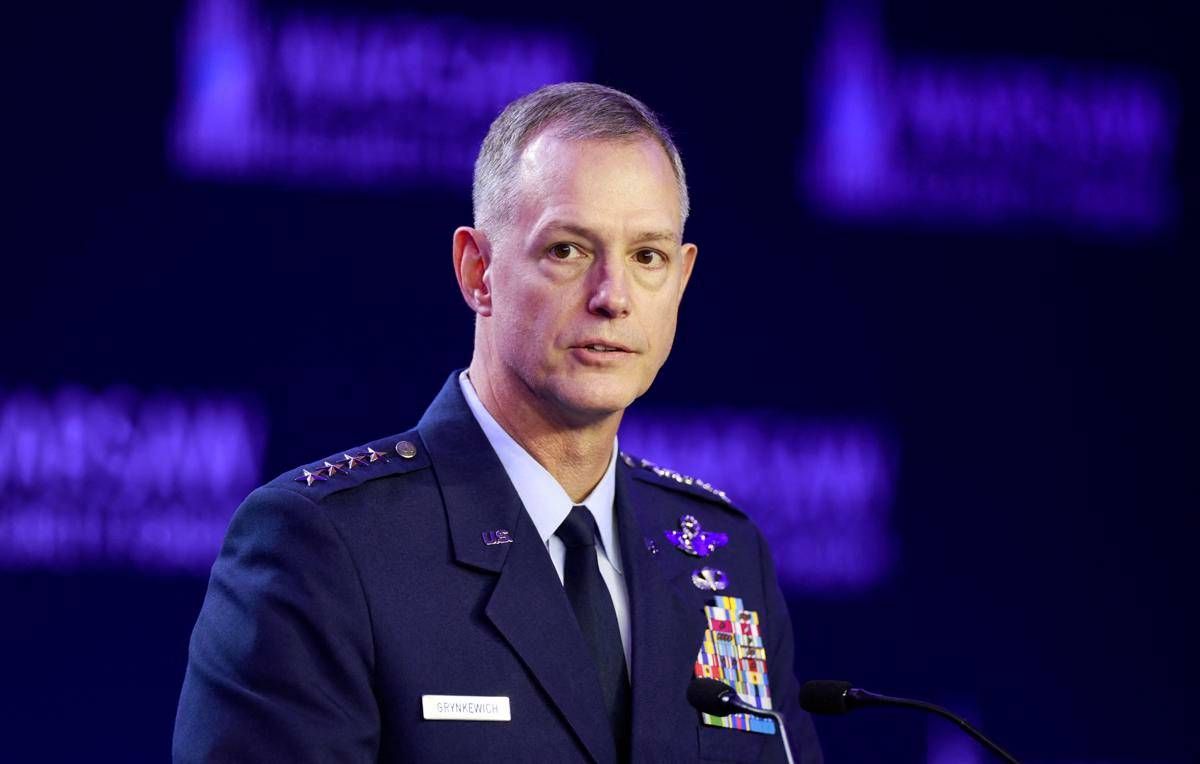
In a stark address in Warsaw, NATO’s top military commander coupled a forceful deterrence message to potential adversaries with an unequivocal defense of America’s commitment to the alliance
WARSAW — NATO’s most senior military commander delivered one of the alliance’s strongest warnings in recent months on Saturday, declaring that any aggressor that attacks a member state would face not only immediate defeat but the destruction of the forces carrying out the assault.
The remarks from Alexus Grynkewich, NATO’s Supreme Allied Commander Europe, came at a moment of deep uncertainty over the war in Ukraine, with prospects for a negotiated settlement appearing remote and intelligence assessments in recent weeks highlighting the risk of possible Russian action against a NATO country.
Speaking at the Security Forum in Warsaw, Grynkewich framed military readiness as the foundation of NATO’s deterrence strategy, arguing that the alliance’s greatest strength lies in convincing adversaries that an attack would be futile from the outset.
“NATO does not seek war with anyone. We are ready today, and we will be even more ready tomorrow and every day that follows,” he said.
The message that followed was notably sharper.
“Today we stand here together in Poland, stronger than ever, united by our shared vision of an alliance that is more balanced, more prepared and more lethal. We know how we would fight if we were ever required to do so, and we know we would win. Together, we will ensure that any adversary contemplating an attack against our alliance reaches the only conclusion that matters: today is not the day.”
Rather than focusing solely on deterrence, Grynkewich outlined how NATO would respond if deterrence failed. Referring to the “Theory of Victory” he presented during the forum, he acknowledged that its implementation would require decisions he hopes never become necessary.
“Implementing the Theory of Victory that I outlined today would require me to give orders that I hope I never have to give. Our alliance exists to preserve peace. But there should be no doubt: if conflict erupts, we will stop and neutralize any attack and then, should that aggression continue, we will destroy the forces conducting it against us.”
The comments amounted to a direct statement of NATO’s warfighting posture at a time when security concerns remain concentrated along the alliance’s eastern flank.
Questions during the forum soon turned to another issue dominating transatlantic security debates: whether President Donald Trump would send American troops to defend a European ally in the event of an attack.
Grynkewich declined to speculate on decisions that ultimately belong to political leaders, noting that determining which nations provide troops and where they are deployed is a matter for governments rather than military commanders.
Still, he pushed back firmly against suggestions that Washington’s commitment to NATO should be questioned.
“We have American troops here in Poland today, and we have American troops deployed across the eastern flank. In the end, it is a political decision who provides troops and where they provide them, but I do not believe anyone should doubt the commitment of the United States to this alliance.”
To underscore the point, Grynkewich pointed to his own appointment as evidence of continued American engagement.
“I am here. I am an American officer sent here by President Donald Trump following confirmation by the United States Senate and appointment by the North Atlantic Council to the position I hold.”
He continued: “All of this was done by President Trump. It is a demonstration of commitment to the alliance. And I believe the issue goes far beyond me. As personally involved as I am, there is much more at stake when America makes a commitment like this.”
Taken together, the remarks offered a dual message from NATO’s top commander: a warning that the alliance is prepared to meet any military challenge with overwhelming force, and an insistence that the United States remains fully committed to the collective defense guarantees at the core of the alliance.
THE LATEST NEWS

NATO Will ‘Destroy’ Any Force That Attacks the Alliance, Commander Warns
12 October 2026
In a stark address in Warsaw, NATO's top military commander coupled a forceful deterrence message to potential adversaries with an...
Read More
European Intelligence Warns of Russian Threats Against Defense Executives
11 October 2026
Financial Times report cites officials from five intelligence agencies as concerns grow over Moscow's expanding hybrid warfare campaign linked to...
Read More

White House TV Pool Boycott Triggers DOJ Antitrust Investigation
11 October 2026
Five of America's biggest television networks now face federal scrutiny after collectively refusing to cover President Donald Trump ahead of...
Read More
Putin’s Return Flight Disrupted by Drone Attack That Closed Moscow Airports
10 October 2026
Flight-tracking data showed Russian government aircraft circling over the capital and diverting to St. Petersburg as airport operations were suspended...
Read More
Christa Pike Returns to Prison After Surviving Execution Attempt
10 October 2026
Christa Pike returns to prison after surviving a lethal injection attempt, leaving Tennessee officials facing unprecedented uncertainty over whether her...
Read More

(Photo: © AndKronos)















You must be logged in to post a comment Login