
Speaking to the Italian news agency Adnkronos, the veteran Israeli mediator says Hamas has lost much of its strength in...
Read More
International-News
Gershon Baskin Says Hamas Weakened Three Years After Oct. 7
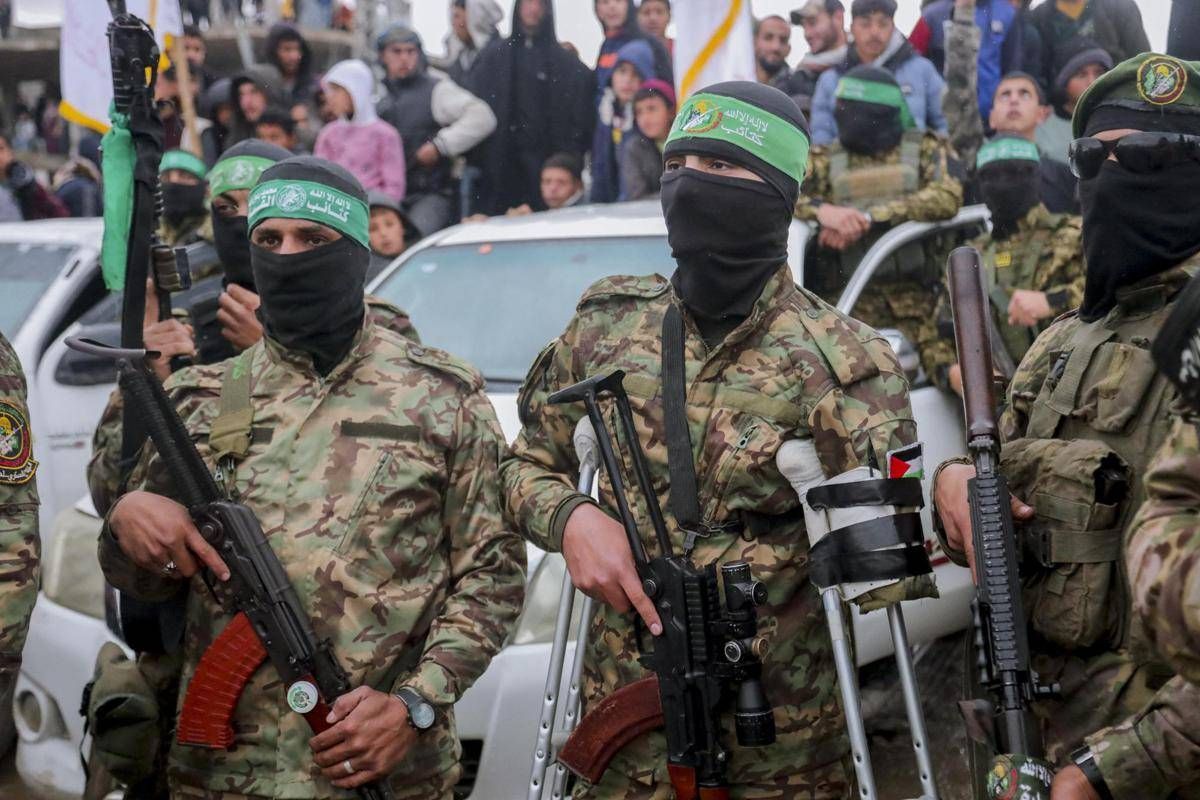
Speaking to the Italian news agency Adnkronos, the veteran Israeli mediator says Hamas has lost much of its strength in Gaza while Israeli society has emerged from the war more skeptical than ever about the prospects for peace
Three years after the Oct. 7 attacks that reshaped the Israeli-Palestinian conflict, veteran Israeli negotiator Gershon Baskin believes Hamas has emerged from the war significantly weakened, internally divided and increasingly disconnected from the population it claims to represent.
Speaking to the Italian news agency Adnkronos, Baskin argued that the movement’s influence inside Gaza has been substantially reduced by three years of conflict, even as many Israelis continue to perceive Hamas as a more formidable force than it actually is.
The assessment carries particular weight given Baskin’s long history of engagement with the group. He managed the secret communication channel that led to the release of Israeli soldier Gilad Shalit in 2011 and has continued maintaining contacts with Hamas after the Oct. 7, 2023 attacks. He remains convinced that direct communication is essential for achieving hostage agreements and ceasefires, and he says he was unofficially involved in negotiations that secured the release of all women and children abducted by Hamas.
According to Baskin, one of the most common misconceptions about Hamas today is the belief that it functions as a unified organization speaking with a single voice.
“Hamas is not a monolithic organization,” he said, pointing to internal disagreements that became evident during the leadership election ultimately won by Khalil Al-Hayya by a single vote. The narrow result, he noted, highlighted competing currents and conflicting priorities within the movement.
The divisions are not limited to leadership politics. Baskin described a widening gap between Hamas figures operating inside Gaza and officials based abroad. While residents of Gaza continue to endure severe hardship and poverty after years of war, members of the organization’s external leadership inhabit a markedly different reality.
In his view, Hamas leaders outside Gaza generally promote more hardline and radical positions than those expressed by the movement’s local representatives. Even so, the commanders and officials inside Gaza continue to receive instructions from the external leadership, and there are no signs of an internal revolt against those directing the organization from abroad.
The picture in the West Bank is different again. There, Baskin described Hamas as lacking an effective organizational structure and facing constant pressure from both Israel and the Palestinian Authority.
Because of those conditions, he said, it remains difficult to accurately measure the group’s level of support among Palestinians in the territory. Gaza, however, offers a clearer picture.
“We know for certain that support in Gaza is minimal,” Baskin said. “These three years of war have demonstrated a significant weakening of Hamas.”
That conclusion contrasts with the prevailing perception in Israel, where public discussion frequently focuses on warnings about Hamas rearming and rebuilding its organizational capacity.
Baskin believes such assessments often exaggerate the movement’s actual strength. While concerns about Hamas remain widespread within Israel, he argues the organization no longer enjoys meaningful backing among Gaza’s population, a reality that he sees as one of the most important consequences of the war.
Looking ahead, Baskin expressed hope that Israel’s Oct. 27 elections could create an opening for a broader political initiative focused on Gaza’s future.
He envisions a postwar framework centered on recovery and reconstruction, supported by Palestinian police forces and an international stabilization mission deployed inside the enclave. Within that context, he said, the arrival of the Technical Committee in Gaza could further diminish Hamas’ role and influence.
Yet rebuilding Gaza is only one part of a much larger challenge.
Baskin argues that the conflict has transformed Israeli society as profoundly as it has transformed Gaza. In the years since Oct. 7, he says, the Israeli public has moved decisively to the right politically.
The change does not necessarily reflect a rejection of coexistence. Rather, he believes many Israelis still desire peace but no longer believe it can be achieved.
“The Oct. 7 attack convinced the majority of Israelis that peace with the Palestinians is not possible,” Baskin said.
The result, he added, is an almost complete collapse of trust. Israeli political leaders, in his view, have done little to help the public reassess its attitudes toward Palestinians, a process he believes can only begin once the election cycle concludes.
Despite the prevailing pessimism, Baskin rejects the notion that the conflict can simply be managed indefinitely.
The longtime peace activist, who organized secret meetings in London in October 1992 between former Israeli security officials and Palestine Liberation Organization representatives that helped lay the foundations for the security component of the Oslo Accords signed in September 1993, argues that both sides ultimately have no alternative but to pursue a political solution.
“It is difficult to imagine peace, but we have no other choice,” he said.
For Baskin, the central lesson of the years since Oct. 7 is that neither Israelis nor Palestinians are going anywhere. The conflict itself is not disappearing and therefore must eventually be resolved rather than merely contained.
He expects Israel to face growing international pressure in the coming years, though much of what happens next may depend on U.S. President Donald Trump and Washington’s relationship with Saudi Arabia.
Whether meaningful momentum toward peace emerges, Baskin said, will largely be determined by Trump’s willingness to encourage a future Israeli government to reengage with the Palestinian issue.
Saudi Arabia could prove particularly influential because of what Baskin described as Trump’s highly transactional view of international affairs.
Major development initiatives currently under discussion, including the India-Middle East-Europe Economic Corridor, involve investments worth billions of dollars and depend on broad cooperation between Washington, Riyadh, Gulf states and other regional partners. In Baskin’s view, projects of that scale cannot fully materialize without progress toward ending the Israeli-Palestinian conflict.
“For the Americans, for Trump, it’s all about money. For Israel, it’s a matter of security. For the Palestinians, it’s a matter of freedom,” he said.
Those competing priorities reinforce his belief that future diplomacy cannot be limited to negotiations between Israelis and Palestinians alone.
Any viable peace framework, he argues, will have to be regional and international in scope, offering benefits large enough to outweigh the concessions required from both sides. The rewards of peace, he said, must ultimately exceed the costs of compromise.
That broader search for solutions was evident during the recent United Nations General Assembly meetings in New York, where Baskin participated in a series of events focused on Gaza and the future of Israeli-Palestinian relations.
He described the conflict as the dominant topic throughout the gathering. Discussions included Board for Peace meetings and roundtables sponsored by Saudi Arabia, Norway and the European Union examining pathways toward implementing a two-state solution. Norway also convened a donor conference focused on support for Palestinians.
The intensity of those discussions, Baskin said, underscored a growing recognition among international actors that the Israeli-Palestinian conflict remains at the center of regional diplomacy and one of the defining geopolitical challenges facing the Middle East.
THE LATEST NEWS
France Sees a Covid Uptick, but Experts Say Europe Is Not Facing a New Crisis
3 October 2026
French surveillance data show a rise in infections from very low levels, while a fragmented mix of SARS-CoV-2 variants continues...
Read More

Teen’s Eyelid Swelling Leads Doctors to Discover Tooth Beneath Eye
3 October 2026
A routine examination at an Indian eye hospital revealed an extraordinarily rare medical condition never previously documented in the same...
Read More

Mary Louise Weller, Animal House Star, Dies at 79
3 October 2026
The actress best known for playing Mandy Pepperidge in John Landis' comedy classic leaves behind a career that spanned film,...
Read More

Shivon Zilis Says Elon Musk Ended Relationship Without Warning
3 October 2026
A deeply personal message posted on X details the end of Shivon Zilis' relationship with Elon Musk, reflecting on love,...
Read More

Christa Pike on Life Support After Surviving Failed Tennessee Execution
2 October 2026
The 50-year-old death row inmate remains unconscious and on a ventilator after surviving two rounds of lethal injection in Nashville,...
Read More

(Photo: © AndKronos)










You must be logged in to post a comment Login