
Speaking to the Italian news agency Adnkronos, the veteran Israeli mediator says Hamas has lost much of its strength in...
Read More
International-News
Teen’s Eyelid Swelling Leads Doctors to Discover Tooth Beneath Eye
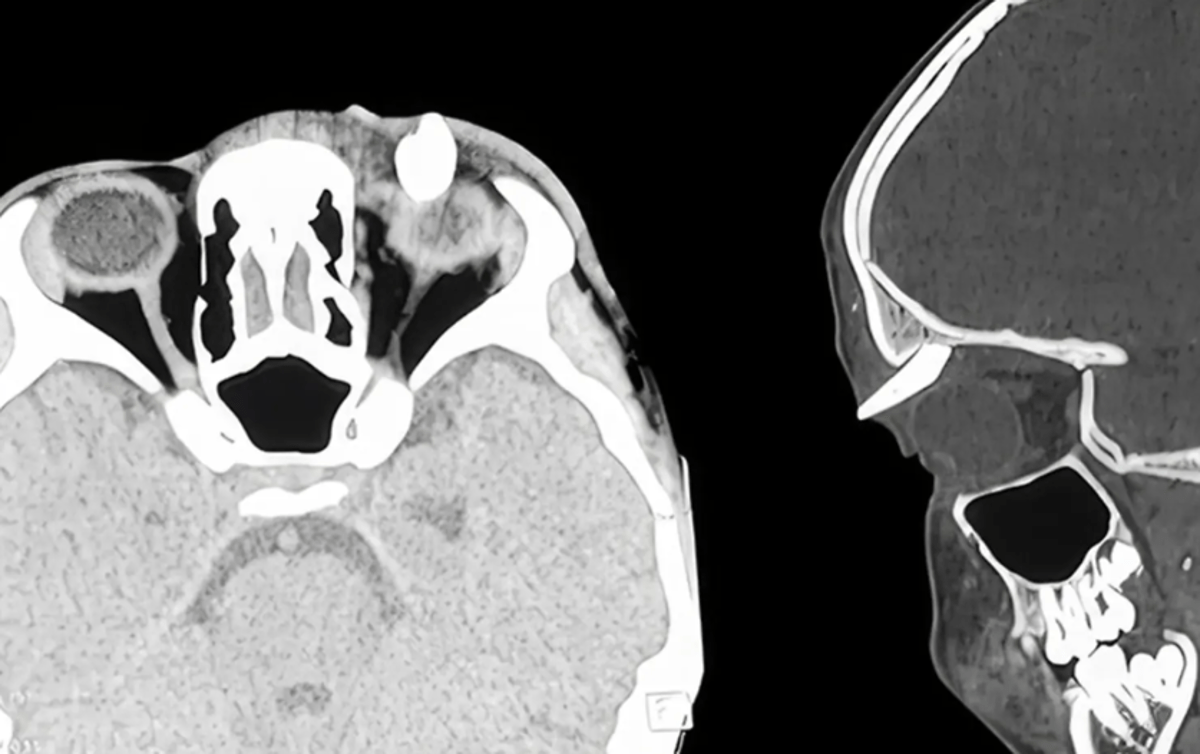
A routine examination at an Indian eye hospital revealed an extraordinarily rare medical condition never previously documented in the same location
What began as a seemingly harmless swelling beneath a teenager’s eye turned into a medical case so unusual that it was later documented in the specialist journal Ophthalmology.
The patient, a 16-year-old boy from India, had noticed persistent puffiness below his eye for months. The condition was not causing significant vision problems, and initially appeared unremarkable. Concern escalated only after two small whitish protrusions became visible beneath his eyebrow, prompting his family to seek medical attention.
At Aravind Eye Hospital, physicians investigating the unexplained swelling uncovered a finding unlike anything previously reported. Hidden behind the upper orbital region was a fully developed canine tooth.
The discovery emerged after doctors ordered a computed tomography scan, which identified the nature of the structure concealed within the tissue surrounding the eye. Imaging revealed that the mass was not a tumor or cyst, but an actual tooth that had developed far from its normal location.
Surgeons subsequently removed the tooth, and further analysis confirmed it was an ectopic tooth, a mature canine that forms outside the dental arch. While ectopic teeth are recognized as a rare developmental anomaly, they are typically found elsewhere in the facial region.
Medical literature has documented such teeth inside the maxillary sinus and the nasal cavity, among other locations. The position identified in the Indian teenager, however, appears to be unprecedented.
According to Dr. Meghana Tanwar of Aravind Eye Hospital, the case represents a first in the medical record.
“To the best of our knowledge, this is the first and currently the only ectopic tooth reported in the superior orbit, not just for us but worldwide,” Tanwar said. “We were very surprised.”
The case adds a new entry to the limited body of research on ectopic teeth and highlights how unusual anatomical abnormalities can remain undetected for extended periods, even when symptoms appear relatively minor.
THE LATEST NEWS

France Sees a Covid Uptick, but Experts Say Europe Is Not Facing a New Crisis
3 October 2026
French surveillance data show a rise in infections from very low levels, while a fragmented mix of SARS-CoV-2 variants continues...
Read More
Teen’s Eyelid Swelling Leads Doctors to Discover Tooth Beneath Eye
3 October 2026
A routine examination at an Indian eye hospital revealed an extraordinarily rare medical condition never previously documented in the same...
Read More
Mary Louise Weller, Animal House Star, Dies at 79
3 October 2026
The actress best known for playing Mandy Pepperidge in John Landis' comedy classic leaves behind a career that spanned film,...
Read More

Shivon Zilis Says Elon Musk Ended Relationship Without Warning
3 October 2026
A deeply personal message posted on X details the end of Shivon Zilis' relationship with Elon Musk, reflecting on love,...
Read More

Christa Pike on Life Support After Surviving Failed Tennessee Execution
2 October 2026
The 50-year-old death row inmate remains unconscious and on a ventilator after surviving two rounds of lethal injection in Nashville,...
Read More

(Photo: © AndKronos)














You must be logged in to post a comment Login