
International-News
France’s Political Crisis Deepens as Voters Lose Faith in 2027 Election
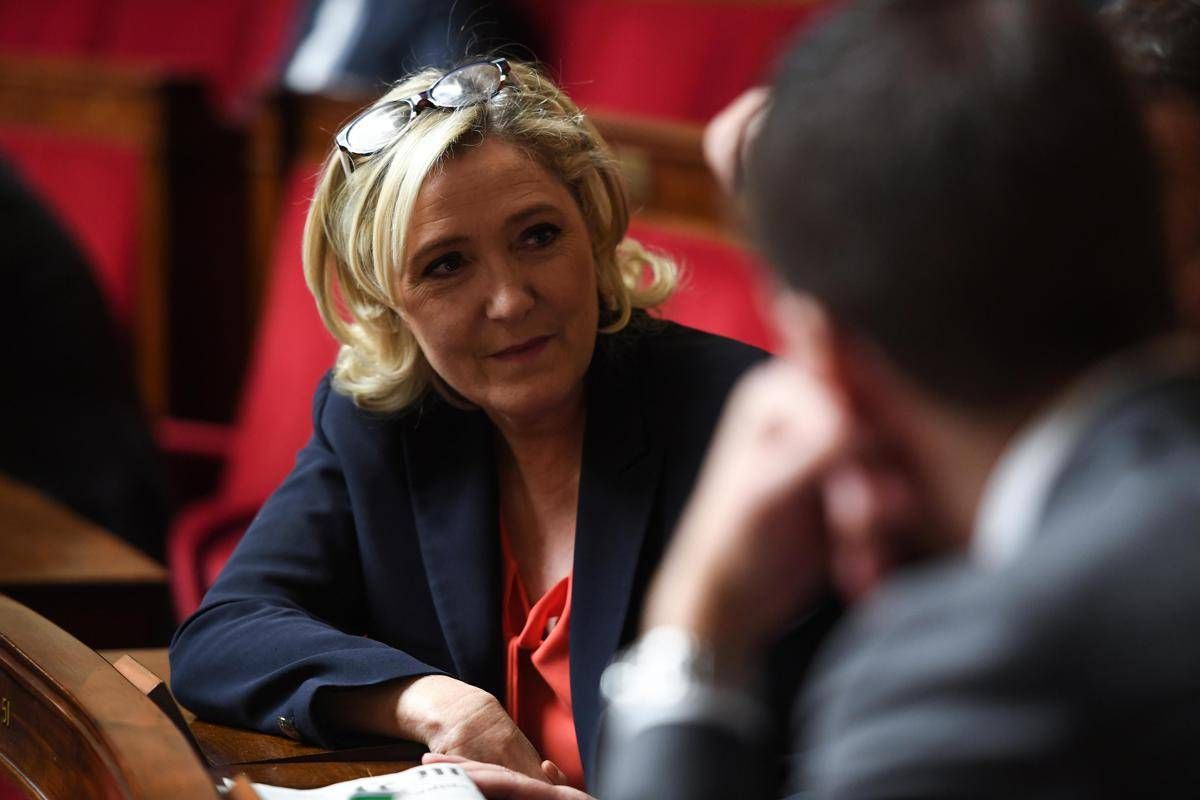
A new national survey reveals widespread anger, economic anxiety and distrust of institutions. Marine Le Pen leads the field of preferred political figures, but the National Rally faces growing resistance over its democratic credentials
France is heading toward its 2027 presidential election with a striking contradiction: Marine Le Pen leads the field of preferred political figures, but confidence in the ability of the vote to change the country’s direction is remarkably low. Only 21% of respondents believe the presidential election can solve France’s problems.
The figures capture a country increasingly defined by anger, economic insecurity and distrust of its political institutions. The latest edition of Fractures françaises, the annual survey conducted by Ipsos BVA-CESI École d’ingénieurs in partnership with Le Monde, Cevipof, the Jean-Jaurès Foundation and the Institut Montaigne, paints a picture of a deeply fragmented electorate approaching a decisive political contest with little optimism.
Now in its 14th year, the study is based on interviews with 3,000 people conducted between October 30 and November 3. Its central finding is stark: 89% of respondents believe France is in decline. For the first time, those who describe themselves as angry outnumber those who say they are simply dissatisfied. The former account for 49% of the population, compared with 48% who identify as dissatisfied.
The mood is not driven by a single political issue. Economic pressure, concerns about violence and a growing sense of social division are feeding into a broader loss of confidence in the country’s future.
The cost of living remains the dominant concern
For millions of French households, the most immediate problem is still making ends meet. Purchasing power is the leading concern in the survey, cited by 47% of respondents. The figure has risen from 36% in 2025, reinforcing the central role of household finances in shaping public discontent.
Crime and public debt and deficits are each cited by 20% of respondents. Immigration and environmental protection follow, both at 19%.
The findings were collected as demonstrations over the cost of living and other grievances continued across France. The economic pressure reflected in the survey is therefore also visible in the country’s streets, where anger has become an increasingly prominent feature of public life.
The perception of violence is another major source of concern. Ninety-one percent of respondents believe violence in French society is increasing. Yet that perception does not translate into widespread acceptance of violent behavior: 78% say violence is not a normal way to defend one’s interests.
A crisis of confidence in national institutions
Distrust extends across much of the political system. Only 9% of respondents say they have confidence in political parties. Trust is also low in the presidency, at 19%, and among members of parliament, at 20%.
The contrast with local government is striking. Mayors retain the confidence of 73% of respondents, the highest level recorded for that institution since the survey began. The gap suggests that political credibility has not disappeared altogether, but is considerably stronger at the local level than in national institutions.
The media also face a difficult picture, with confidence standing at 30%, down four percentage points from the previous year.
More broadly, 81% of respondents believe their ideas are not adequately represented in the political system, while 88% think politicians primarily act in their own interests. The sense of exclusion is accompanied by a bleak assessment of the country’s social cohesion: 69% say the forces dividing French society are stronger than those bringing people together.
Le Pen leads, but the National Rally faces resistance
The approaching presidential election offers no obvious remedy for that disillusionment. Marine Le Pen is the leading figure in the survey’s ranking of political personalities, but the electorate remains fragmented. A quarter of respondents express no preference among the potential candidates presented to them.
The National Rally (RN) appears to be benefiting from the broader political climate, yet its support comes with significant reservations. Fifty-three percent of respondents consider the party dangerous to democracy, up from 49% in 2025. Another 52% say it fuels violence, compared with 50% a year earlier.
The figures point to a difficult balance for the party: it has established itself as a leading force in the presidential race, but a substantial share of the electorate remains wary of its political project.
Concern about the election itself is also widespread. Sixty-one percent of respondents say they are worried about its outcome, while only 21% believe the presidential vote can resolve the country’s problems. Even among National Rally supporters, the most optimistic group, confidence reaches just 37%.
France is therefore approaching the 2027 campaign with a political landscape in which the leading candidates may be identifiable, but the electorate’s faith in the institutions and in the power of elections to deliver change remains deeply uncertain.
(Photo: © AndKronos)







You must be logged in to post a comment Login