
International-News
Trump ties $5,000 checks to GOP victory, prompting fiscal and legal scrutiny
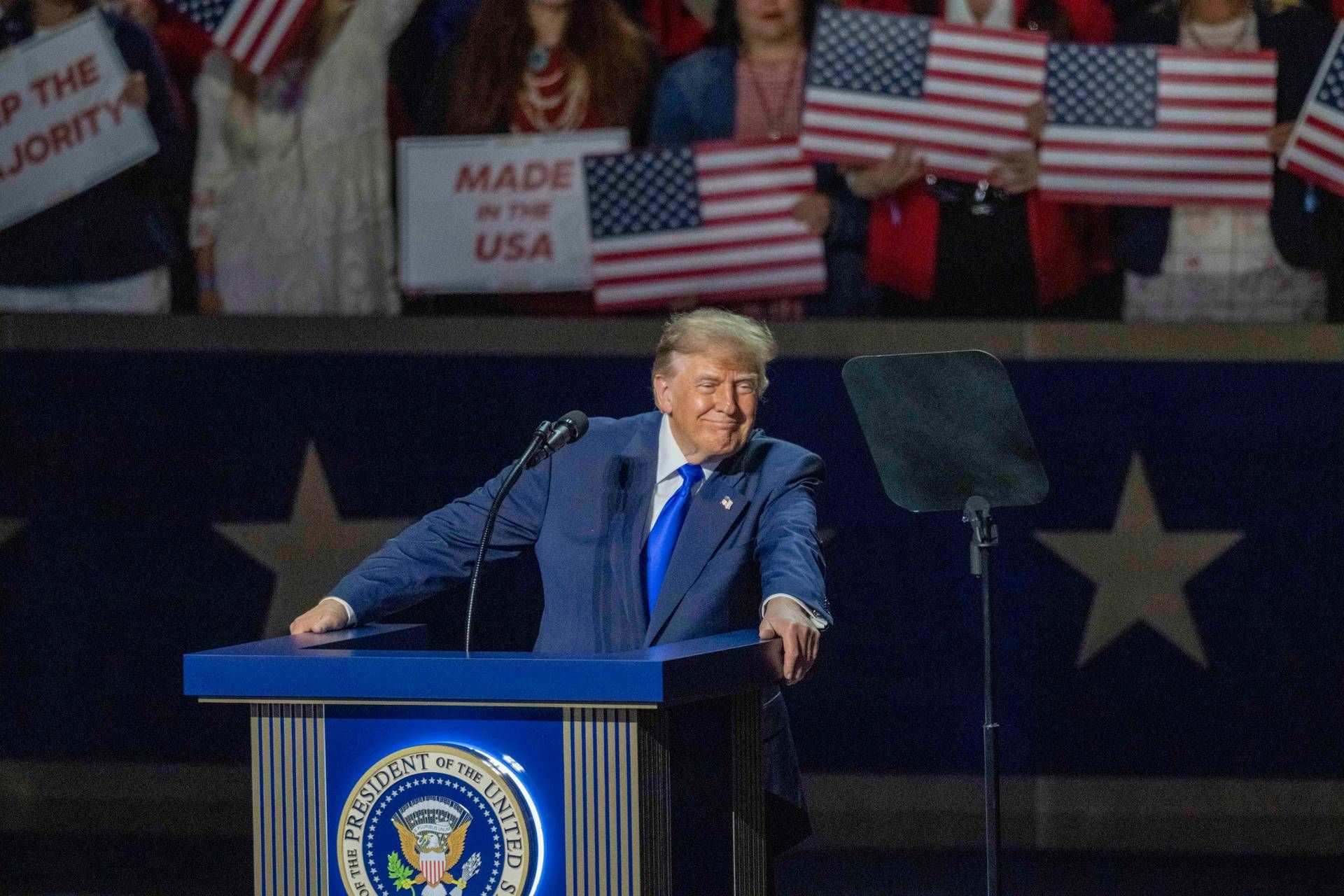
The president promises $5,000 per adult if Republicans keep Congress, prompting scrutiny over funding, legality and political implications
President Donald Trump has unveiled a new proposal he calls the “Trump dividend”: a $5,000 payment to every American adult, contingent on the Republican Party maintaining control of Congress in the upcoming midterm elections. With roughly 240 million adults in the United States, the measure would carry an estimated federal cost of $1.2 trillion.
The announcement comes at a time when the United States faces an annual deficit approaching $2 trillion and a national debt that recently surpassed $40 trillion. Trump did not specify how the payments would be financed, a point that drew immediate questions — including from conservative outlets — in the hours following his speech at the GOP convention in Dallas.
Trump framed the proposal using the analogy of a corporate dividend, arguing that the strength of the U.S. economy under his administration allows for a redistribution of prosperity to citizens. Fiscal experts, however, note that dividends are typically issued when an entity has a surplus. Marc Goldwein, policy director at the Committee for a Responsible Federal Budget, observed that the federal government continues to operate with a substantial annual deficit.
Congressional authority and constitutional limits
The plan also raises institutional considerations. Under the U.S. Constitution, Congress holds the power of the purse, meaning federal spending must be authorized through legislation. As former New Mexico prosecutor John Day explained to the New York Times, the president cannot unilaterally order such payments through executive action.
For this reason, the “Trump dividend” would require congressional approval — a significant factor given that Trump presented the measure as a reward tied to a Republican victory in November.
Trump referenced a previous initiative: the “warrior dividend” of $1,776 distributed to members of the armed forces. That payment, however, was funded through existing Pentagon resources already approved by Congress.
Vance’s clarification: funding and eligibility
Vice President JD Vance sought to clarify the financial basis of the plan during an interview with Fox News, stating that the dividends would be funded through tariff revenues. He also indicated that the payments would not be extended to high‑income Americans — a new condition not mentioned in Trump’s initial formulation and one that leaves open questions about eligibility criteria.
Trump had floated a similar idea last year: a $2,000 tax rebate funded by tariff proceeds. That proposal did not advance in Congress, despite Republican control at the time.
Political dimension and legal boundaries
The president explicitly linked the dividend to the GOP retaining control of Congress, prompting debate over the political nature of the announcement. Federal law prohibits conduct that could constitute vote buying. Legal experts consulted by the New York Times consider it unlikely that such a proposal would meet that threshold.
Day draws a distinction between a bribe and a campaign promise: “A promise to lower taxes provides financial reasons to support a candidate, but that does not make the promise itself a bribe.”
In his interpretation, a measure of this kind would benefit Americans regardless of how they vote, placing it within the realm of political messaging rather than unlawful inducement.
THE LATEST NEWS
[recent_post_slider design=”design-07″ show_author=”false” slider_height=”390″ lazyload=”progressive” limit=”6″ category=”11728″]
(Photo: © AndKronos)

UPDATE Ukraine Confirms Oleshky Ceasefire as Humanitarian Corridor Set to Open in Russian-Occupied Town
Kyiv formally backs the localized truce announced by the White House, paving the way for civilian evacuations and aid deliveries...
AGGIORNAMENTO Ucraina, accordo per il cessate il fuoco a Oleshky: c’è la conferma di Kiev
La tregua è prevista dal 27 ottobre nella cittadina sulla riva sinistra del Dnipro, di fronte a Kherson, a soli...


Eni proroga il price cap, ma il gasolio è aumentato di 65 centesimi da febbraio
Il tetto resta fissato a 2,25 euro al litro per il diesel e a 1,99 euro per la benzina. La...

F1 Austin, orari e dove vedere le qualifiche Sprint in tv
Venerdì 23 ottobre la Formula 1 torna in pista negli Stati Uniti: appuntamento alle 23 per decidere la griglia della...


Omicidio a Vergiate, 53enne uccide la compagna e si costituisce
La donna, 36 anni e originaria della Colombia, è stata trovata morta nella camera da letto a Vergiate. L’uomo si...

“Putin Can Kill Anyone”: Pussy Riot’s Warning to Europe
In an interview with Adnkronos ahead of the Italian return of Riot Days, Pussy Riot members Masha Alyokhina, Eric Breitenbach,...

MotoGP Australia, orari e dove vedere qualifiche e Sprint in tv
Si corre a Phillip Island sabato 24 ottobre: in programma le qualifiche ufficiali e la gara che assegna i primi...


Terremoto nel Tirreno Meridionale, scossa di magnitudo 5 e allerta maremoto
Sono 25 gli eventi sismici registrati dalle 11. A Trapani evacuato in via precauzionale il Palazzo di giustizia Uno sciame...

Iran, Usa e Israele valutano nuovi raid dopo il 3 novembre
Le indiscrezioni del New York Times parlano di piani per una nuova campagna militare. Teheran avverte che la risposta potrebbe...

Tom Skerritt Dies at 93, Leaving a Legacy From Alien to Picket Fences
The Emmy-winning actor built one of Hollywood’s most durable careers, moving from landmark films to acclaimed television while remaining a...
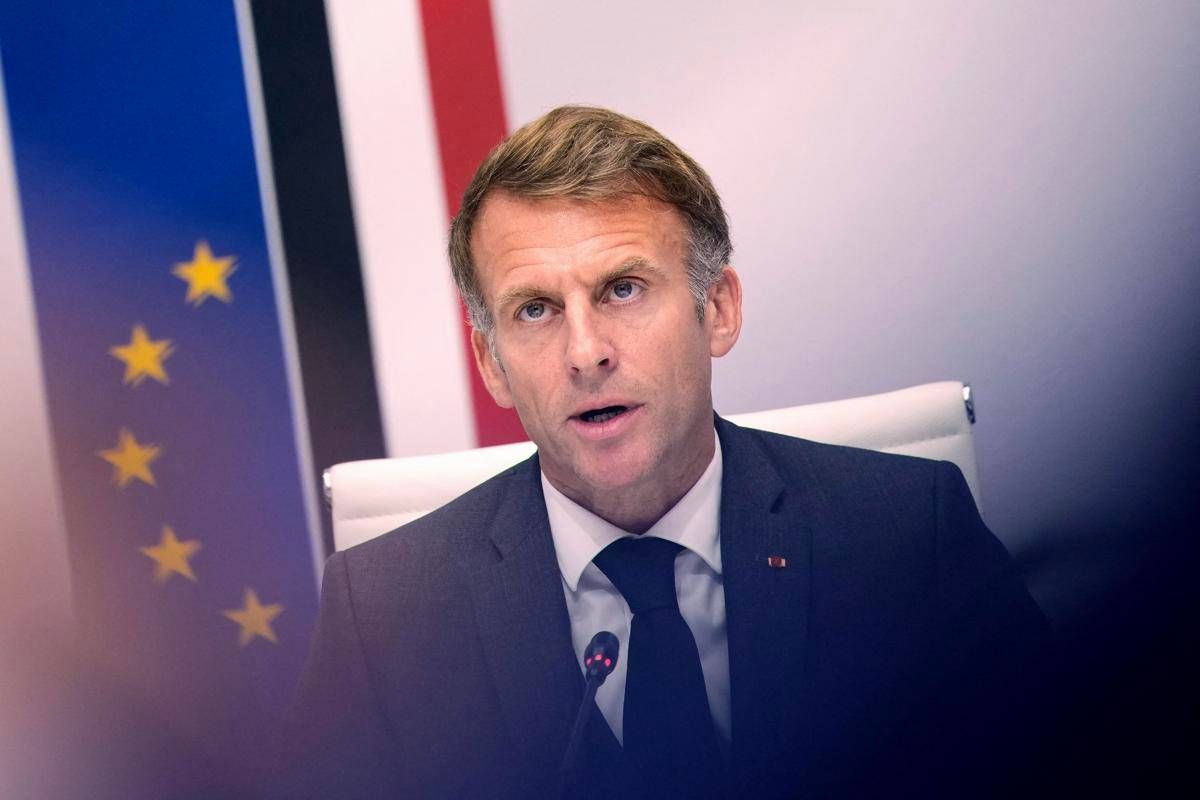
Macron Accuses Far-Left Groups of Plotting to Overthrow Republic
After convening France’s security council and intelligence chiefs, the president linked Saturday’s violence to organized far-left groups and pledged tighter...

Judi Dench Says Vision Loss Has Ended Her Stage and Film Career
More than a decade after being diagnosed with age-related macular degeneration, the Oscar-winning actress says she can no longer perform,...

Hamas minaccia un nuovo 7 ottobre: «Possiamo colpire ovunque»
L’avvertimento sarebbe stato trasmesso a Israele attraverso il coordinatore umanitario dell’Onu Ramiz Alakbarov. Nel mirino, secondo il messaggio, anche Cisgiordania...


Sondaggio Emg, centrodestra al 44% e centrosinistra al 43,1%
Fratelli d’Italia resta il primo partito con il 26% dei consensi. La rilevazione per Linea Notte su Rai3 fotografa anche...
Trump Deposition Ordered in BBC Defamation Fight Over Jan. 6 Broadcast
A Florida judge has ordered President Donald Trump to testify under oath in his lawsuit against the BBC, rejecting further...

Tempesta Harry, all’Italia 74,9 milioni dall’Ue per quasi 3 miliardi di danni
Il Parlamento europeo approva il contributo per Sicilia, Sardegna e Calabria. Le risorse coprono una quota limitata delle perdite e...