
International-News
Trump-Netanyahu Iran Tensions Expose Rift Over Renewed War
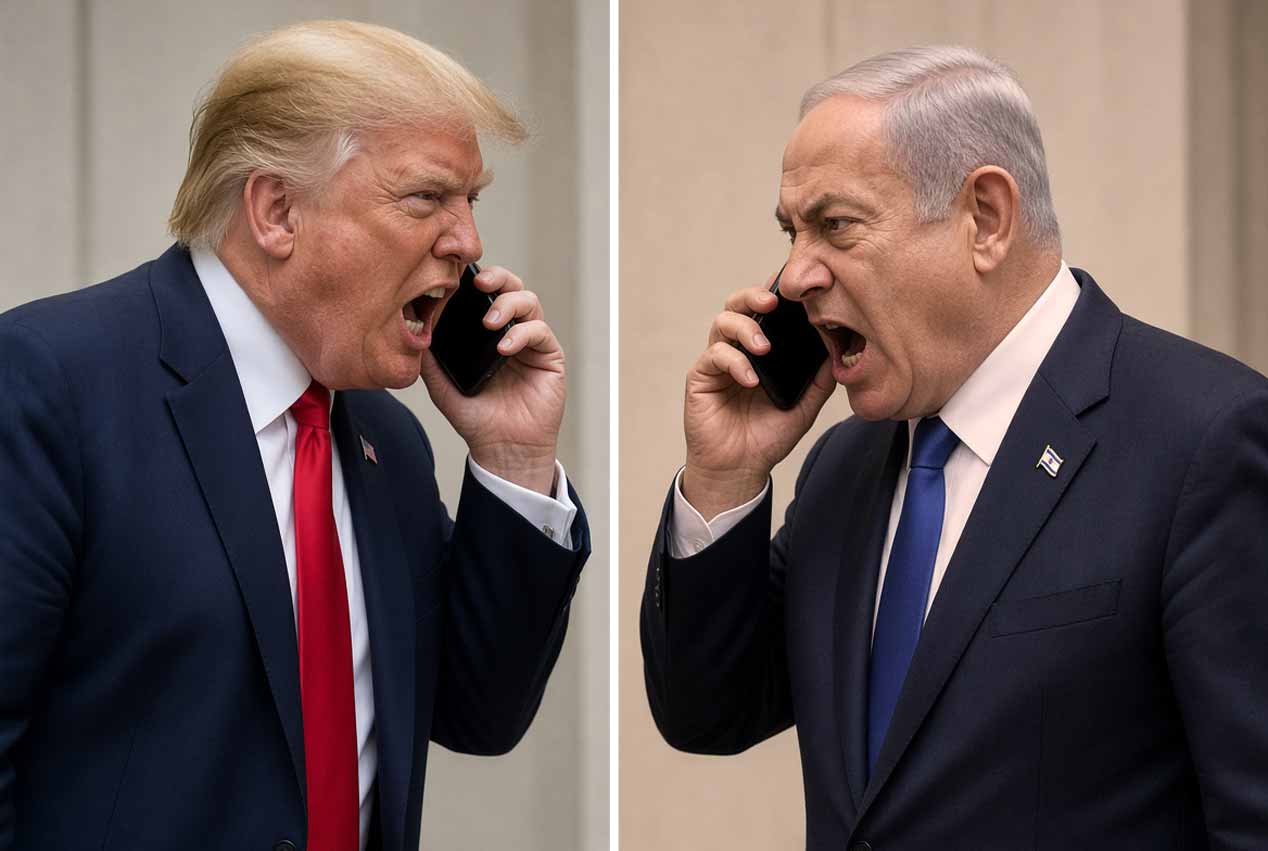
A reportedly explosive phone call between the two leaders has highlighted disagreements over whether to resume military action against Tehran. Netanyahu’s office denies the account, as Iran steps up its rhetoric and Washington faces new security concerns
Washington and Jerusalem are reportedly at odds over whether to resume military operations against Iran, with a tense phone conversation between Donald Trump and Benjamin Netanyahu exposing the divisions at the heart of their strategy toward Tehran. An Israeli source described the exchange as a “furious argument,” according to Ynet. Netanyahu’s office has categorically rejected that account, calling it “fake news” and “nonsense.”
The disagreement reportedly centered on the possibility of restarting the war against the Islamic Republic. Sources familiar with the conversation told the Israeli news outlet that the call, held over the weekend, was particularly difficult and heated. A senior Israeli official, however, acknowledged that the conversation took place while insisting that it was “not tense at all.” Netanyahu’s office also maintained that there had been nothing difficult about the exchange.
The competing accounts emerge as Washington weighs the effectiveness of economic pressure against the prospect of further military action. Secretary of State Marco Rubio recently argued in Paris that the sanctions imposed on Iran were making additional large-scale attacks unnecessary. That position has drawn a sharp response from Tehran.
Iranian Foreign Minister Abbas Araghchi took aim at both Rubio and his predecessor, Mike Pompeo, accusing Washington of recycling a policy of economic coercion that he described as misguided and inhumane.
“Eight years ago, a cartoon character like Pompeo said that Iranians had to obey the White House’s diktats ‘if they wanted to eat.’ Today Rubio, whose fellow Cubans are victims of the same policy, repeats that nonsense,” Araghchi wrote on X.
“Let us set aside the inhumanity. It is delusions that produce failed American policy,” he added, responding to Rubio’s remarks about the impact of sanctions on Tehran.
The diplomatic confrontation is unfolding alongside growing security concerns in the United States. Treasury Secretary Scott Bessent has moved from his home in the Washington area to a military base after receiving threats against his life from Iran, according to The New York Times, which cited three people familiar with the matter.
The newspaper reported that Iranian plans targeting current and former U.S. officials had reached a “more advanced stage.” The precise nature and seriousness of the threat against Bessent, however, remain unclear.
Bessent has been one of Washington’s leading figures in the economic campaign against Tehran since the outbreak of the war in the Middle East. He has repeatedly pledged to pursue the “economic strangulation” of the Islamic Republic through sanctions, making him a prominent figure in the administration’s pressure strategy.
The concerns extend beyond the Treasury secretary. Last month, U.S. Director of National Intelligence Jay Clayton warned that Iran had substantially increased its efforts to target American citizens, both in the Middle East and elsewhere.
Meanwhile, tensions around one of the region’s most sensitive maritime routes have added another element of uncertainty. The United Kingdom Maritime Trade Operations (UKMTO) agency said it had received a report of an incident involving an oil tanker in the Strait of Hormuz.
The circumstances remain unclear. Authorities have not yet established the condition of the crew, the extent of any damage to the vessel or the potential environmental impact.
Photo created using AI Grok, x.com


Trump-Netanyahu Iran Tensions Expose Rift Over Renewed War
A reportedly explosive phone call between the two leaders has highlighted disagreements over whether to resume military action against Tehran....
Stacy Keach, the Actor Behind Mike Hammer, Dies at 85
The American actor, who also held Polish citizenship, built a career spanning Broadway, Hollywood and television, earning a Golden Globe...
House Rejects Pete Hegseth Impeachment Bid; Trump Celebrates
The 211-204 vote defeats a resolution introduced by Republican Thomas Massie, who accused the defense secretary of abusing his authority...
Impeachment di Pete Hegseth, la Camera boccia la procedura
La risoluzione è stata respinta con 211 voti contrari e 204 favorevoli. A favore del segretario alla Difesa quasi tutto...

Terremoto in Sicilia, scossa di magnitudo 4.1 al largo della costa
Il sisma è stato registrato alle 6.12 a una profondità di 8 chilometri. Nella stessa area altre cinque scosse, l’ultima...
“Delusional, Divisive and Shameful”: Eisenkot Turns on Netanyahu
The Yashar leader says the caretaker prime minister is unfit to remain in office and has called off a meeting...

“Your Ratings Are a Loser”: Trump Mocks CNN’s Kaitlan Collins VIDEO
The president lashed out at the CNN correspondent after she asked whether he would keep Defense Secretary Pete Hegseth if...

Thomas Markle Ordered to Undergo Mental Competency Exam
The 82-year-old father of Meghan, Duchess of Sussex, faces federal charges involving alleged possession of child sexual abuse material. A...

Martina Carbonaro, in aula i genitori. Tucci: «Non ero in me»
La testimonianza si è svolta dietro un paravento. A fine udienza i familiari della ragazza hanno rivolto parole durissime all’imputato...


Allerta meteo 11 novembre, arancione in Emilia-Romagna
La Protezione civile segnala rischio idrogeologico sulla montagna emiliana centrale. Allerta gialla anche in Liguria e Toscana per temporali, rischio...
Card ricaricabili Atac, da oggi il debutto in tre stazioni
Si parte dalle biglietterie di Lepanto, Ottaviano e Conca d’Oro. Il nuovo supporto permette di caricare più titoli di viaggio...
Jensen Huang Scandal Tests Nvidia’s Dependence on Its Founder
An affair involving a Singapore-based executive under scrutiny over Nvidia chip exports has collided with U.S.-China technology policy. The crisis...
Pete Hegseth Calls Impeachment Motion a “Farce” as House Weighs Vote
The defense secretary accuses the media of hating Donald Trump more than they love the country and the armed forces....

Toukie Smith, Model Turned Actress, Dies at 74
A prominent face in 1970s fashion, Smith later became known to television audiences as Eva Rawley on the sitcom 227....

Parkinson, a Pisa arriva la tecnologia che tratta i tremori senza bisturi
Exablate Prime sarà consegnata il 13 novembre all’ospedale pisano: trattamento in una sola seduta e senza anestesia, con copertura del...
Minaccia iraniana, gli Usa spostano aerei dalla base di Mildenhall
Un velivolo è stato trasferito dalla base britannica della Raf. Altri aerei cisterna sono stati ridislocati in Germania e in...
You must be logged in to post a comment Login