
International-News
Jensen Huang Scandal Tests Nvidia’s Dependence on Its Founder
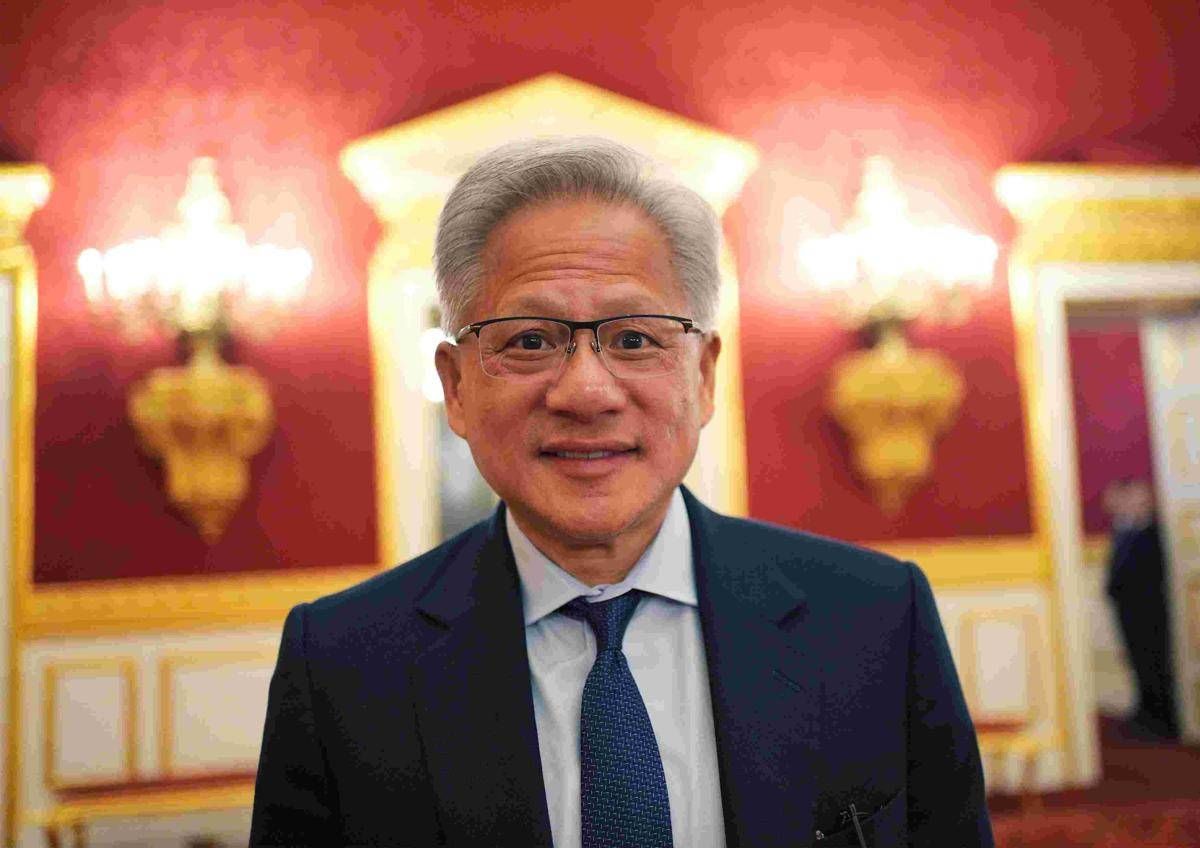
An affair involving a Singapore-based executive under scrutiny over Nvidia chip exports has collided with U.S.-China technology policy. The crisis is exposing a deeper vulnerability: the company has no clear successor to the man who built it
Nvidia’s board can fire Jensen Huang. What it has not done is prepare a convincing answer to the question of who could replace him.
That dilemma has become urgent as the company’s founder and chief executive confronts a scandal with consequences extending well beyond his private life. Huang has acknowledged an affair with a woman identified by U.S. intelligence as a Chinese spy, according to the account provided by the investigation. The woman, Alice Huang, is an executive at Singapore-based Megaspeed, a company under scrutiny over suspected violations of U.S. restrictions on advanced technology exports to China. The affair has brought personal conduct, corporate governance and national security into the same crisis — at a company whose influence reaches across the global artificial intelligence industry.
The stakes are unusually high because Nvidia is so closely identified with its founder. Huang has built the company into the indispensable supplier of the chips powering the AI boom, cultivated relationships with political leaders and become an influential voice in Washington’s technology policy. Yet the board has no chair, no recognized second-in-command and no established succession plan capable of matching the breadth of his responsibilities.
For now, the board has opened an investigation while publicly expressing confidence in Huang. Donald Trump, who has made the Taiwanese-born executive one of his preferred advisers on artificial intelligence, has defended him while confirming that the FBI is examining the matter. Wall Street has been less accommodating. Nvidia shares fell 4.3% in the latest session, wiping out another $190 billion in market value, and shareholders have already filed an initial class-action lawsuit.
The scandal is also unfolding against a much larger dispute over whether American companies should be allowed to sell advanced computing technology to China. The allegations surrounding Megaspeed are giving fresh ammunition to those who argue that access to Nvidia hardware must be restricted, even as Huang has spent years pressing the U.S. government to loosen export controls.
A company built around one person
The concentration of power inside Nvidia is visible in the way Huang runs the company. At its Santa Clara headquarters, he works from an enormous oval table, with his closest collaborators seated in front of him and other employees positioned behind them. The room is too crowded to resemble the traditional office of a chief executive. It functions more like an operations center, where Huang manages more than 60 direct reports.
He asks managers to send emails identifying the five most important issues occupying their attention. He involves himself in strategic decisions and operational details, including employee compensation. There is no widely recognized number two, and the company has never established a succession process comparable to the one Apple put in place before Steve Jobs stepped down in 2011.
That dependence is reflected in Nvidia’s corporate structure. The board has no chairman. Instead, it has a lead independent director, Stephen Neal, the former head of the law firm Cooley. Nvidia presents the position as a mechanism for independent oversight, but several directors have worked alongside Huang for decades, some from before the company became the giant it is today. Its governance structure, in other words, has not evolved at the same pace as the business.
Huang owns just 3.6% of Nvidia. He does not control a majority of its shares and has not secured special voting rights of the kind held by Mark Zuckerberg or Elon Musk. The board therefore has the authority to remove him. The problem is identifying someone capable of taking over.
Names already circulating in the U.S. media include Colette Kress, Nvidia’s chief financial officer; Debora Shoquist, who has extensive experience in operations and supply-chain management; and Bill Dally, a central figure in the company’s scientific leadership. Each brings important expertise. None is an obvious replacement for Huang’s combination of technological authority, industrial vision, political relationships and commercial charisma.
His children, Madison and Spencer, both hold important positions at the company, but neither appears to offer a credible immediate succession option. Huang has said that if they aspire to lead Nvidia, they will have to earn the position.
The comparison with Apple is difficult to avoid. When Jobs finally left the company in 2011, Tim Cook had spent years preparing to succeed him. Nvidia has made no equivalent investment in a transition. It faces what corporate governance experts call key-person risk: the danger that a company’s value becomes excessively dependent on one individual. Founders are often rewarded by investors precisely because they are unlike conventional executives. Replacing them can expose how much of the enterprise rests on their presence.
The Singapore connection and the export investigation
The immediate crisis has its roots in a meeting in Taipei in June 2024, during Computex, one of the technology industry’s major annual events.
One evening at a restaurant, Alice Huang told a group of executives that she could persuade Nvidia’s founder to join them. She sent him a message. Jensen Huang arrived shortly afterward, ordered a whiskey and spent time with the group. A photograph shows the two sitting close together. At the time, Megaspeed’s success appeared to be one more element in the expansion of Nvidia’s business ecosystem.
The company, which operates from Singapore and grew out of the Chinese group 7Road, provides computing capacity through data centers across Southeast Asia. Its customers include Chinese companies, among them Alibaba.
By the fall of 2025, however, U.S. authorities were asking increasingly serious questions about where Megaspeed’s processors were ending up. A report published in September 2026 by C4ADS, a research organization specializing in opaque commercial and financial networks, described channels through which advanced chips could reach Chinese users despite American export restrictions. Megaspeed was among the companies examined. According to the report’s analysis, it imported $4.6 billion worth of Nvidia hardware between 2022 and 2025 through an ownership structure with possible links to China.
The Information has separately reported that chips secretly sent to China could be worth at least $7.5 billion.
Megaspeed denies violating export rules. Beijing rejects the allegation that Alice Huang is a spy. And there is, so far, no evidence that Jensen Huang knowingly helped an intelligence operation or deliberately facilitated an illegal transfer of technology.
But the questions surrounding the company are not limited to the physical movement of processors. As Michelle Nie and Daniel Remler of the Center for a New American Security have observed, Chinese companies can obtain access to advanced chips through cloud-computing services based in third countries, without the hardware itself ever crossing into China. Preventing a computer from crossing a border does not necessarily prevent its computing power from being used on the other side.
There are also multiple ways to evade export controls. A Georgetown University estimate puts the number of advanced chips illegally brought into China in 2024 and 2025 at more than 450,000.
The investigation has raised further questions about the handling of the case in Washington. According to reporting by The New York Times, Nvidia’s general counsel, Tim Teter, contacted a senior Commerce Department official while an investigation into Megaspeed was underway. The administrative inquiry was halted, and the Justice Department took over the investigation.
That sequence does not establish that Nvidia caused the inquiry to be stopped or exerted improper pressure. There is no smoking gun. Nor does it demonstrate that Huang was personally involved in any effort to circumvent export restrictions. But the timing has added to the scrutiny surrounding the company and its access to the highest levels of government.
The political cost of Nvidia’s influence
For years, Huang has argued that the United States should ease restrictions on exports to China. His case is that selling American technology to Chinese customers serves U.S. interests: better to keep China dependent on the Nvidia ecosystem than force it to develop a domestic alternative. China, he has argued, will eventually find one if American products are shut out.
There is a strategic logic to that position. The Center for Strategic and International Studies has also noted that Western export controls have accelerated Beijing’s drive for semiconductor self-sufficiency.
But the opposing argument is equally central to the debate: allowing China to acquire advanced computing hardware could help it develop artificial intelligence capabilities with military and intelligence applications. The dispute is not simply about market access. It concerns the relationship between commercial competition and national security.
Huang, once the most prominent advocate of the more permissive approach, is now caught in a scandal that strengthens the case made by those who favor tighter restrictions.
His influence has extended far beyond Nvidia’s sales strategy. He became a personal interlocutor of Trump and helped shape the administration’s thinking on artificial intelligence. He was also a central figure in technology diplomacy, from relations with Gulf countries to negotiations involving China. Nvidia itself had become a symbol of American economic power, while its founder occupied an unusual position between corporate leadership and national policymaking.
The political environment has now turned less hospitable. After the midterm elections, Huang risks facing pressure from Democrats seeking stronger controls on major technology companies and from Republican China hawks who criticize his more accommodating approach to exports. Three House committees led by Republicans have requested a closed-door hearing. Senator Elizabeth Warren and other lawmakers are pressing for tougher restrictions on semiconductor exports.
The personal scandal therefore threatens something more consequential than Huang’s standing inside Nvidia. It could undermine his credibility as a trusted interlocutor for the White House and the U.S. government.
The financial scale of the company helps explain why his position has become so consequential. Nvidia’s stock has risen almost thirteenfold, and the company became the first to surpass $5 trillion in market capitalization before the latest declines associated with the midterm-election fallout and the controversy surrounding Megaspeed. Analysts project that revenue could exceed $400 billion this year, compared with less than $27 billion four years ago.
Oracle founder Larry Ellison has described how he and Elon Musk had to plead with Huang to sell them more processors. The obstacle was not the price. Nvidia simply did not have enough chips to meet demand.
That extraordinary position was not achieved through hardware alone. As Chris Miller explains in Chip War, Huang’s defining insight was recognizing earlier than his competitors that graphics processing units could do far more than make video games look realistic. In 2006, Nvidia introduced CUDA, software that allows programmers to use GPUs for applications beyond graphics. It was a costly bet: according to a company estimate cited by Miller, Nvidia had invested at least $10 billion in developing the software by 2017. Huang distributed it free of charge, with one essential condition: it worked only with Nvidia chips.
The breakthrough became apparent in 2012, when AlexNet, a neural network trained using two Nvidia GPUs, demonstrated the potential of accelerated computing for machine learning. A decade later, ChatGPT triggered a surge in demand for computing power. Nvidia was positioned to sell the infrastructure required to build the next generation of AI systems.
Its success also rests on a far broader industrial network than Huang alone. Bill Dally is one of the company’s leading scientific figures; Morris Chang founded Taiwan Semiconductor Manufacturing Company, or TSMC, which manufactures the most advanced semiconductors. Nvidia designs its chips in the United States, has much of its hardware manufactured in Taiwan, and relies on complex systems assembled and installed in data centers around the world. Its strength depends on the alignment of manufacturing capacity, supply chains, energy, capital and government policy.
Alessandro Aresu describes this model as “political capitalism”: a system in which corporate strategy and national security interests are increasingly difficult to separate. It is also the system that transformed Huang from a technology entrepreneur into a figure who can influence presidential decisions. The same proximity to power that helped Nvidia expand now makes the company vulnerable to the consequences of a political and intelligence scandal.
The founder who became indispensable
Huang’s personal story helps explain the unusual authority he commands inside the company. Born in Taiwan, he spent part of his childhood in Thailand before his parents sent him and his older brother to the United States in 1972, when he was 9. He was enrolled at the Oneida Baptist Institute in Kentucky, which his family believed to be a prestigious boarding school. In reality, the institution also housed teenagers with serious disciplinary problems.
His roommate was 17 and showed him scars from knife wounds sustained in fights. The older boy could not read. Huang taught him; in return, he learned weight training. He began doing 100 pushups every night. Small and thin, the young Asian immigrant became a target for bullies. His path to Silicon Valley was not the familiar story of a prodigy moving effortlessly from elite school to startup success. It involved difficult circumstances, menial work and an almost obsessive determination.
While studying electrical engineering at Oregon State University, he worked at the Denny’s restaurant chain. “Nobody cleaned bathrooms better than I did,” he has recalled. It was there that he met Lori, who would become his wife. After earning a master’s degree at Stanford, he returned to a Denny’s in 1993, at age 30, with two fellow engineers, Chris Malachowsky and Curtis Priem. They discussed starting a company. Their initial plan was to develop graphics chips for video games. Thirty-three years later, those semiconductors had become the engine of the AI economy.
Huang’s public image has grown alongside the business. His black leather jacket has become as recognizable a uniform as Steve Jobs’s black turtleneck. Nvidia conferences resemble rock concerts, and in Taiwan he is frequently surrounded by people asking for autographs and photographs. One of his jackets sold at auction for $1 million. His presentations, by contrast, have been described as considerably less electrifying than those of Apple’s co-founder.
The contrast between the founder’s public image and the company’s immense industrial power is striking. Nvidia is no longer simply a chipmaker selling to technology companies. It also invests directly in businesses that are, or may become, its customers, helping finance an ecosystem that in turn buys its products. The arrangement can accelerate growth, but it also raises questions about the financial sustainability of the AI investment boom.
The company’s future depends on more than Huang’s ability to navigate the current scandal. It will also be shaped by how long investment in AI infrastructure continues, how Nvidia responds to competition from AMD and from chips developed internally by major cloud providers, whether enough energy can be secured to power data centers, and how much room governments leave for the global distribution of its technology.
Three paths, none without consequences
The immediate expectation is that Huang will remain in charge. Nvidia’s board has already expressed confidence in him. Musk has defended him, Trump continues to support him, and many investors believe an abrupt departure would inflict damage far greater than the scandal itself.
One possible outcome is a continued tenure under closer supervision. Huang would retain the chief executive role while Nvidia strengthens board oversight, conflict-of-interest safeguards, export-compliance procedures and, crucially, succession planning. For a company built around its founder’s autonomy, that would represent a significant change.
A second possibility would be more disruptive. If investigators uncover information that was withheld from the board, undisclosed conflicts of interest or concrete national-security problems, Huang’s position could become untenable. Nvidia would then need an interim leadership arrangement, potentially a collective one, while searching for a successor capable of managing technology, finance and geopolitics.
There is also a third possibility: Huang stays, but Nvidia changes anyway. The scandal may force the company to reconsider how it governs itself, how it manages political relationships and how it handles the risks created by its expanding role in the global AI economy.
The central issue is the political capital Huang accumulated as Nvidia rose to dominate the semiconductor industry. That capital helped make him an indispensable partner for governments and technology companies. If it erodes, the consequences will not necessarily stop at the boardroom door.
In an interview with Bloomberg, Huang once explained that he had deliberately avoided becoming chairman of Nvidia’s board so that directors could assess his performance and remove him if necessary. “Unlike many CEOs, I can absolutely be fired,” he said.
Whether the board can exercise that power — and whether Nvidia could withstand the consequences — may soon become the company’s most consequential test.
(Source and Photo: © AndKronos)

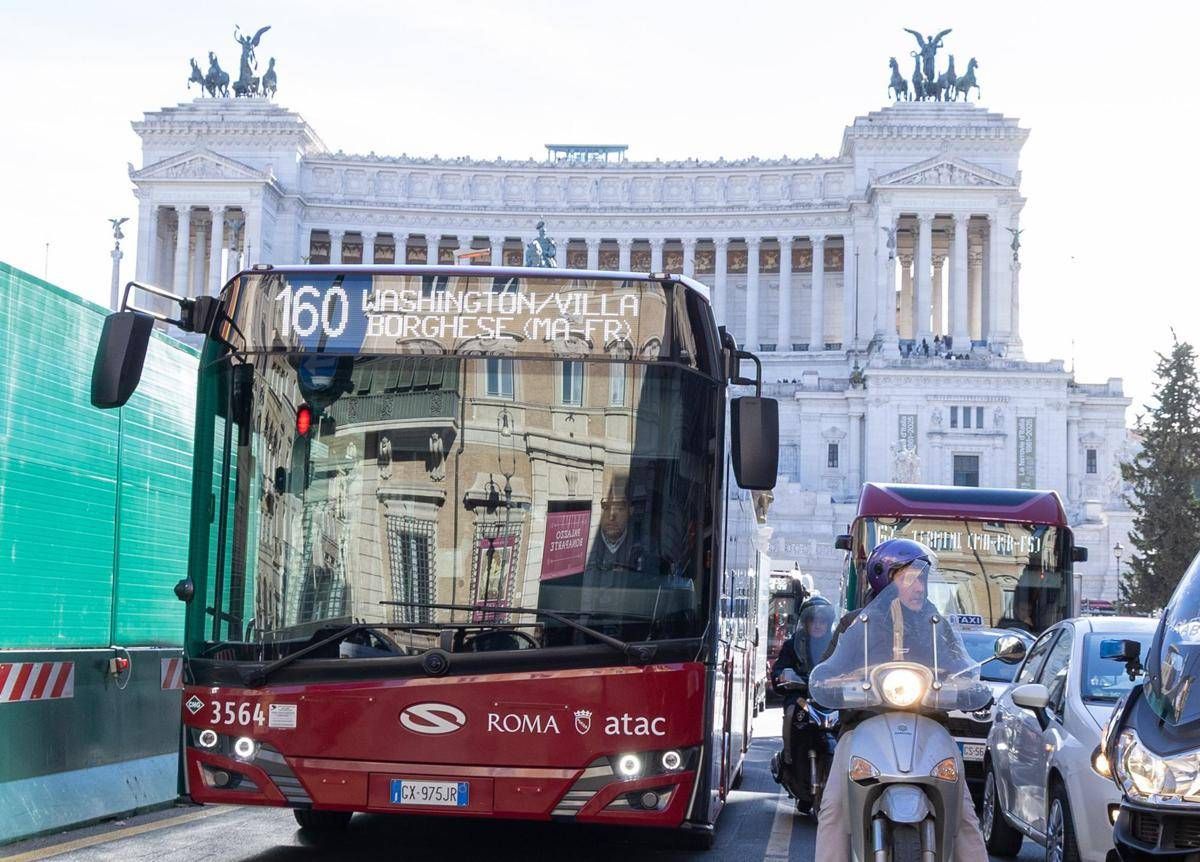
Card ricaricabili Atac, da oggi il debutto in tre stazioni
Si parte dalle biglietterie di Lepanto, Ottaviano e Conca d’Oro. Il nuovo supporto permette di caricare più titoli di viaggio...
Jensen Huang Scandal Tests Nvidia’s Dependence on Its Founder
An affair involving a Singapore-based executive under scrutiny over Nvidia chip exports has collided with U.S.-China technology policy. The crisis...

Pete Hegseth Calls Impeachment Motion a “Farce” as House Weighs Vote
The defense secretary accuses the media of hating Donald Trump more than they love the country and the armed forces....

Toukie Smith, Model Turned Actress, Dies at 74
A prominent face in 1970s fashion, Smith later became known to television audiences as Eva Rawley on the sitcom 227....

Parkinson, a Pisa arriva la tecnologia che tratta i tremori senza bisturi
Exablate Prime sarà consegnata il 13 novembre all’ospedale pisano: trattamento in una sola seduta e senza anestesia, con copertura del...
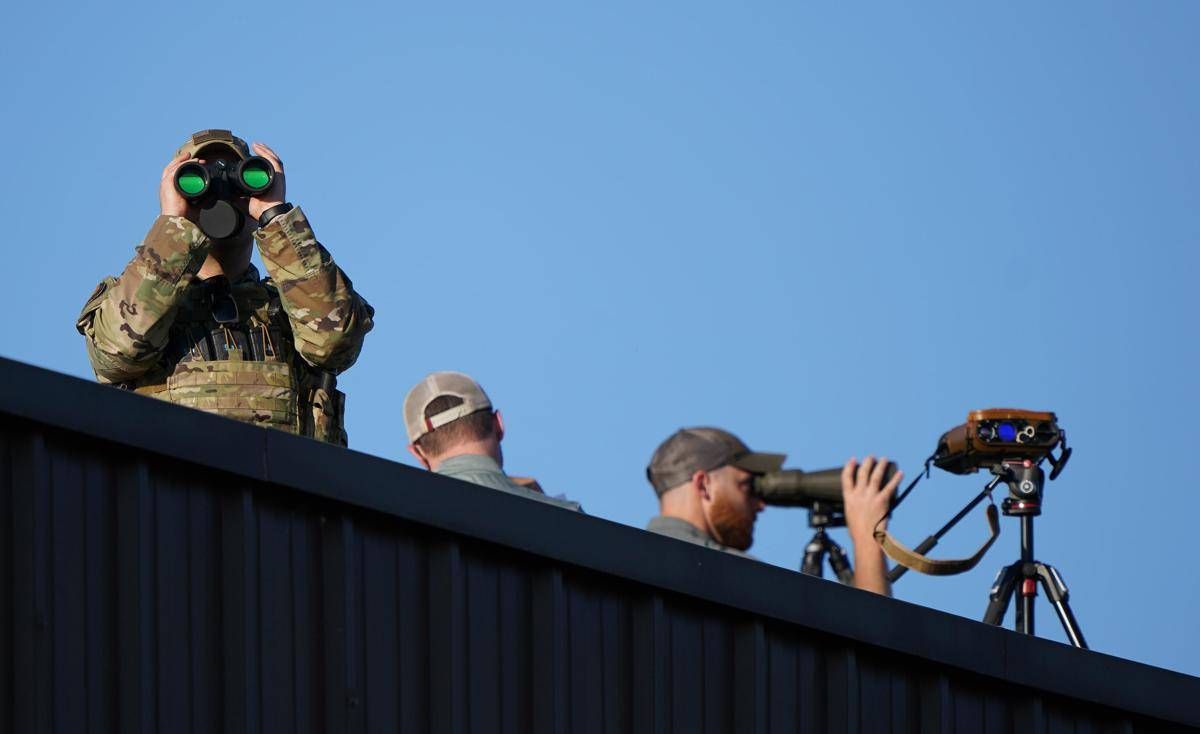
Minaccia iraniana, gli Usa spostano aerei dalla base di Mildenhall
Un velivolo è stato trasferito dalla base britannica della Raf. Altri aerei cisterna sono stati ridislocati in Germania e in...

Inchiesta sugli appalti a Napoli: 13 misure cautelari
Nove persone in carcere e quattro ai domiciliari. Al centro dell’indagine le presunte infiltrazioni del clan Veneruso e un sistema...

Massie Seeks Impeachment of Hegseth, Citing Abuse of Power Over Iran
The Kentucky Republican has filed a motion in the House that could come to a vote by Wednesday. Marco Rubio...
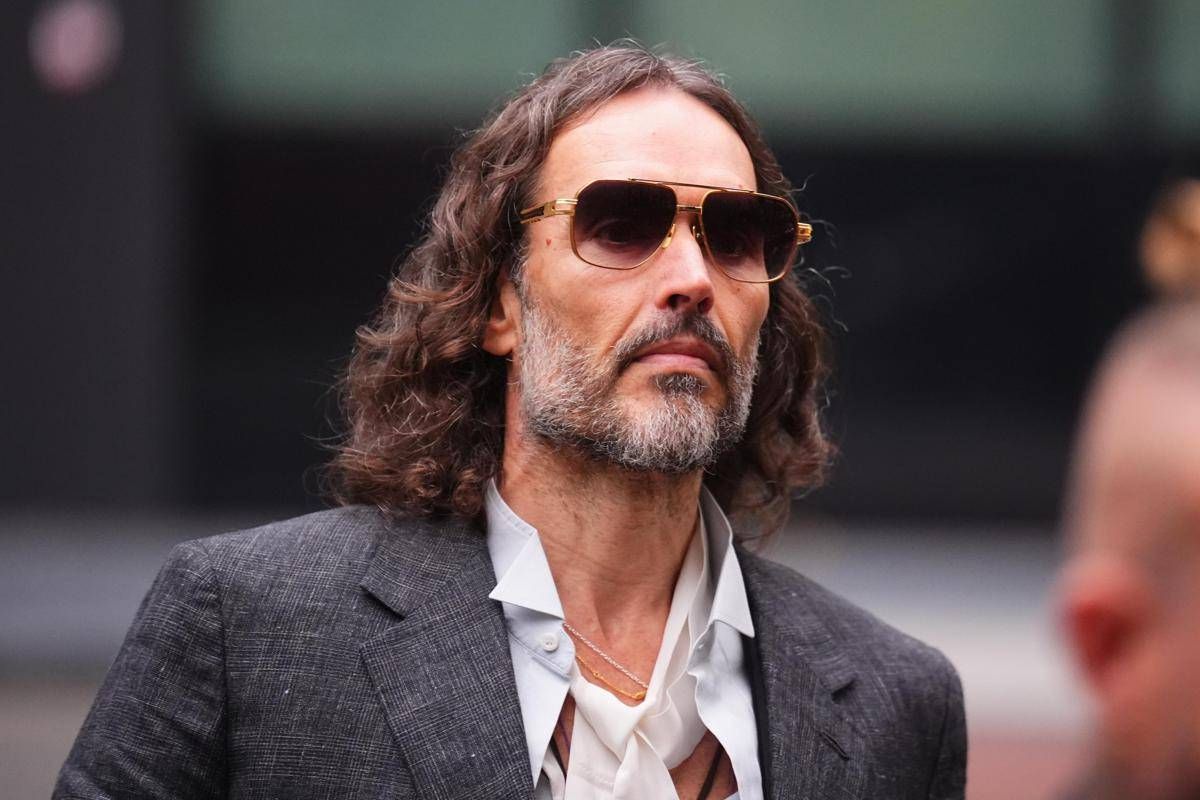
Russell Brand Sentenced to 10½ Years in Prison for Sexual Offenses
A London judge called the British comedian a “sexual predator” and said his celebrity status had fostered a belief that...

Russia’s Ukraine War Death Toll May Exceed 450,000, Leaked Data Suggest
A breach of Russia’s state statistics agency has exposed a vast accounting of wartime deaths, including military personnel and civilians....
Domeniche ecologiche a Roma: si parte il 15 novembre, cinque date fino a marzo 2027
Accanto al blocco del traffico nella Fascia Verde, il Campidoglio organizza una giornata di eventi per sensibilizzare i cittadini sulla...
Difesa ed energia, via libera alla deroga per l’Italia fino all’1,5% del Pil
Il Consiglio economia e finanza approva la clausola di salvaguardia nazionale per quattro anni. Roma potrà superare i limiti di...
Trump Renews Attacks on Midterm Election Results After GOP Defeat
The president questions the integrity of the Nov. 3 vote on Truth Social, targeting early ballot counts and voting machines...

Energia, completato il Dl Bollette: cosa cambia da gennaio
Il Consiglio dei ministri approva il nuovo meccanismo di rimborso dei costi del gas usato per produrre elettricità, dopo il...

Israele, Eisenkot cerca una maggioranza ma Lieberman può far saltare tutto
Il leader di destra sarebbe pronto a far cadere un eventuale esecutivo di minoranza sostenuto dalla Lista Araba Unita. Sullo...

Car Crashes Near White House, Triggering Secret Service Lockdown
The vehicle struck an information sign near Lafayette Park, prompting agents to secure the area and move journalists indoors. President...
You must be logged in to post a comment Login