
International-News
“Delusional, Divisive and Shameful”: Eisenkot Turns on Netanyahu
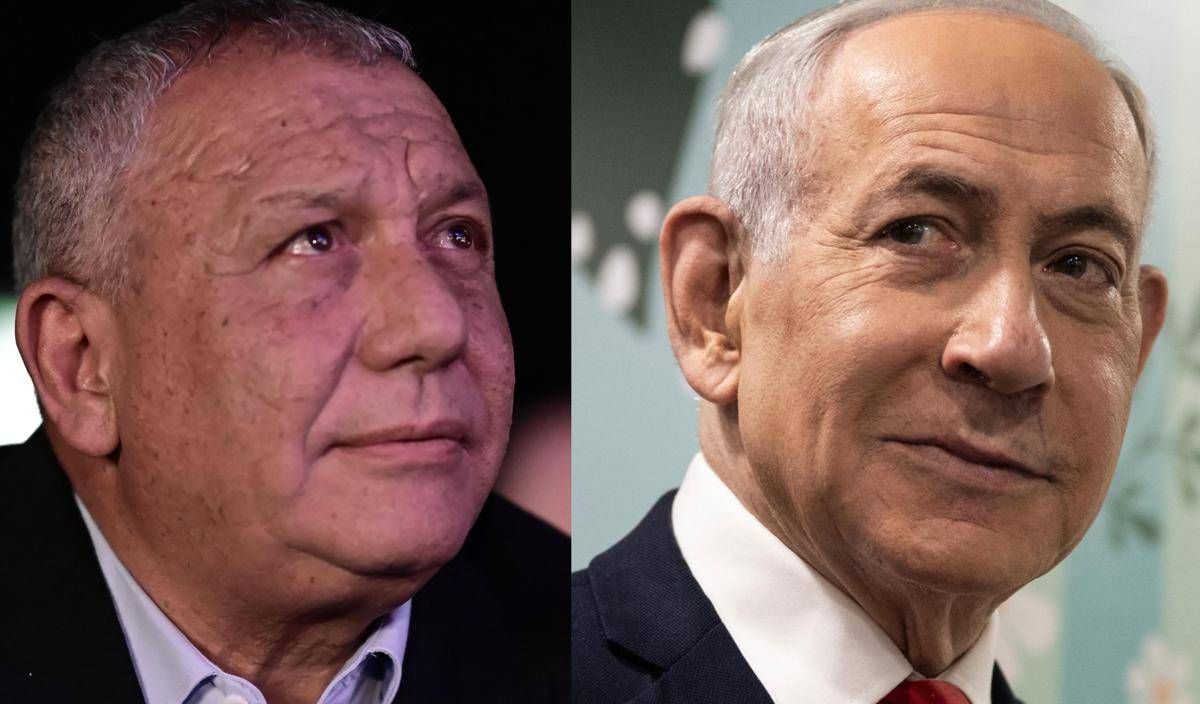
The Yashar leader says the caretaker prime minister is unfit to remain in office and has called off a meeting with Likud. Meanwhile, 67 lawmakers have demanded a vote to replace Knesset Speaker Amir Ohana, scheduled for November 17
Gadi Eisenkot has called off the first scheduled coalition meeting with Benjamin Netanyahu’s Likud after accusing the caretaker prime minister of turning the opening of Israel’s new parliament into a divisive political attack. The Yashar party leader described Netanyahu’s address as “delusional, divisive, hate-filled and shameful,” adding that he was now even more convinced the prime minister was unfit to remain in office “for even one minute more.”
The confrontation has dealt an immediate blow to efforts to form Israel’s next government. Eisenkot, a former chief of staff of the Israel Defense Forces, was tasked by President Isaac Herzog on Sunday, November 8, with trying to assemble a governing coalition after receiving the backing of 67 lawmakers during consultations, compared with 46 who recommended Netanyahu. He has 28 days to form a government, with the possibility of an extension of up to 14 more days.
The rupture came after Netanyahu addressed the newly sworn-in 26th Knesset on Tuesday, November 10. He called for a national unity government, arguing that Israel faced security challenges too serious to be handled by a narrow coalition. But the appeal was accompanied by an attack on the possibility of relying on the Arab-led parties Ra’am and the Joint List to form a government.
“We cannot rely on a narrow government with supporters of terrorism and enemies of Israel,” Netanyahu told lawmakers. He accused the two parties of opposing Israel’s existence as a Jewish state and questioned whether opposition politicians were prepared to depend on them to govern.
Eisenkot’s response was swift. In a statement on X, he said he had listened to the prime minister’s “delusional, divisive, hate-filled and shameful speech” and accused him of exploiting a formal national occasion to deepen divisions. He said Netanyahu’s leadership was dividing Israel and endangering its security.
Yashar subsequently announced that the meeting scheduled for Wednesday with Likud representatives had been canceled. The party said national unity and social solidarity were essential to Israel’s security, but accused Netanyahu of choosing his own political survival over the country’s interests.
“Netanyahu does not want unity,” the party said, arguing that the prime minister had once again chosen himself “at any cost.”
Likud rejected the accusation and insisted that Netanyahu remained committed to a national unity government. The party said the prime minister would “leave no stone unturned” in pursuing that goal, but maintained that cooperation with parties it describes as supporters of terrorism was impossible. It also objected to working with lawmakers who had left the Knesset chamber during the singing of Hatikvah, Israel’s national anthem.
The Likud statement described the cancellation as puzzling, given that Eisenkot’s bloc was continuing contacts with the very parties Netanyahu opposed.
Netanyahu takes the dispute to social media
The prime minister did not limit his response to the speech in parliament. Between 6:39 p.m. and 7:36 p.m. local time, his account on X published seven posts carrying the same message: “It is forbidden to establish a dangerous government with terror supporters from Ra’am and the Joint List!”
Each post included a video intended to support Netanyahu’s accusations against the Arab-led factions. One featured an excerpt from a controversial 2012 speech in Ramallah by Ahmad Tibi, leader of the Ta’al party. In that address, Tibi praised Palestinian “martyrdom.” He later said he was referring to Palestinians killed unjustly by Israeli forces, not people killed while carrying out terrorist attacks.
Netanyahu also raised allegations of foreign interference in the October 27 election, calling for a full investigation into what he described as suspicions that foreign actors had used substantial sums of money to influence the result. Those allegations remain unproven: reporting by The Times of Israel said police were believed to have found little evidence, while judicial officials indicated that even if the suspicions were substantiated, they would not affect the election outcome.
His remarks prompted interruptions inside the Knesset. Former prime minister Naftali Bennett challenged Netanyahu over the absence of a state commission of inquiry into the October 7, 2023, Hamas-led attack and questioned his government’s ties to Qatar. Other opposition lawmakers also demanded answers over alleged connections between Netanyahu’s aides and Qatari interests.
The October 7 investigation has become one of the central issues in the emerging parliamentary confrontation. On the opening day of the new Knesset, Eisenkot’s bloc submitted legislation to establish a state commission of inquiry into the Hamas attack. The proposed package also includes measures to introduce term limits for prime ministers and reverse parts of Netanyahu’s judicial overhaul.
A test of strength over the Knesset speaker
The political standoff is already moving beyond coalition negotiations. The next major confrontation will concern the leadership of parliament itself.
On Tuesday evening, Knesset Speaker Amir Ohana, a member of Netanyahu’s Likud party, announced that he had received a request signed by 67 lawmakers calling for a vote to elect a new speaker. He scheduled the debate and vote for Tuesday, November 17, at 4 p.m. Israeli time — 3 p.m. in Italy.
The anti-Netanyahu bloc has agreed to nominate Matan Kahana, a member of Eisenkot’s Yashar party and a former minister, to replace Ohana. The choice was agreed by the bloc’s principal leaders, including Eisenkot, Naftali Bennett, Yair Golan, Avigdor Lieberman and Yair Lapid.
Ohana described the request as “unusual” and criticized the political agenda of the lawmakers seeking his replacement, arguing that they intended to advance legislation that would significantly expand the powers of the attorney general. Despite his opposition, he said he would respect the will of the parliamentary majority.
The 67 signatures represent an important procedural show of strength, but they do not automatically translate into a governing coalition. The parties directly aligned behind Eisenkot hold 48 seats in the 120-member parliament, while the Arab-led Ra’am and Joint List factions hold another 19. Their support is crucial to the parliamentary majority, but cooperation with them remains disputed among some of Eisenkot’s potential coalition partners.
That tension is likely to shape the next stage of negotiations. Netanyahu has called for unity while ruling out a government dependent on the Arab parties. Eisenkot, meanwhile, is trying to assemble a majority capable of replacing him, but the first direct negotiating channel between Yashar and Likud has now been shut down.
(Photo: © AndKronos)

“Delusional, Divisive and Shameful”: Eisenkot Turns on Netanyahu
The Yashar leader says the caretaker prime minister is unfit to remain in office and has called off a meeting...


“Your Ratings Are a Loser”: Trump Mocks CNN’s Kaitlan Collins VIDEO
The president lashed out at the CNN correspondent after she asked whether he would keep Defense Secretary Pete Hegseth if...

Thomas Markle Ordered to Undergo Mental Competency Exam
The 82-year-old father of Meghan, Duchess of Sussex, faces federal charges involving alleged possession of child sexual abuse material. A...

Martina Carbonaro, in aula i genitori. Tucci: «Non ero in me»
La testimonianza si è svolta dietro un paravento. A fine udienza i familiari della ragazza hanno rivolto parole durissime all’imputato...


Allerta meteo 11 novembre, arancione in Emilia-Romagna
La Protezione civile segnala rischio idrogeologico sulla montagna emiliana centrale. Allerta gialla anche in Liguria e Toscana per temporali, rischio...

Card ricaricabili Atac, da oggi il debutto in tre stazioni
Si parte dalle biglietterie di Lepanto, Ottaviano e Conca d’Oro. Il nuovo supporto permette di caricare più titoli di viaggio...
Jensen Huang Scandal Tests Nvidia’s Dependence on Its Founder
An affair involving a Singapore-based executive under scrutiny over Nvidia chip exports has collided with U.S.-China technology policy. The crisis...

Pete Hegseth Calls Impeachment Motion a “Farce” as House Weighs Vote
The defense secretary accuses the media of hating Donald Trump more than they love the country and the armed forces....

Toukie Smith, Model Turned Actress, Dies at 74
A prominent face in 1970s fashion, Smith later became known to television audiences as Eva Rawley on the sitcom 227....

Parkinson, a Pisa arriva la tecnologia che tratta i tremori senza bisturi
Exablate Prime sarà consegnata il 13 novembre all’ospedale pisano: trattamento in una sola seduta e senza anestesia, con copertura del...

Minaccia iraniana, gli Usa spostano aerei dalla base di Mildenhall
Un velivolo è stato trasferito dalla base britannica della Raf. Altri aerei cisterna sono stati ridislocati in Germania e in...

Inchiesta sugli appalti a Napoli: 13 misure cautelari
Nove persone in carcere e quattro ai domiciliari. Al centro dell’indagine le presunte infiltrazioni del clan Veneruso e un sistema...

Massie Seeks Impeachment of Hegseth, Citing Abuse of Power Over Iran
The Kentucky Republican has filed a motion in the House that could come to a vote by Wednesday. Marco Rubio...
Russell Brand Sentenced to 10½ Years in Prison for Sexual Offenses
A London judge called the British comedian a “sexual predator” and said his celebrity status had fostered a belief that...

Russia’s Ukraine War Death Toll May Exceed 450,000, Leaked Data Suggest
A breach of Russia’s state statistics agency has exposed a vast accounting of wartime deaths, including military personnel and civilians....

Domeniche ecologiche a Roma: si parte il 15 novembre, cinque date fino a marzo 2027
Accanto al blocco del traffico nella Fascia Verde, il Campidoglio organizza una giornata di eventi per sensibilizzare i cittadini sulla...
You must be logged in to post a comment Login