
International-News
Putin Has Made a Fool of Trump’s Ukraine Peace Push
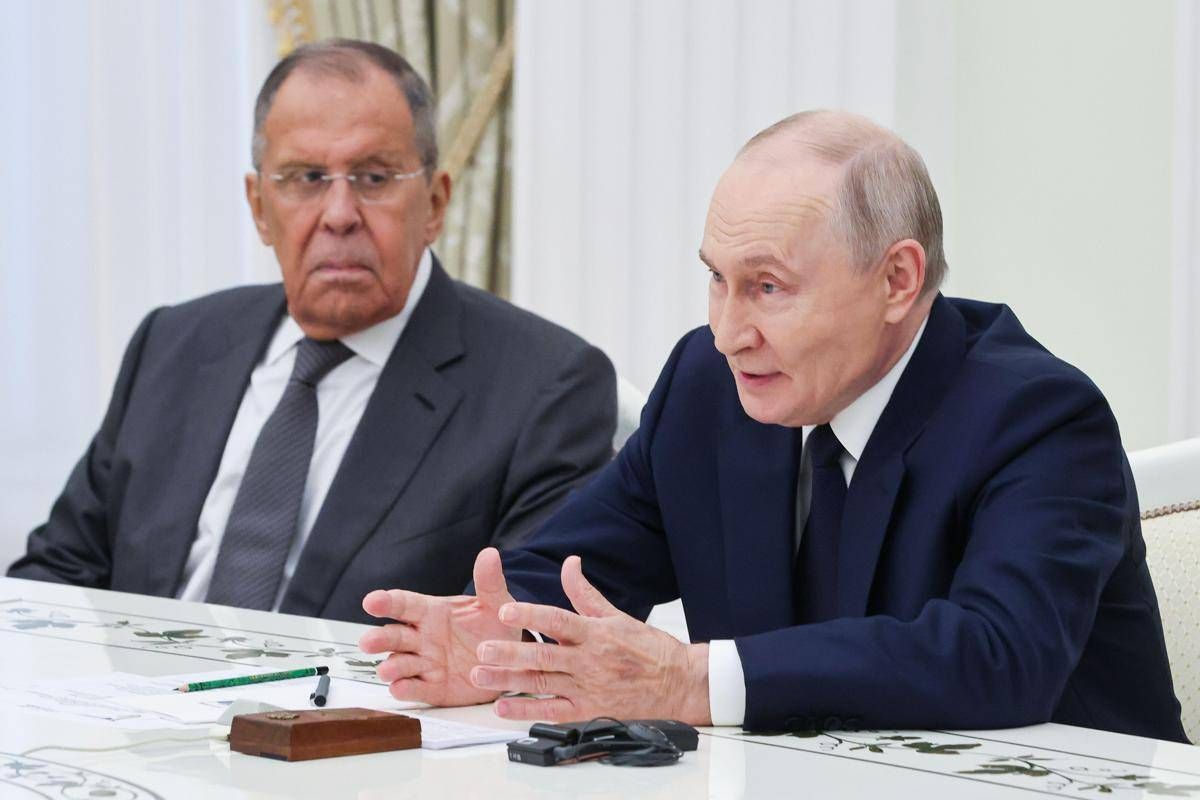
Lavrov confirms that Russia’s war objectives remain exactly as Putin set them in June 2024. Peskov goes further, openly threatening the use of force if negotiations fail. The Kremlin’s message exposes the failure of Trump’s diplomacy and the illusion that Moscow is ready to compromise
Only someone as gullible as Donald Trump could keep believing Vladimir Putin’s assurances. The Russian president’s words are repeatedly contradicted by the actions of his government, and the latest statements from Moscow leave little doubt about his intentions. There will be no easy deal over the Donbas, no indication that Putin is ready to abandon his demands and no evidence that Trump’s diplomatic overtures have brought the Kremlin any closer to compromise. After the efforts of Steve Witkoff and Jared Kushner, the American president appears to have another diplomatic failure on his hands. Moscow has now made its position explicit: the objectives Putin set for the war in June 2024 remain unchanged, and Russia is prepared to use force to achieve them.
The message came from two of the most senior figures in the Russian government. Foreign Minister Sergei Lavrov said Russia’s negotiating position would be built around achieving the objectives of what the Kremlin calls its “special military operation” — the full-scale invasion of Ukraine launched in February 2022. Those objectives, he stressed, were formulated by Putin in June 2024 and “have not changed since then.” The implication is unmistakable: Moscow is not negotiating to abandon its demands. It wants negotiations to deliver them.
Kremlin spokesman Dmitry Peskov made the threat behind that position even clearer. If there is no prospect of a negotiated settlement with Europe, Russia “will have to use force” to achieve its objectives. This is not the language of a government preparing to make concessions. It is a warning that the Kremlin intends to pursue its goals by military means if diplomacy does not produce the outcome Putin wants.
The statements expose the gap between Trump’s expectations and the reality of the Russian position. The American president has pursued an agreement that could involve Ukrainian withdrawal from the Donbas in exchange for NATO membership. But the Kremlin continues to demand the complete withdrawal of Ukrainian forces from the regions of Donetsk and Luhansk. Lavrov’s declaration that Putin’s objectives have not changed makes clear that Moscow has offered no meaningful retreat from that demand.
Lavrov also used his remarks to attack Europe’s attempt to influence the negotiations. He accused European leaders of trying to jump aboard the last train as the diplomatic process moves forward, suggesting they had waited too long to claim a role. He dismissed European Commission President Ursula von der Leyen’s call for a ceasefire before discussions on the architecture of European security as a dead-end approach. He also criticized EU foreign policy chief Kaja Kallas for saying Europe would not support an agreement that took Russian interests into account. Such statements, Lavrov argued, showed that European leaders did not understand what role they could play in the negotiations.
Peskov, meanwhile, portrayed Europe as divided and incapable of reaching decisions quickly. He said the European Union had so far failed to develop a common position and questioned whether its members had the determination to act together. But his central point was more consequential: any settlement of the war in Ukraine, he argued, would have to be linked to a new security architecture for the entire continent. The Kremlin wants discussions not just about Ukraine’s future, but about the military and strategic balance across Europe.
That broader ambition is also at the heart of the warning delivered by Ukrainian President Volodymyr Zelensky. According to the Ukrainian leader, US negotiators proposed that Kyiv withdraw its remaining forces from the Donbas in exchange for membership in NATO. The proposal would mean giving up territory that Russia has failed to conquer completely, in return for the security guarantee of joining the Western alliance. Yet even that possible concession does not appear to satisfy Moscow.
The Donbas, comprising the regions of Donetsk and Luhansk, remains one of the central battlegrounds of the war. Russia occupies most of the two regions and, according to the BBC, about one-fifth of Ukrainian territory overall. But Ukrainian forces continue to hold positions that Moscow has been unable to capture since the conflict began in 2014. Zelensky has said Putin is now seeking to force Ukrainian troops out of Kostyantynivka, in Donetsk, to allow Russian forces to take control of the entire city.
NATO membership is an equally difficult obstacle. Russia has consistently opposed the prospect of Ukraine joining the alliance, and US officials had previously said Ukrainian membership was off the table. Zelensky now believes the American proposal has put the question back into play. But he has warned that Putin’s own statements show how difficult any agreement will be. Ukraine, he insists, will have the final say on any deal involving the Donbas, and no territorial arrangement can be considered without a security package that includes guarantees for Kyiv.
Zelensky also believes the Kremlin’s ambitions reach far beyond Ukraine’s eastern border. He has accused Putin of seeking to redraw Europe’s borders and reduce NATO’s military presence across the continent. Finland and Sweden, which joined the alliance after Russia’s full-scale invasion, could become targets of Moscow’s demands as part of its attempt to reshape the European security order. “It is a fact that Putin wants to redraw borders in Europe,” Zelensky said, describing the revision of European security guarantees as part of the Russian president’s wider project.
The contrast could hardly be sharper. Trump appears to believe that a combination of territorial concessions and security arrangements can persuade Putin to end the war. Putin’s own representatives are saying something very different: the objectives remain unchanged, Russia will not abandon them, and force remains an option. The Kremlin has once again shown that Trump’s confidence in a quick deal is not matched by any comparable willingness from Moscow to compromise.
(Photo: © AndKronos)



You must be logged in to post a comment Login