
International-News
FAA Ground Stop Exposes Risks in Air Traffic Control Overhaul
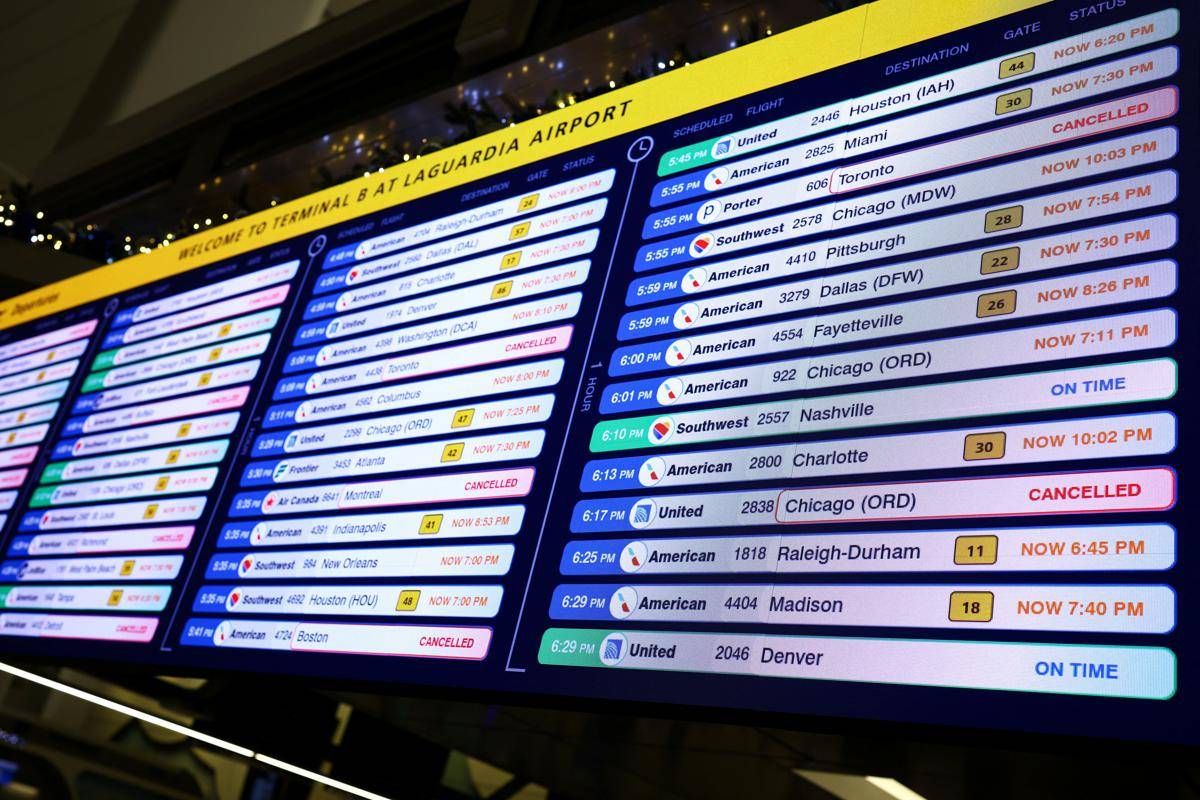
A router malfunction during a contractor-led upgrade disrupted data across 17 air traffic control centers, grounding departures nationwide and exposing weaknesses in an aging system the government had already warned was vulnerable
A communications upgrade intended to modernize America’s aging air traffic control system helped trigger one of the most significant nationwide aviation disruptions in more than two decades, exposing the risks of replacing critical infrastructure while keeping the world’s busiest airspace operational.
The failure forced the Federal Aviation Administration to halt departures nationwide on Nov. 13 after a router malfunction disrupted communications and data systems used by 17 of the agency’s 22 en route air traffic control centers. Airlines were left scrambling to recover from thousands of cancellations and delays that continued through the weekend. About 3,500 aircraft were already in the air when the FAA ordered the ground stop, and Transportation Secretary Sean Duffy said all landed safely.
The immediate technical cause has been traced to a router involved in the transition from legacy copper telephone lines to fiber-optic communications, an upgrade being carried out by L3Harris, a longtime FAA contractor. Investigators are still trying to determine whether the router itself was defective or whether the failure resulted from an installation, configuration or implementation error during the upgrade.
The incident has highlighted a broader challenge facing U.S. aviation. The country is attempting to replace critical infrastructure that federal auditors have repeatedly described as aging and increasingly difficult to sustain, while relying on that same infrastructure to safely manage tens of thousands of flights every day.
A Single Network Failure, Nationwide Consequences
The disruption began at 3:36 p.m. Eastern Time on Friday, according to federal officials. Eighteen minutes later, at 3:54 p.m., the FAA ordered a nationwide ground stop preventing airlines from launching additional departures. International arrivals continued under special procedures and were handled on a case-by-case basis.
The agency did not lose all radar coverage or communications, and the event was not a complete blackout of the national airspace system. Instead, intermittent instability affected the reliability of the data used by controllers to manage aircraft movements. In an environment where safe separation depends on continuous access to accurate information, that uncertainty was enough to suspend departures until system stability could be confirmed.
The ground stop remained in effect for more than four hours before being lifted at 8:15 p.m. Eastern Time. By then, however, normal operations had already been severely disrupted. Aircraft, crew schedules and airport operations had fallen out of sequence, extending the impact long after flights were allowed to resume.
According to Duffy, the malfunctioning router began generating more than 1,000 connection attempts every four to five seconds. The abnormal traffic overwhelmed other devices on the network and destabilized data transmission between critical systems.
The disruption spread to communications and radar-related information used by controllers across much of the national airspace system. With uncertainty affecting multiple facilities simultaneously, the FAA halted departures while technicians isolated the source of the problem and verified that network stability had been restored.
L3Harris Faces Questions Over the Upgrade
L3Harris was performing work as part of a long-term effort to replace aging copper-based communications infrastructure with fiber-optic connections.
Federal officials have focused on two main possibilities: a router failure or an error associated with the upgrade process itself. The outcome will help determine whether the incident was primarily an equipment failure or a problem involving testing, installation procedures, implementation controls or oversight.
L3Harris said it was cooperating with the FAA and telecommunications partners to establish exactly what happened. The company has stated that more than 70% of the planned conversion from copper to fiber has already been completed.
The Professional Aviation Safety Specialists union, which represents FAA technical employees, said its members were not involved in the work preceding the shutdown. The union argued that FAA technicians have historically played a larger role in coordinating maintenance activities and evaluating operational risks, and called for greater involvement in future modernization efforts.
No finding has yet established negligence by the contractor. Nevertheless, L3Harris remains at the center of the investigation because of its role in the upgrade work under review.
The Warning Signs Were Already There
The FAA’s infrastructure challenges long predate the Nov. 13 disruption.
America’s air traffic control system handles as many as 45,000 flights per day through a network built across several generations of technology. Maintaining that system has become increasingly difficult as equipment ages and replacement programs struggle to keep pace with operational demands.
Some communications equipment linked to the modernization effort is roughly 25 years old. Federal officials have said the agency spends about $1 billion annually maintaining the legacy copper-based network. Some components currently being replaced were originally scheduled for modernization nearly two decades ago.
The scale of the challenge was detailed in a September 2026 report by the Government Accountability Office. The congressional watchdog found that the FAA was managing thousands of modernization projects without a sufficiently integrated schedule and lacked a comprehensive documented estimate of long-term program costs.
The first phase of the modernization effort included 11,389 separate projects. By May 2026, the FAA had replaced 2,560 of the 5,170 copper lines identified for conversion.
The GAO warned that planning and coordination weaknesses could increase the risk of delays, service interruptions and operational complications during implementation. While the report did not predict the Nov. 13 router failure or identify the equipment involved, it highlighted the risks associated with modernizing critical infrastructure while simultaneously relying on it for daily operations.
The watchdog also raised concerns about the condition of existing systems. Of 138 air traffic control systems reviewed in 2024, 51 were classified as unsustainable and another 54 as potentially unsustainable, meaning more than three-quarters faced significant long-term support challenges.
The challenge confronting the FAA is therefore broader than replacing outdated hardware. The agency must complete a massive technological transition without undermining the reliability of the system air traffic controllers depend on every day.
No Evidence of a Cyberattack
The scale of the disruption quickly fueled speculation that U.S. aviation infrastructure may have been targeted by a cyberattack.
So far, investigators have found no evidence supporting that theory.
Federal officials have repeatedly said there are no indications that the incident resulted from malicious activity. FAA Administrator Bryan Bedford said investigators found no evidence linking the outage to artificial intelligence or hostile cyber activity. Duffy similarly attributed the disruption to the technical failure that emerged during the communications upgrade.
Officials have also stated that the FAA incident was unrelated to a separate outage affecting Microsoft services.
Current findings point toward a technical failure during maintenance work rather than sabotage or foreign interference.
A History of Failures in Critical Systems
The Nov. 13 shutdown was not the first major technology-related disruption to affect the U.S. aviation system.
In January 2023, a failure involving the Notice to Air Missions system forced the FAA to suspend departures nationwide for approximately 90 minutes and disrupted roughly 11,000 flights. The agency later traced the incident to files that had been accidentally deleted during maintenance work.
Other disruptions in recent years have involved damaged fiber-optic infrastructure, telecommunications failures and aging equipment. In 2025, recurring problems involving telecommunications lines serving Newark Liberty International Airport led to repeated losses of radar and radio communications, generating delays and cancellations.
The Nov. 13 event was considerably broader in scope. Industry observers and major news organizations described it as the most serious nationwide halt to U.S. air traffic operations in roughly 25 years outside of the airspace shutdown that followed the Sept. 11 terrorist attacks.
Thousands of Cancellations and a Weekend of Disruption
The operational consequences continued long after the FAA lifted the ground stop.
More than 9,000 flights were canceled on Friday and more than 6,400 on Saturday as airlines attempted to recover. Hundreds of additional cancellations were already recorded before the start of service on Sunday.
Carriers faced a complex logistical challenge. Aircraft had to be repositioned, crews reassigned and schedules rebuilt. An aircraft stranded away from its next scheduled departure cannot immediately return to normal rotation, and flight crews who reach federally mandated duty limits cannot simply be reassigned to replacement flights.
Those constraints ensured that disruption continued well beyond the four-hour outage itself.
FAA officials expressed confidence that airlines would progressively restore schedule integrity as operations stabilized, but recovery timelines ultimately depended on the ability of individual carriers to rebuild their networks.
The Cost of Replacing an Aging System
The disruption has intensified pressure on both the administration and Congress to accelerate modernization efforts.
Congress approved $12.5 billion in July 2025 for the first phase of the Brand New Air Traffic Control System program, which includes upgrades to communications, surveillance, weather systems and training infrastructure. The first phase is expected to continue through 2028.
A second phase focused on advanced automation and traffic-management technologies is projected to require billions of dollars in additional funding.
Transportation Secretary Sean Duffy has called for approximately $50 billion in additional investment to modernize air traffic control infrastructure and airport systems nationwide.
The latest shutdown has sharpened the dilemma facing federal officials. Delaying modernization leaves the aviation system dependent on increasingly obsolete technology. Yet every major upgrade introduces operational risks that must be carefully managed to avoid disrupting the very network the work is intended to improve.
The investigation into the Nov. 13 router failure may eventually determine what went wrong during the upgrade. The broader challenge is already clear: modernizing America’s air traffic control infrastructure may be one of the most urgent aviation priorities of the coming decade, but doing so without jeopardizing operational continuity could prove just as critical as the technology itself.
(Photo: © AndKronos)










You must be logged in to post a comment Login