International-News
Rutte Dismisses Nuclear Escalation Fears, Says Russia Cannot Defeat NATO
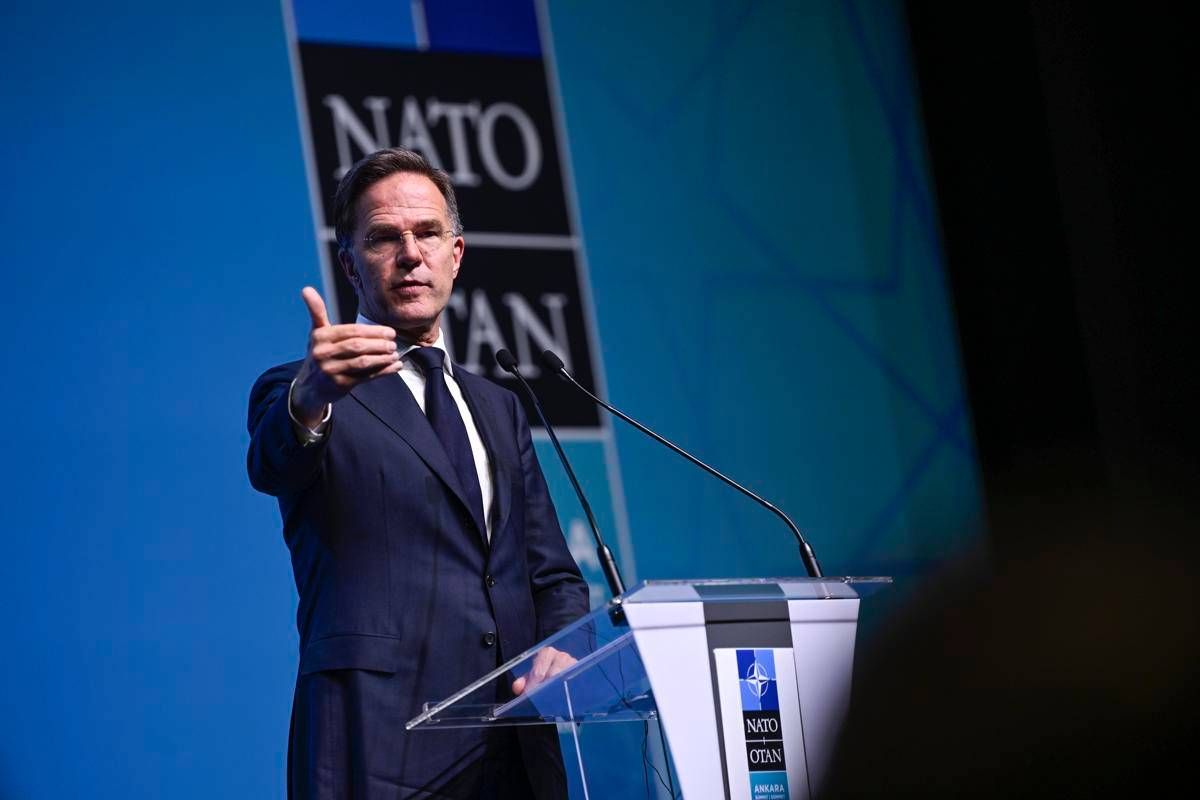
The NATO secretary general says there is no imminent threat to alliance territory, argues Moscow’s nuclear rhetoric should not alter support for Ukraine, and insists the alliance retains a clear strategic advantage over Russia
NATO Secretary General Mark Rutte rejected concerns that Europe could be heading toward a nuclear confrontation with Russia, arguing that Moscow’s repeated threats do not reflect a realistic path to escalation and that the alliance remains in a position of strength.
Speaking at a Euronews conference on space and defense in Brussels, Rutte was asked whether Europe faced a genuine risk of nuclear weapons being used. His answer was unequivocal: “No, that is not the case.”
The NATO chief said Russian President Vladimir Putin understands that a military victory against the alliance is unattainable, a reality that, in his view, significantly reduces the likelihood that Moscow’s nuclear rhetoric could translate into immediate action. Even so, Rutte stressed the importance of making clear that NATO is a defensive alliance and that nuclear threats must stop.
“NATO is much stronger than Russia; therefore there is no possibility that they could ever defeat us,” he said.
Rutte also urged European members of the alliance not to allow Kremlin pressure tactics to influence their policies, particularly regarding continued assistance to Ukraine. He argued that the battlefield situation does not support claims that Russia is gaining the upper hand and suggested that Putin may be unsettled by current developments.
“Putin is not winning this game. We can therefore assume that he is somewhat concerned and shaken,” Rutte said, describing calm and consistency as the most effective response to Russian pressure.
The secretary general emphasized that sustaining military investment remains essential. NATO member states, he noted, are continuing to increase defense spending while strengthening their armed forces and strategic capabilities.
Rutte pointed to higher defense investments in the Netherlands, Germany and much of the alliance, arguing that the objective extends beyond keeping pace with the United States. The broader goal, he said, is to ensure NATO maintains the military capabilities necessary to preserve its strategic advantage over Moscow.
“Russia clearly possesses powerful military strength and we want to maintain the advantage,” he said.
According to Rutte, Russian threats and hybrid activities form part of a broader strategy designed to weaken allied unity and divert attention from the war in Ukraine. He argued that Moscow is attempting to create divisions among NATO members through actions conducted in what he described as the “gray zone.”
“Through these letters and these hybrid activities in the gray zone, Putin is trying to divide us and make us lose sight of Ukraine. We will not allow that,” Rutte said.
He concluded by reiterating that NATO sees no immediate danger to its territory and remains prepared for a wide range of contingencies.
“There is no imminent threat to NATO territory. We are fully prepared, both regarding hybrid threats and any other possible scenario. We must, however, remain clear-headed: Russia is struggling in Ukraine, and that is precisely the crucial point,” Rutte said.
THE LATEST NEWS
[recent_post_slider design=”design-07″ show_author=”false” slider_height=”390″ lazyload=”progressive” limit=”6″ category=”11728″]
(Photo: © AndKronos)