
International-News
U.S. Donbas Border Plan Could Give Putin a Paper Victory

American negotiators have reportedly proposed redrawing the administrative boundaries of Donetsk and Luhansk so Moscow could claim the entire region without forcing Ukraine to surrender the territory it still holds. Kyiv has rejected any recognition of Russian occupation. The Abu Dhabi talks produced a prisoner-swap agreement in principle, but no breakthrough on territory
Could Vladimir Putin be allowed to claim victory in the Donbas without conquering the Ukrainian territory his forces have so far failed to take? That is the logic behind an extraordinary proposal reportedly put forward by Donald Trump’s negotiators: redraw the administrative boundaries of Ukraine’s Donetsk and Luhansk regions so Moscow could declare both fully under Russian control while Kyiv retains the land it still holds.
The idea, reported by The Economist, amounts to a map-based solution to the central territorial dispute blocking negotiations. It would not require Ukraine to withdraw its forces from the remaining positions in the Donbas, but would alter the internal boundaries of the two regions in a way that could allow the Kremlin to present one of its principal war objectives as achieved.
There is, however, a fundamental obstacle. A Ukrainian source close to the negotiations told The Telegraph that Kyiv had never discussed concessions involving territories occupied by Russia and would never recognize Russian control, either de facto or de jure. President Volodymyr Zelensky has also made clear that Ukraine will not accept a peace agreement requiring its troops to withdraw from the Donbas.
The reported proposal has therefore exposed the distance between Washington’s search for a compromise and Kyiv’s refusal to legitimize Moscow’s territorial claims. And the latest round of diplomacy in Abu Dhabi has done little to bridge it.
A map redrawn, but no agreement on territory
The proposal emerged from two days of U.S.-mediated talks between Russian and Ukrainian delegations in the United Arab Emirates, held on November 10 and 11. According to The Economist, American officials have explored changing the administrative borders of Donetsk and Luhansk, the two eastern regions that Russia insists on controlling in their entirety.
Under the reported arrangement, Russia could claim full control of both regions without Ukraine physically surrendering the towns and territory still held by its forces. The proposal would give Putin a political narrative of territorial success, but it has not been accepted by Kyiv and has not been publicly confirmed by the U.S. government.
Ukraine’s position is unequivocal. «This is an easy way to talk to the Russians: pressure us to leave Donbas, and there will be a deal. We are not ready for such a deal. We are not ready to trust Putin», Zelensky said during a visit to Dublin. He argued that Washington should put pressure on Moscow rather than expect Ukraine to make territorial concessions.
The Ukrainian president also questioned the information reaching the Kremlin about the battlefield. During the Abu Dhabi negotiations, he said, Russian military intelligence representatives claimed that their forces had captured roughly half of the territory in the Donbas that remains under Ukrainian control. Kyiv presented evidence disputing those claims. Zelensky suggested that Putin was being given a distorted picture of the military situation.
The disagreement is not merely about where a line should appear on a map. Russia continues to demand control over the entire Donbas, while its forces have yet to take all the territory claimed by Moscow. The front line has remained largely static, and the pace of Russian advances has slowed, despite continuing attacks on Ukrainian cities and infrastructure.
The Kremlin’s territorial ambitions also extend beyond the eastern regions. Moscow claims annexation of Donetsk, Luhansk, Kherson and Zaporizhzhia, including areas it does not control, as well as Crimea. The Institute for the Study of War has warned that Putin’s claims reach further still, encompassing additional Ukrainian regions that Russian rhetoric groups under the historical label of Novorossiya, or New Russia.
That broader ambition raises questions about whether a compromise limited to the administrative boundaries of Donetsk and Luhansk could actually settle the territorial dispute.
Abu Dhabi delivers a prisoner deal, not a peace breakthrough
The two days of negotiations ended without an agreement on territory or a wider settlement to end the war. There was, however, one tangible result: Russia and Ukraine agreed in principle to a large-scale exchange of prisoners of war.
Jared Kushner, Trump’s son-in-law and one of the American envoys, described the prospective exchange as potentially the largest humanitarian release of the conflict. The number of prisoners is due to be finalized on Thursday, November 12. Russian state news agency TASS has reported that the exchange could take place within two to three weeks.
Kushner nevertheless acknowledged the scale of the remaining obstacles. «The reality is there is no trust right now between the sides», he said, describing the Abu Dhabi meeting as a difficult but productive first step. Territorial questions, he added, would be the hardest to resolve.
The Russian delegation’s leader, Vladimir Medinsky, struck a more assertive tone. Speaking to Russian state television, he said that the two sides had found some common ground and that an agreement was closer, but that much would depend on Ukraine, the United States and Europe’s position. He also reiterated Moscow’s territorial demands, declaring that «every inch» of what Russia considers its land would be returned to Russia.
Meanwhile, Zelensky said Ukraine wanted concrete progress toward ending the war before the end of the year. But he emphasized that much would depend on the outcome of the next discussions between Washington and Moscow.
Witkoff and Kushner head to Moscow
The American diplomatic initiative now moves to the Kremlin. Steve Witkoff and Kushner are due to meet Putin in Moscow on Thursday, November 12, to present the proposals discussed in Abu Dhabi and seek further movement on the outstanding issues.
The meeting was confirmed by Yuri Ushakov, an aide to the Russian president, who said the American envoys would arrive in Moscow in the morning. «We don’t yet know the results of the talks in Abu Dhabi. But they’re bringing something», he said.
The U.S. negotiators also intend to discuss the participation of European countries in future negotiations. Kushner has argued that Europe must be involved in any arrangement intended to guarantee lasting peace and security on the continent. The European officials who traveled to Abu Dhabi, however, held separate consultations with the Americans and Ukrainians rather than joining the trilateral negotiations. Russia’s delegation declined to meet them.
The role of Europe is particularly sensitive because any postwar security arrangement would have consequences extending well beyond Ukraine. Washington has reportedly explored a broader security framework involving Russia and European countries, while Ukrainian officials remain skeptical about the reliability of possible American guarantees. Moscow, for its part, has shown no willingness to accept a multinational security force on Ukrainian territory and continues to demand Ukrainian neutrality and reductions in the country’s military capabilities.
After the Moscow meeting, Witkoff and Kushner are expected to travel to Dublin to meet Zelensky, who is attending a gathering of European leaders. The American envoys will seek to discuss with him the ideas put forward during their conversations with Putin.
Energy concessions add another dispute
The redrawing of regional boundaries is not the only controversial idea reportedly considered by Trump’s negotiators. The Economist has also reported that Washington floated the possibility of allowing Russia to regain access to European energy markets as part of a broader settlement.
That prospect has met resistance from Ukraine and its European partners. It would also conflict with European Union measures aimed at ending dependence on Russian hydrocarbon supplies.
The two proposals illustrate the breadth of the concessions reportedly being explored by the American administration to secure an agreement with Putin. But they also reveal the risk that efforts to accommodate Moscow could deepen divisions between Washington, Kyiv and European capitals.
For Ukraine, the central question remains whether a diplomatic formula can stop the fighting without legitimizing the territorial gains Russia has claimed since launching its full-scale invasion. For Putin, the demand to secure the entire Donbas remains a declared war objective.
The next test will come in Moscow, where Witkoff and Kushner are due to present the outcome of the Abu Dhabi talks directly to the Russian president.
(Photo: © AndKronos)



Scuole chiuse per maltempo, allerta rossa in Toscana e arancione in Liguria
La Protezione civile segnala forti criticità per venerdì 13 novembre. Numerosi sindaci hanno disposto la sospensione delle lezioni: ecco i...
U.S. Donbas Border Plan Could Give Putin a Paper Victory
American negotiators have reportedly proposed redrawing the administrative boundaries of Donetsk and Luhansk so Moscow could claim the entire region...
11-Month-Old Boy Found Alive Buried in Dog Crate in South Carolina
Koah Sharpe was believed to have been underground for 24 hours after disappearing with his 25-year-old father. Nearly 100 rescuers...

Giornata nazionale degli abiti storici, un mese per riscoprirli
Dall’11 novembre all’11 dicembre iniziative da Nord a Sud. Il Ministero del Turismo lancia il Calendario Unico Nazionale per dare...


Allarme bomba in scuole italiane da nord a sud, dubbi su origine e regia email
Gli investigatori valutano l’ipotesi di un’unica centrale di coordinamento. L’indirizzo del mittente rimanda a un’università di Taiwan, ma potrebbe essere...
Strage di Viareggio: Moretti dal carcere i domiciliari, rabbia parenti vittime
Il giudice di sorveglianza ha accolto la richiesta dei legali dell’ex ad di Ferrovie dello Stato, che ha compiuto 73...

Trump-Netanyahu Iran Tensions Expose Rift Over Renewed War
A reportedly explosive phone call between the two leaders has highlighted disagreements over whether to resume military action against Tehran....
Stacy Keach, the Actor Behind Mike Hammer, Dies at 85
The American actor, who also held Polish citizenship, built a career spanning Broadway, Hollywood and television, earning a Golden Globe...
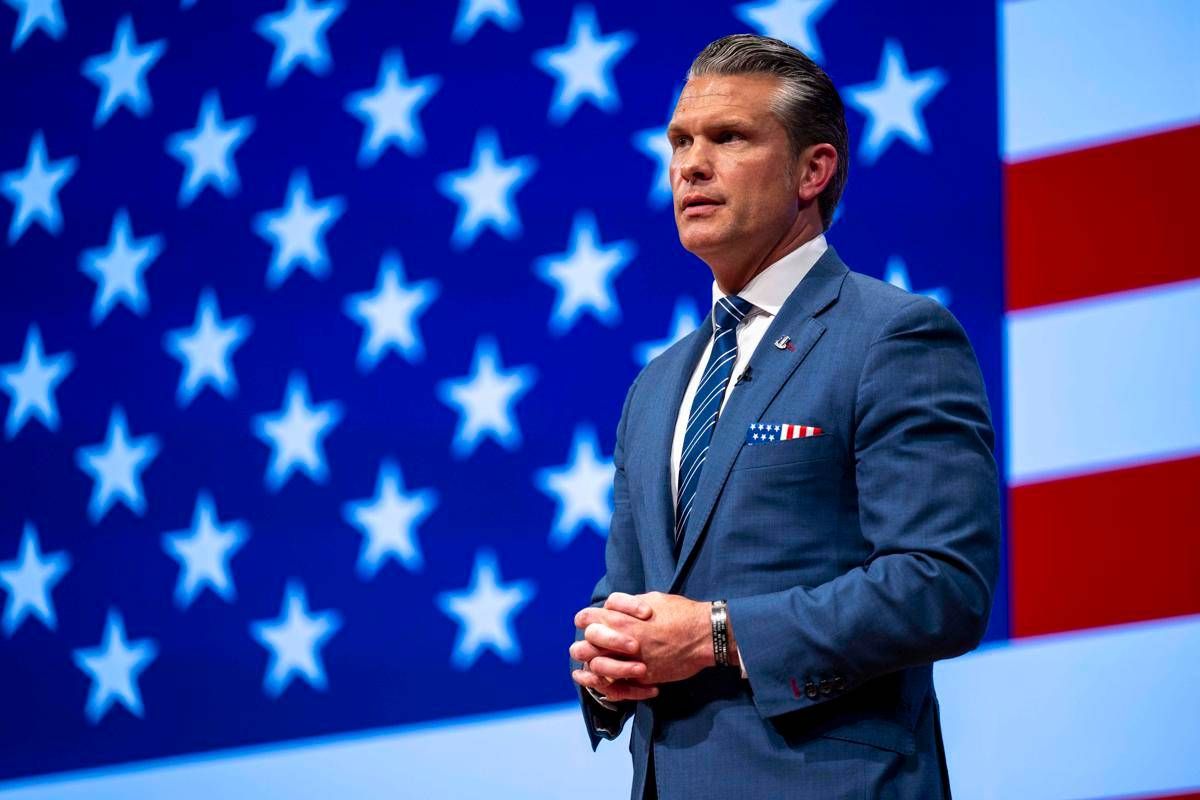
House Rejects Pete Hegseth Impeachment Bid; Trump Celebrates
The 211-204 vote defeats a resolution introduced by Republican Thomas Massie, who accused the defense secretary of abusing his authority...
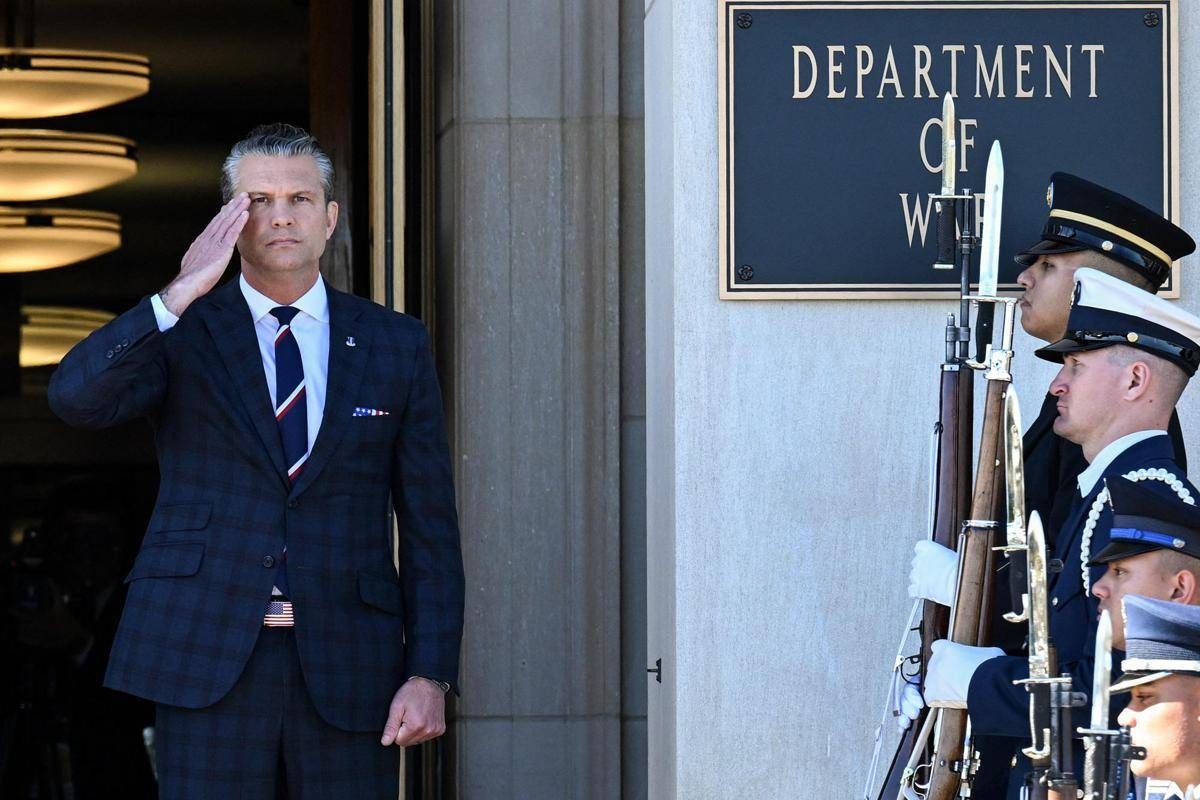
Impeachment di Pete Hegseth, la Camera boccia la procedura
La risoluzione è stata respinta con 211 voti contrari e 204 favorevoli. A favore del segretario alla Difesa quasi tutto...

Terremoto in Sicilia, scossa di magnitudo 4.1 al largo della costa
Il sisma è stato registrato alle 6.12 a una profondità di 8 chilometri. Nella stessa area altre cinque scosse, l’ultima...
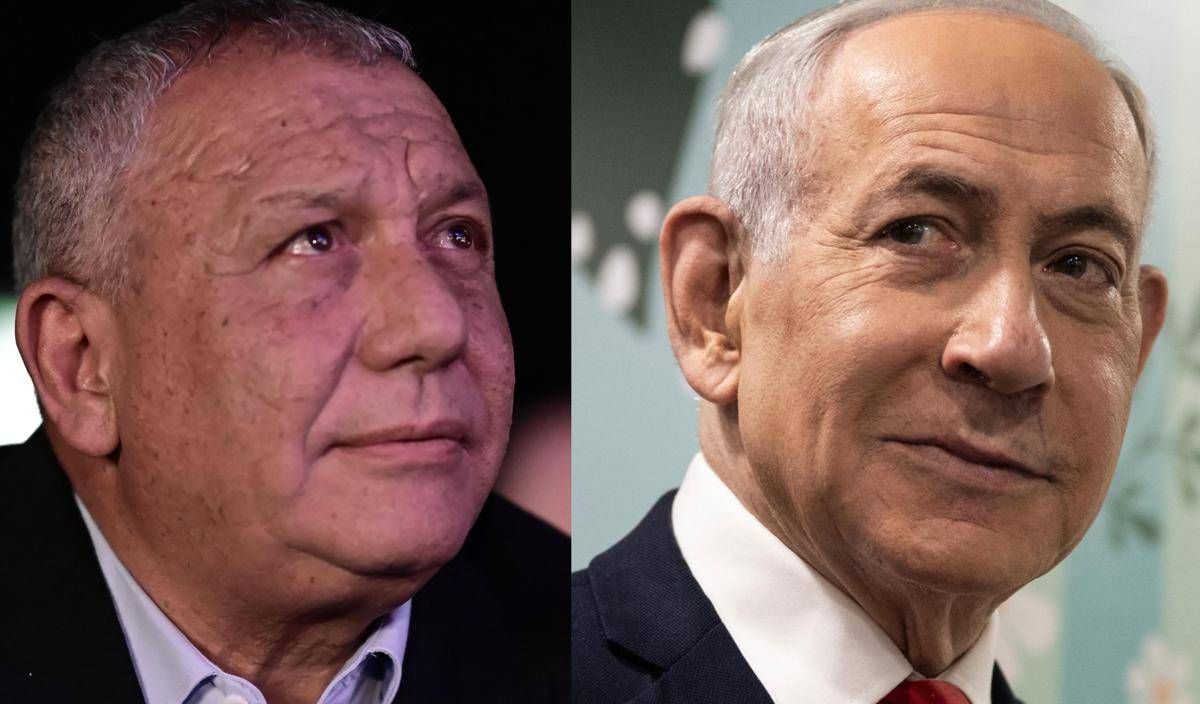
“Delusional, Divisive and Shameful”: Eisenkot Turns on Netanyahu
The Yashar leader says the caretaker prime minister is unfit to remain in office and has called off a meeting...

“Your Ratings Are a Loser”: Trump Mocks CNN’s Kaitlan Collins VIDEO
The president lashed out at the CNN correspondent after she asked whether he would keep Defense Secretary Pete Hegseth if...
Thomas Markle Ordered to Undergo Mental Competency Exam
The 82-year-old father of Meghan, Duchess of Sussex, faces federal charges involving alleged possession of child sexual abuse material. A...

Martina Carbonaro, in aula i genitori. Tucci: «Non ero in me»
La testimonianza si è svolta dietro un paravento. A fine udienza i familiari della ragazza hanno rivolto parole durissime all’imputato...


Allerta meteo 11 novembre, arancione in Emilia-Romagna
La Protezione civile segnala rischio idrogeologico sulla montagna emiliana centrale. Allerta gialla anche in Liguria e Toscana per temporali, rischio...
You must be logged in to post a comment Login