
International-News
Ceuta crisis declassified documents outline intelligence timeline before July 2026 mass crossing
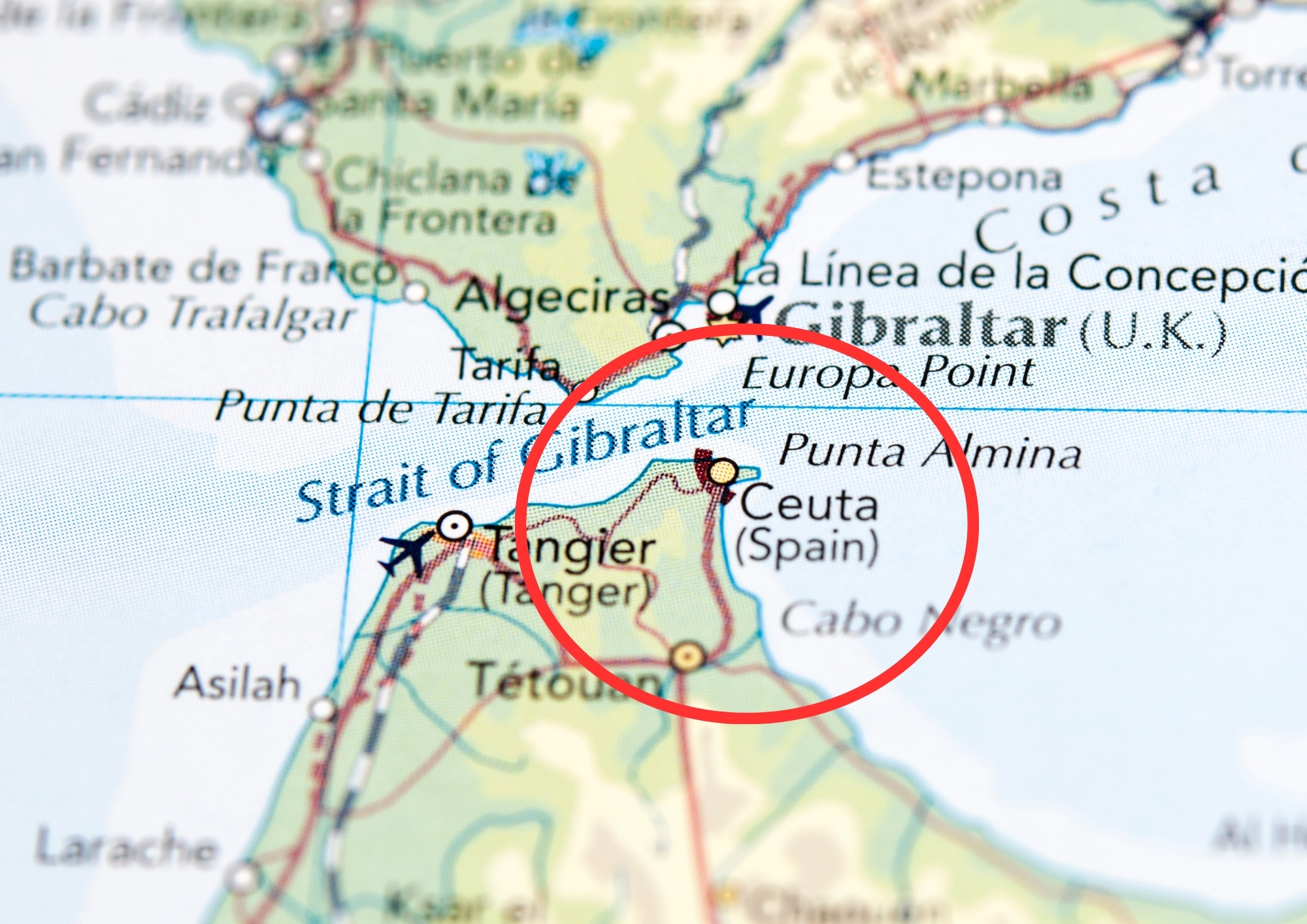
Spain releases 40 official files detailing how agencies monitored rising pressure and coordinated with Morocco ahead of the border breach
The Spanish government has made public a set of 40 declassified documents that shed new light on the migration crisis that struck the enclave of Ceuta in July 2026. The release fulfills a commitment made before the Congress of Deputies on September 3 and provides a detailed, chronological account of how national agencies monitored developments in the weeks preceding the mass crossing.
Published on the official government portal, La Moncloa, the archive includes reports, maps, urgent alerts and partial transcripts of WhatsApp communications exchanged among intelligence personnel. The documents — issued between July 1 and July 31 by the National Police, the Guardia Civil, the National Intelligence Center (CNI) and military intelligence (CIFAS) — offer a structured view of the information available to Spanish institutions before and during the escalation.
Early monitoring and rising pressure
The files indicate that Ceuta had been under steady migratory pressure from the beginning of July. Daily infographics tracked attempts to enter the enclave either by swimming or by climbing border fences, allowing agencies to maintain situational awareness.
A significant increase in activity was recorded in the final days of the month.
On July 27, the CNI issued an urgent note to national and local authorities.
By July 29, Spanish intelligence had shared a report directly with Morocco’s DGST and DGED, reflecting ongoing cooperation aimed at managing flows near the shared border.
WhatsApp communications: alerts ahead of the breach
One of the most notable elements in the archive is the inclusion of WhatsApp exchanges between CNI agents in Ceuta and the Government Delegation. These messages show that intelligence personnel had identified online calls for a coordinated attempt to breach the fence.
On July 29 at 13:52, agents circulated a screenshot from a social media page in Castillejos (Fnideq), the Moroccan town adjacent to Ceuta. The message warned:“There is a call on social networks for an assault on the fence and by sea tomorrow at 20:00.”
The alert also noted that the organizers were leveraging the visibility of the Festa del Trono celebrations in Morocco, anticipating that local security forces would be heavily engaged.
Agents highlighted the scale of the online mobilization, citing two groups with a combined audience of roughly 180,000 followers.
July 30: emergency measures activated
On July 30, the situation intensified.
CIFAS documents confirm that classified military communications were issued to coordinate responses across Spain’s sovereign territories. The National Immigration Center (CENIF) circulated alerts for a “mass arrival of irregular migrants,” extending warnings beyond Ceuta and Melilla to ports such as Algeciras and Tarifa, and later to police authorities in the Canary Islands.
A broader debate on border management
Although some portions of the documents remain redacted to protect national security and personal data, the publication has prompted renewed discussion in Spain about the management of the European Union’s external borders and the role of social networks in facilitating rapid mobilization near frontier areas.
The declassified archive provides a clearer institutional timeline of the July 2026 events, illustrating how Spanish agencies monitored developments, exchanged information and coordinated with partners in the region.
THE LATEST NEWS
[recent_post_slider design=”design-07″ show_author=”false” slider_height=”390″ lazyload=”progressive” limit=”6″ category=”11728″]



MotoGP Australia, Marquez in pole: griglia di partenza e orari tv
Il GP di Phillip Island scatta domenica 25 ottobre alle 4 ora italiana. Diretta esclusiva su Sky, differita in chiaro...

Torino, scontri al corteo contro il riarmo: cariche e lancio di oggetti
I manifestanti hanno tentato più volte di superare i blocchi delle forze dell’ordine nel centro città. Nuovi momenti di tensione...

Cassano allo Jonio, agguato al boss Damiano Pepe: uccisa la moglie
L’uomo, 64 anni, è rimasto gravemente ferito ed è ricoverato all’ospedale di Cosenza. I sicari hanno aperto il fuoco contro...


Ora solare, lancette indietro stanotte: risparmi e novità per il 2027
Nella notte tra sabato 24 e domenica 25 ottobre si torna all’ora solare. Intanto, alla Camera si valuta il superamento...
Movimento 17 ottobre, indagato Youssef Siher: perquisito a Milano
Il trentenne, giornalista freelance e attivista pro Pal originario di Brescia, è indagato per istigazione a delinquere. Piantedosi lo indica...

Kim Jong-un riappare in Cina dopo le voci sulla sua possibile morte
Il leader nordcoreano è arrivato a Dandong attraversando il nuovo ponte sul fiume Yalu. La notizia è stata riferita da...
Ostia, esplosione in una palazzina di cinque piani: evacuate 11 famiglie
L’incidente è avvenuto ieri sera, intorno alle 21.40, in via dei Velieri. Una persona è rimasta ferita Undici famiglie sono...
Manifestazioni del 24 ottobre, allerta sicurezza in tutta Italia: 100 perquisiti
Circa cento persone, tra cui 51 minorenni, sono state perquisite in 18 città dopo i disordini del fine settimana scorso....
Mondiale MotoGp, Marquez allunga in vetta dopo il successo australiano
Il pilota Ducati sale a 365 punti, mentre Alex Marquez chiude secondo la Sprint. Il duello per la testa della...

UPDATE Ukraine Confirms Oleshky Ceasefire as Humanitarian Corridor Set to Open in Russian-Occupied Town
Kyiv formally backs the localized truce announced by the White House, paving the way for civilian evacuations and aid deliveries...

AGGIORNAMENTO Ucraina, accordo per il cessate il fuoco a Oleshky: c’è la conferma di Kiev
La tregua è prevista dal 27 ottobre nella cittadina sulla riva sinistra del Dnipro, di fronte a Kherson, a soli...


Eni proroga il price cap, ma il gasolio è aumentato di 65 centesimi da febbraio
Il tetto resta fissato a 2,25 euro al litro per il diesel e a 1,99 euro per la benzina. La...

F1 Austin, orari e dove vedere le qualifiche Sprint in tv
Venerdì 23 ottobre la Formula 1 torna in pista negli Stati Uniti: appuntamento alle 23 per decidere la griglia della...


Omicidio a Vergiate, 53enne uccide la compagna e si costituisce
La donna, 36 anni e originaria della Colombia, è stata trovata morta nella camera da letto a Vergiate. L’uomo si...

“Putin Can Kill Anyone”: Pussy Riot’s Warning to Europe
In an interview with Adnkronos ahead of the Italian return of Riot Days, Pussy Riot members Masha Alyokhina, Eric Breitenbach,...

MotoGP Australia, orari e dove vedere qualifiche e Sprint in tv
Si corre a Phillip Island sabato 24 ottobre: in programma le qualifiche ufficiali e la gara che assegna i primi...