
International-News
Hungary turns the page: Orbán concedes as Magyar secures decisive victory
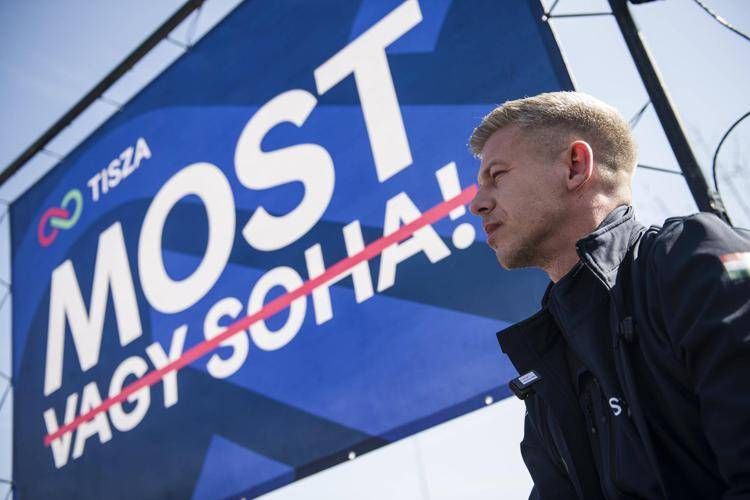
After 16 years in power, Viktor Orbán acknowledges a decisive loss to opposition leader Peter Magyar, whose Tisza movement is set to secure a constitutional majority
Hungary’s long-standing political equilibrium has been abruptly overturned. After 16 years in power, Viktor Orbán conceded defeat in Sunday’s parliamentary election, acknowledging a result that hands opposition leader Peter Magyar a commanding mandate to govern.
The concession came via a direct phone call to Magyar, who later confirmed the exchange publicly. The outcome reflects not just a transfer of power, but a structural shift in Hungary’s political landscape, reinforced by a surge in voter turnout that approached record levels.
With more than 70 per cent of ballots counted, projections indicate that Magyar’s Tisza movement is on course to secure a two-thirds majority in parliament. Such a margin would grant the incoming leadership the capacity to revise key elements of the institutional framework shaped during Orbán’s tenure. Fidesz, by contrast, faces a sharp contraction in representation.
In his first remarks after the vote, Orbán described the result as “clear”, conceding that the mandate to govern had passed to his opponents. While reaffirming his commitment to remain politically active, he signalled a transition to opposition after more than a decade of consolidated control.
The scale of the defeat underscores the erosion of a model that had come to define Hungary’s position within the European Union—often marked by friction with Brussels over rule-of-law standards and strategic alignment.
European response
European leaders reacted swiftly, framing the result as a potential inflection point in Hungary’s relationship with the EU.
European Commission President Ursula von der Leyen welcomed what she described as a reaffirmation of Hungary’s European trajectory, and held an initial conversation with Magyar focused on future cooperation. In Brussels, attention is already turning to whether the new government will unlock policy deadlocks that had stalled collective decisions.
French President Emmanuel Macron and German Chancellor Friedrich Merz both issued statements emphasising democratic participation and signalling readiness to work with Hungary’s incoming leadership.
Beyond the immediate political transition, the significance of the result lies in its scope. A two-thirds majority would not simply enable governance—it would allow Magyar to dismantle and redesign elements of the system built under Orbán.
What emerges, therefore, is not only a change of government, but the opening of a new institutional phase—one that will test how far and how quickly Hungary can realign both domestically and within Europe.
THE LATEST NEWS
[recent_post_slider design=”design-07″ show_author=”false” slider_height=”390″ lazyload=”progressive” limit=”6″ category=”11728″]
(Photo: © AndKronos)



-
 News1 day ago
Carlo Calenda aderisce allo sciopero della fame per Oleshky
-
 International-News1 day ago
He Was Washing Dishes in New York. Now He’s About to Walk Across America
-

 News2 days ago
Meloni: «Manifestare è un diritto, devastare le città no»
-
 News2 days ago
Roma, sicurezza rafforzata per le manifestazioni del 24, 30 e 31 ottobre