A flawed intelligence assessment generated with the help of artificial intelligence reportedly set in motion preparations for a U.S. operation...
Read More
International-News
Ceuta Migration Crisis Keeps EU on High Alert Ahead of August 15
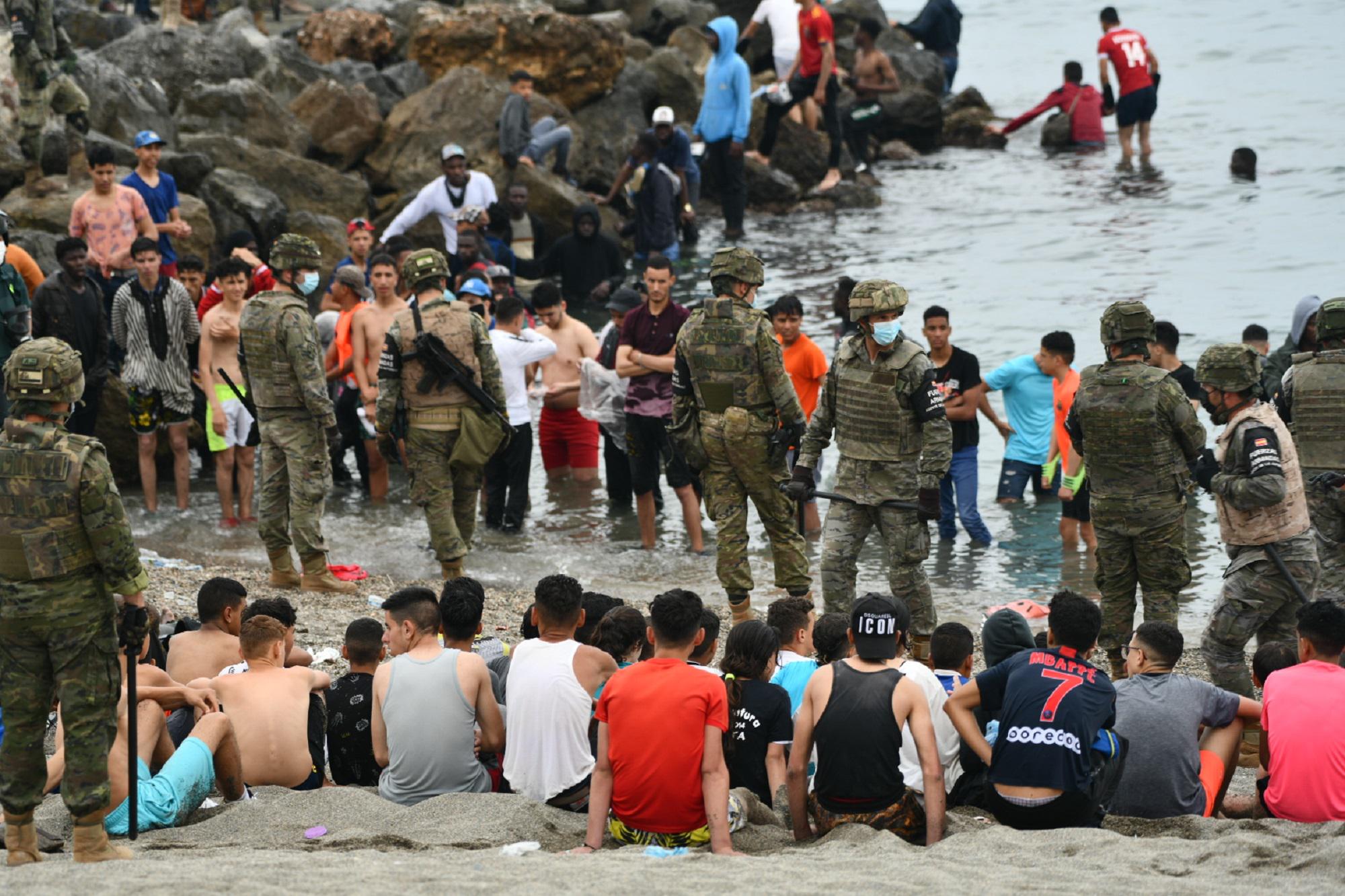
Ceuta’s mayor describes last week’s mass border crossing as an attack on Spain’s territorial integrity, while the European Commission prepares additional support for Madrid and closely monitors reports of a possible new crossing attempt
The Ceuta migration crisis continues to dominate the European agenda as the European Commission maintains heightened vigilance over reports of a possible new mass attempt to cross the border between Morocco and the Spanish enclave on August 15.
Speaking via video link during a hearing of the European Parliament’s Committee on Civil Liberties, Justice and Home Affairs (LIBE), Ceuta Mayor and regional president Juan Jesús Vivas described last week’s events as far more than a migration emergency.
“It was a genuine invasion,” Vivas said, arguing that the incident represented “an attack” and “a violation of territorial integrity.” He insisted the episode challenged not only the sovereignty of Ceuta but also that of Spain and the European Union.
According to Vivas, the city has not returned to normal because between 3,000 and 5,000 of the people who crossed into Ceuta last week remain there. Reception facilities, he said, are overwhelmed, creating what he called “a humanitarian emergency of major proportions.”
He added that local residents remain fearful about the possibility of another mass crossing, arguing that Ceuta’s security ultimately depends on Morocco, which, he said, does not recognize Spanish sovereignty over the territory.
The European Commission confirmed it is closely monitoring the situation ahead of August 15. Commission spokesperson Guillaume Mercier said Brussels remains in contact with the Spanish authorities, as well as Frontex and Europol.
“Threats to the external borders can happen, as we have seen,” Mercier said during the Commission’s daily press briefing in Brussels. He added that alerts regarding a possible new crossing are being followed closely and that the EU remains “very vigilant.”
Mercier also noted that the events seen on the ground last week were rapidly amplified through multiple communication channels, including Russian ones.
Vivas said the rumors surrounding a possible new attempt on August 15 reflect the anxiety felt in Ceuta.
“We do not know whether it will happen again,” he said, adding that the recent events demonstrated the enclave’s border remains “absolutely vulnerable.”
The European Commission is also preparing additional financial assistance for Spain to help manage the situation.
Mercier confirmed that Brussels received an initial assessment of Spain’s needs and is reviewing the document to determine the most appropriate form of support. Once Spain submits a formal request, the additional funding could cover border management equipment and services, as well as humanitarian and medical assistance.
He also said the Commission has offered operational support through Frontex and the European Union Agency for Asylum. A meeting between the Commission’s Directorate-General for Migration and Home Affairs and the executive agencies was held to coordinate information sharing and assistance, with work continuing on multiple fronts as the situation develops.
During the same parliamentary hearing, European Commissioner for Migration Magnus Brunner said the integrity of the Schengen Area had been fully preserved throughout the events in Ceuta.
While acknowledging public concern, Brunner stressed that internal border controls should remain “a measure of last resort” and must always be proportionate.
Italy is currently the only EU member state to have introduced air and maritime border controls with Spain. Although Ceuta lies outside the Schengen Area, anyone traveling from the enclave into mainland Spain must undergo external Schengen border checks. According to the information presented during the hearing, none of the migrants who entered Ceuta illegally last week has reached mainland Spain.
THE LATEST NEWS

Trump Bars CNN, MS NOW and Politico From the White House
18 September 2026
The president accused the three outlets of publishing false reports and signaled that additional media organizations could be targeted President...
Read More

Charles Spencer Says King Charles Seemed ‘Like a Lottery Winner’ After Diana’s Death
18 September 2026
In a forthcoming memoir, Princess Diana’s brother claims the future king appeared “euphoric” when they spoke after learning of her...
Read More

Search for Noah Woods Ends in Tragedy After Suffolk Pond Discovery
18 September 2026
A nationwide search involving more than 1,300 volunteers ended in heartbreak when three-year-old Noah Woods, missing since Tuesday, was found...
Read More

Italian Fighters Scrambled Again After Russian Military Jets Breach Lithuanian Airspace
17 September 2026
Two Russian military aircraft entered Lithuanian airspace, triggering a new intervention by the Italian Air Force's Baltic Thunder III Task...
Read More

Meloni Says Moscow Is Seeking an Escalation With Europe VIDEO
17 September 2026
The Italian prime minister linked the growing provocations to Russia’s difficulties on the battlefield in Ukraine and called for a...
Read More

(Photo: © AndKronos)