
International-News
Eisenkot Prepares Minority Government Vote as Netanyahu Exploits Opposition Divisions
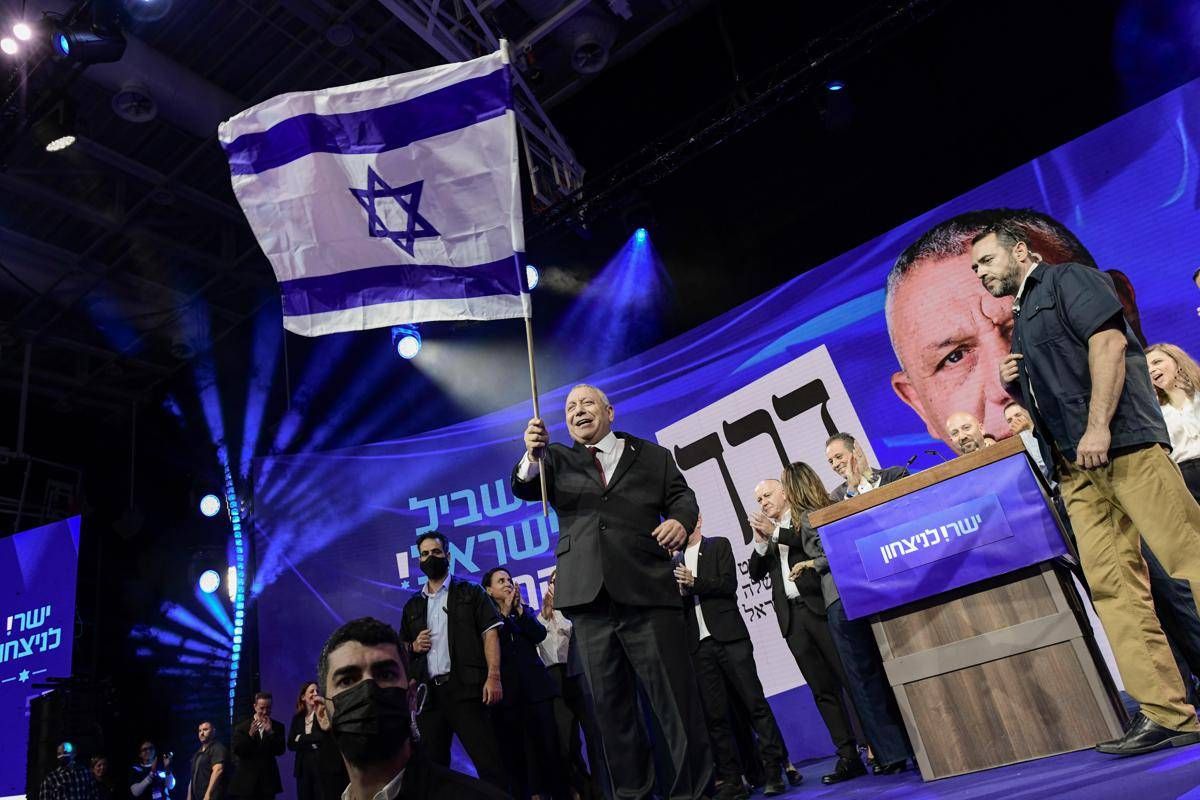
The Yashar leader is ready to put a government to a Knesset vote even without a guaranteed majority. But Naftali Bennett’s private meeting with Netanyahu and Avigdor Liberman’s opposition to relying on Arab lawmakers have exposed deep divisions within the bloc seeking to remove the prime minister
Gadi Eisenkot is preparing to take his bid to replace Benjamin Netanyahu to the Knesset floor, even if he cannot secure the numbers needed for a conventional coalition. Rather than return his mandate without a final attempt, the Yashar leader is considering putting a minority government to a parliamentary vote, relying on support from outside the coalition to get it approved.
The possibility, reported on Thursday, November 19, gives a new direction to the negotiations over Israel’s next government. Eisenkot’s immediate priority remains reaching an agreement with the ultra-Orthodox parties, traditionally aligned with Netanyahu. But if those talks fail, he is prepared to test whether the parliamentary forces opposed to the caretaker prime minister can come together long enough to install an alternative administration.
The numbers explain both the appeal and the risks of the plan. Eisenkot’s bloc has 48 lawmakers in the 120-seat Knesset, while Netanyahu’s Likud-led alliance holds 53. The Arab-led parties control another 19 seats. A minority government could therefore depend on Ra’am voting in favor from outside the coalition, without formally joining it, while the Joint List abstains.
That arrangement, however, is far from assured. Avigdor Liberman, leader of Yisrael Beytenu and a member of Eisenkot’s bloc, has repeatedly ruled out supporting a government dependent on Arab lawmakers. His opposition could be enough to sink the initiative unless Eisenkot persuades other parties to support it or stay out of the vote.
The most immediate challenge, though, is not simply parliamentary arithmetic. It is the growing uncertainty over whether the leaders who have united around the goal of removing Netanyahu agree on what should come next.
That tension became particularly visible after Naftali Bennett met Netanyahu at the Knesset on Wednesday. The meeting, which lasted approximately two and a half hours, took place without Eisenkot being informed in advance, according to Haaretz. The prime minister’s office described it as a security briefing, but the timing and circumstances raised questions among the other opposition leaders, who had been due to meet shortly afterward.
Bennett’s associates have insisted that he is not preparing to join a government led by Netanyahu. Their account is that he is exploring the possibility of a national unity government, provided Eisenkot serves as prime minister first under a rotation arrangement. But the encounter has unsettled the alliance and fuelled suspicions that Netanyahu is trying to prise open divisions within the opposition.
After the meeting, Eisenkot, Bennett, Liberman, Yair Lapid and Yair Golan gathered to discuss the negotiations. Their joint statement reaffirmed that replacing Netanyahu was their priority and described the formation of an emergency government as an urgent objective. Yet the statement did not erase the differences over how to achieve it. Bennett wants to keep the unity-government option open; Liberman is pursuing contacts with the ultra-Orthodox parties while rejecting an administration reliant on Arab support; Eisenkot is preparing for the possibility that neither route will produce an agreement.
The political manoeuvring is unfolding alongside a shift in the balance of power inside the Knesset. On Tuesday, Eisenkot’s bloc secured the election of Yashar lawmaker Matan Kahana as parliamentary speaker, replacing Likud’s Amir Ohana. Kahana won 66 votes to 52, with support extending beyond the parties formally aligned with Eisenkot. The new parliamentary leadership has also begun advancing legislation to reverse key elements of Netanyahu’s judicial overhaul, although the measures still have to pass through further legislative stages.
For Eisenkot, the next few days will be decisive. His negotiations with the Haredi parties remain central, while the possibility of a minority government provides an alternative if those talks collapse. A vote could take place as early as November 28 or 29, according to Haaretz, although no date has been officially set.
His mandate to form a government expires on December 6. President Isaac Herzog could grant a further extension until December 19, but Eisenkot’s camp is reportedly not taking that possibility for granted. The decision to consider a parliamentary vote before the mandate expires reflects the pressure on the opposition leader: he must demonstrate that the alliance can do more than agree on removing Netanyahu. It must also show that it can govern together.
(Photo: © AndKronos)








You must be logged in to post a comment Login