
International-News
Russia Warns Italy Ukraine Could Use Its Territory for Future Attacks
Moscow’s warning follows Ukraine’s November 22 strikes on two Russian vessels near Benghazi. Rome says it was not informed of the operation, while Zelensky has acknowledged the lack of prior coordination and spoken with Meloni
Russia has issued a direct warning to Italy over Ukraine’s military operations in the Mediterranean, suggesting that Kyiv could eventually use Italian territory and maritime waters to launch attacks against Russian targets. The statement, published by the Russian Embassy in Rome on November 27, follows Ukraine’s November 22 operation against two Russian vessels near Benghazi, Libya, which was carried out without advance notification to the Italian government.
The warning comes as the diplomatic consequences of the operation become increasingly clear. Ukrainian President Volodymyr Zelensky has acknowledged that the attack was conducted without prior coordination with European partners. He also spoke by telephone with Italian Prime Minister Giorgia Meloni on Friday, November 27, in a conversation that included an apology over Italy not being informed, according to an exclusive report by Il Foglio.
The Russian Embassy framed the episode as evidence of a broader threat to Mediterranean security, accusing Kyiv of attempting to draw additional countries into its war with Moscow.
“Italy should open its eyes,” the diplomatic mission said in its social media statement, warning that Ukraine could one day consider using Italian territory and maritime spaces for another attack.
Moscow alleges Ukrainian military activity near Italian forces
A central element of the Russian statement concerns the alleged involvement of Ukrainian military personnel operating from the area around Misrata, in western Libya, where an Italian military contingent is also present.
The embassy referred to reports that the maritime drones used against the Russian vessels had been operated by Ukrainian armed forces personnel stationed in the area. It argued that the alleged presence of Ukrainian operators in a country close to Italy demonstrated the risks associated with Kyiv’s military activities beyond its own territory.
The allegations have not been independently established. The Associated Press, reporting on the November 22 attack, cited Libyan military officials who said an initial investigation indicated that Ukrainian sea drones had been launched from a base operated by Ukrainian forces in western Libya. That account does not independently establish that personnel stationed near Misrata controlled the drones throughout the operation.
Moscow also questioned how the Ukrainian naval drones reached Libyan territorial waters, arguing that the use of territory belonging to countries neighboring Italy to conduct operations against Russia should prompt a reassessment in Rome.
The embassy accused Kyiv of seeking to expand what it described as terrorist activity across the Mediterranean, Africa and the Middle East. It further alleged that Zelensky was using financial assistance from foreign partners to build a Ukrainian network capable of organizing attacks in different regions.
These accusations are the Russian government’s claims, not independently verified findings.
The statement ended with an explicit warning directed at Italy: “We would not be surprised if Ukrainian officials tomorrow considered using Italy’s territory and maritime spaces for a new terrorist attack.”
Zelensky acknowledges the lack of coordination with Italy
The Russian warning follows several days of friction between Rome and Kyiv over the operation.
Italy’s Foreign Minister Antonio Tajani had already made clear that the government had received no advance information about the Ukrainian action. Speaking to Corriere della Sera on November 25, he called the decision to strike Russian vessels inside Libyan territorial waters a mistake and stressed that Italy had not been informed of Kyiv’s intentions. Reuters reported his remarks.
Tajani also warned against allowing the Russia-Ukraine conflict to spread into new areas of the Mediterranean, where Italy has significant strategic and economic interests.
The issue became more complicated after Zelensky, in an interview with the BBC, said Ukrainian forces did not carry out operations without coordinating with international partners. Tajani subsequently rejected the suggestion that Italy had been informed, insisting that Rome had known nothing about the planned attack.
On Friday, however, Zelensky provided a more explicit account of the situation following his conversation with Meloni.
In a statement published on X, the Ukrainian president confirmed that the operation in Libya had taken place without prior coordination with European partners. He said Kyiv was committed to establishing a regular exchange of information between the relevant authorities and maintaining direct and effective communication with Italy.
According to Il Foglio, Zelensky also apologized to Meloni for the failure to inform Rome in advance. The two leaders agreed to maintain communication and strengthen coordination at several levels.
Two Russian vessels targeted near Benghazi
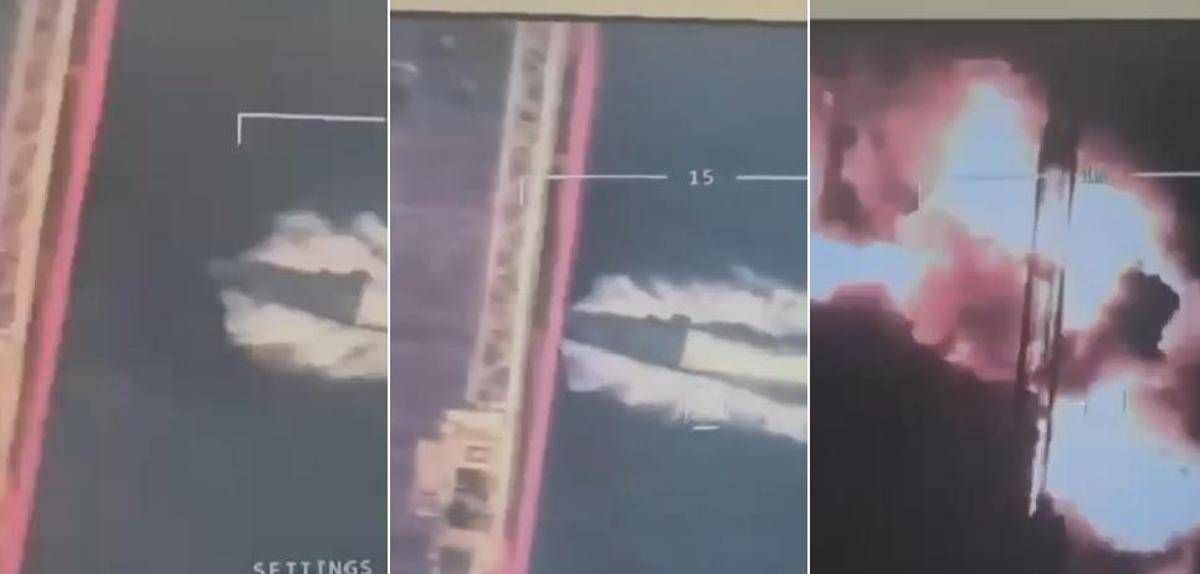
The operation took place on November 22 and involved Ukrainian maritime drones targeting Russian naval assets in the Benghazi area.
According to Reuters, Ukraine struck the Russian corvette Merkury, which was docked at the Benghazi naval base, and the cargo vessel MV Angara, which Kyiv accused of transporting military equipment for Moscow.
Ukrainian President Zelensky subsequently claimed responsibility for the operation, presenting the vessels as legitimate military targets. The Ukrainian authorities said the attack was part of their efforts to disrupt Russia’s military logistics beyond the Black Sea.
The incident has also raised concerns in Libya, a country divided between rival political and military authorities and with significant Russian interests.
The eastern-based Libyan National Army reported that two of its personnel died from injuries sustained during the attack. Meanwhile, Ukraine’s Foreign Minister Andrii Sybiha told his Libyan counterpart that the operation had been directed against Russian military assets rather than Libya or its population. He expressed regret over the unintended consequences and offered condolences to the Libyan people, according to Reuters.
For Italy, the episode has exposed a difficult diplomatic situation: Rome continues to support Ukraine against Russia’s invasion but has made clear that this support does not extend to military operations in Libyan waters conducted without its knowledge and carrying the risk of widening the conflict across the Mediterranean.
The Russian Embassy’s warning has now added another dimension to the dispute, placing Italy itself at the center of Moscow’s allegations about the geographical expansion of Ukrainian military operations.
(Photo: © AndKronos)









You must be logged in to post a comment Login