
International-News
Trump Seeks Wider Ukraine Truce After Oleshky Ceasefire
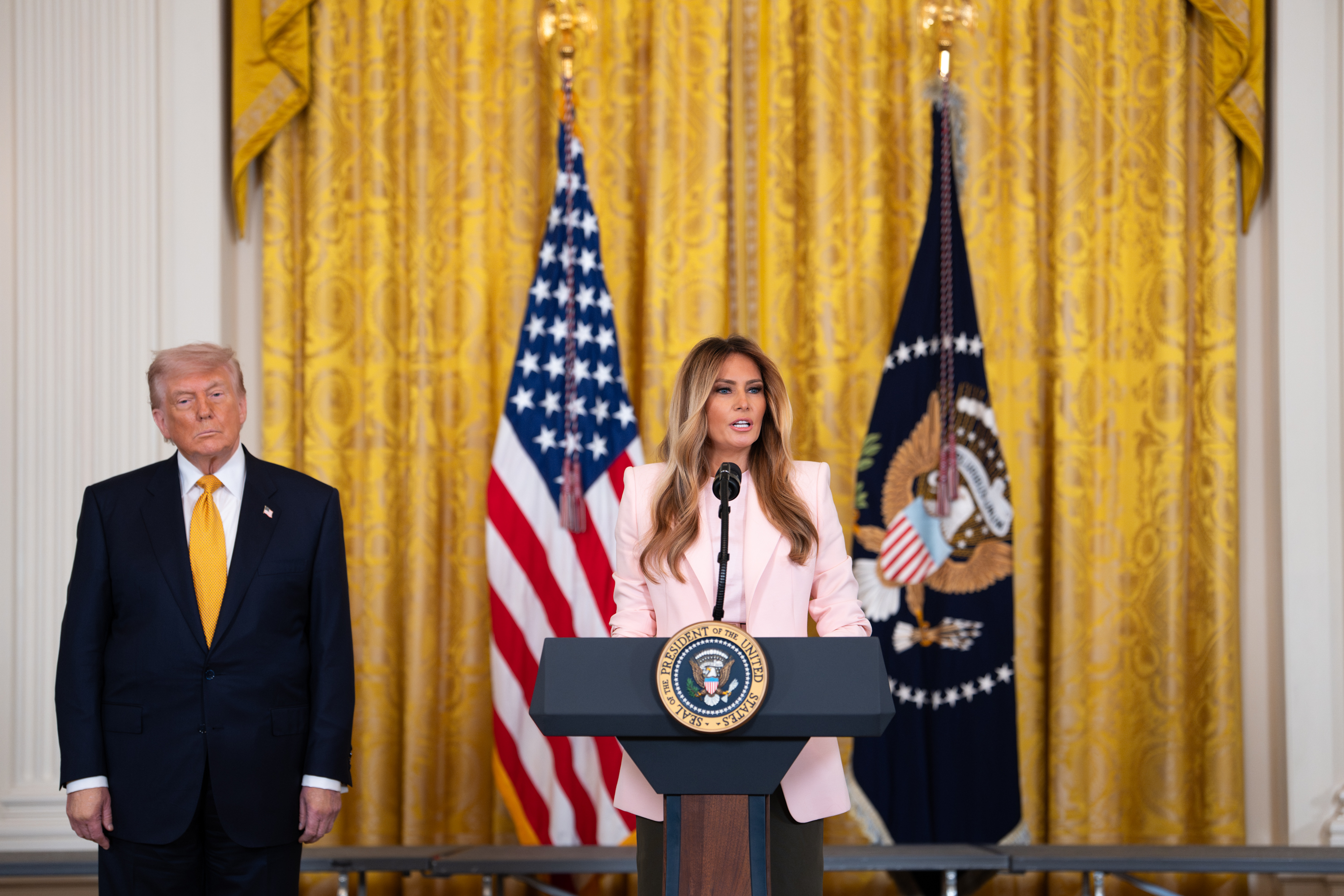
The humanitarian operation helped evacuate nearly 800 people from Russian-occupied territory. Kyiv has now proposed similar missions in 14 more settlements, while Melania Trump says she hopes to secure another ceasefire before Christmas
President Donald Trump wants to turn the Oleshky ceasefire into a broader humanitarian agreement between Ukraine and Russia, building on an operation that allowed nearly 800 people to leave Russian-occupied territory and brought the two sides into direct cooperation.
Speaking in a Fox News interview, Trump praised First Lady Melania Trump for her role in securing the temporary truce and described the Oleshky operation as a successful pilot project. Washington, he said, is now working to replicate the arrangement on a much larger scale.
“That was a ceasefire. Now we will do the same thing on a larger scale,” Trump said, presenting the initiative as a possible model for further humanitarian agreements. He did not specify which areas could be covered next or whether Moscow and Kyiv had already agreed to expand the arrangement.
There is, however, a concrete proposal on the table. Ukrainian President Volodymyr Zelenskyy has identified 14 additional settlements in the occupied parts of the Kherson and Zaporizhzhia regions where Kyiv wants to organize humanitarian operations similar to the one carried out in Oleshky. The updated list has been submitted to the United States and Ukraine’s human rights commissioner.
The locations include Hola Prystan, Radensk, Velyki Kopani and several other settlements in the Kherson region, as well as Dniprorudne, Vasylivka and Kamianske in Zaporizhzhia. Oleshky itself is also included in the list as the completed operation. Zelenskyy said the proposals could be updated as Ukrainian authorities obtain more information about the number and condition of civilians remaining in the occupied territories.
The scale of the humanitarian crisis gives the initiative its urgency. Oleshky, in the Kherson region, has been under Russian occupation since 2022. By the time the agreement was reached, residents were facing severe shortages of food, medicine and other essentials. The temporary ceasefire, which took effect on October 27 and ran until November 1, allowed humanitarian supplies to enter the area, routes to be cleared and civilians to be evacuated. Melania Trump said nearly 800 people had been rescued.
The operation was unusual not only for its humanitarian results but also for the diplomatic role played by the American first lady. Melania Trump said she had been involved in the planning, including discussions about mine clearance, evacuation routes, access to hospitals, transport and medical resources. Representatives from Russia and Ukraine subsequently met at the White House on November 5, in a gathering organized by the first lady to recognize the agreement and explore further cooperation.
Her involvement may not end with Oleshky. In a separate Fox News appearance on November 20, Melania Trump said she was already in talks with representatives of both countries and hoped another ceasefire could be reached before Christmas.
“I would very much like to see more ceasefires,” she said. “We could achieve this very quickly if Ukraine and Russia were ready for it. Negotiations are already underway, so perhaps we’ll have another ceasefire by Christmas.”
That prospect remains uncertain. The Oleshky agreement was limited in geography and purpose: it created a temporary pause to deliver aid and move civilians, not a general suspension of fighting. Kyiv has also accused Russian forces of using the pause to rotate troops, reinforce defenses and improve military logistics in the area. Those allegations have highlighted the difficulty of separating humanitarian cooperation from the military calculations of both sides.
The distinction matters as Washington seeks to build on the operation. A wider humanitarian arrangement would require Moscow and Kyiv to agree on specific locations, security guarantees and practical arrangements for aid deliveries and civilian evacuations. Trump’s remarks signal an ambition to expand the model, while Zelenskyy’s list gives the proposal a defined set of potential next steps.
For now, the Oleshky operation remains a limited precedent rather than the beginning of a broader ceasefire. Whether it can be repeated across other occupied communities — and whether that cooperation can lead to a more substantial pause in the war — will depend on the willingness of both governments to commit to further agreements.



You must be logged in to post a comment Login