
International-News
Zelensky Compares Trump Calling Putin a Friend to Befriending Hitler
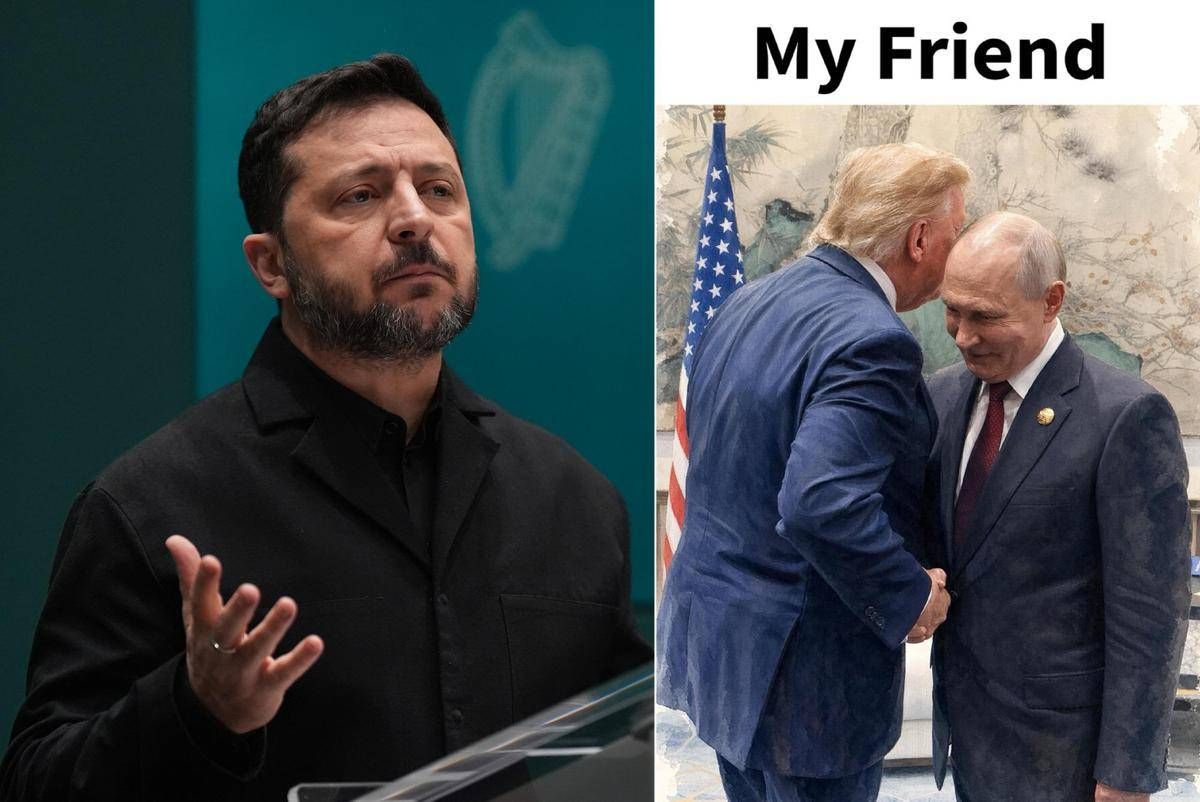
The Ukrainian president called Trump’s public display of affection for the Russian leader “strange,” arguing that a man responsible for aggression and killings cannot be considered a friend. The pointed comparison came as tensions between Kyiv and Washington continue over military aid and peace negotiations
Ukrainian President Volodymyr Zelensky has drawn a stark historical parallel to challenge Donald Trump’s description of Vladimir Putin as a friend, saying the American president’s public show of closeness with the Russian leader is comparable to someone claiming friendship with Adolf Hitler during World War II.
In an interview with the BBC at his office in central Kyiv, Zelensky reacted to a photograph Trump posted on social media showing him embracing Putin, accompanied by the caption “My Friend.” The image followed a meeting between the two leaders at a summit in China.
“Of course it’s up to the President of the United States, but… it’s strange,” Zelensky said. He then made his position unmistakable: “He’s an aggressor, and a killer. He can’t be a friend. Just cannot be.”
The Ukrainian president went on to spell out the historical comparison: “It’s the same that somebody say about Hitler during the Second World War that he’s a good friend. No, he’s not a friend.”
The remarks put the personal relationship Trump has chosen to display with Putin at the center of an increasingly difficult question for Washington’s dealings with Kyiv: how can the United States act as a mediator between Ukraine and Russia while its president publicly describes the Russian leader in friendly terms?
Trump’s public embrace of Putin draws a direct response from Kyiv
Trump’s photograph was more than a diplomatic image for Zelensky. It represented a public gesture toward the leader whose forces have invaded Ukraine and continued to wage war against the country.
The Ukrainian president did not dispute Trump’s right to decide how he conducts his personal and diplomatic relationships. But he rejected the suggestion that Putin could reasonably be described as a friend, given Russia’s actions in Ukraine.
His comparison with Hitler was the sharpest part of the BBC interview, making clear how far apart the two presidents remain in their descriptions of the Russian leader. For Zelensky, the issue is not simply the language used by Trump, but the message that such gestures send while the war continues.
Zelensky also accuses Washington of failing to put enough pressure on Moscow
The criticism of Trump’s relationship with Putin came alongside a broader expression of frustration with U.S. policy. Zelensky said Washington was devoting too much attention to the Middle East and not applying sufficient pressure on Russia during efforts to negotiate an end to the war.
He also pointed to delays in the delivery of critical anti-ballistic missiles, saying the shortage was costing Ukrainian lives. The systems are essential to protecting Ukrainian cities and infrastructure from Russian attacks.
The complaint underscores Kyiv’s concern that American priorities are shifting at a moment when Ukraine remains heavily dependent on Western military assistance.
Peace talks in Abu Dhabi have made no concrete progress
Zelensky’s criticism also comes as diplomatic efforts remain stalled. The latest round of negotiations in Abu Dhabi, held earlier in November, ended without a concrete breakthrough.
“More we know, more problems,” the Ukrainian president said, describing how further discussions had exposed additional obstacles rather than bringing the sides closer to an agreement.
A new round of talks is expected in December. But Zelensky’s comments suggest that Kyiv remains dissatisfied with the current approach, particularly with what it sees as Washington’s reluctance to use its influence to force Moscow toward meaningful concessions.
The contrast running through the interview is unmistakable: while Trump publicly presents Putin as a friend, Zelensky is asking the United States to treat Russia as the aggressor and apply greater pressure to end the war. His reference to Hitler turned that disagreement into a pointed public challenge to the American president.
(Photo: © AndKronos)

You must be logged in to post a comment Login