
International-News
EU Budget Talks Face a December Deadline as Leaders Remain Divided
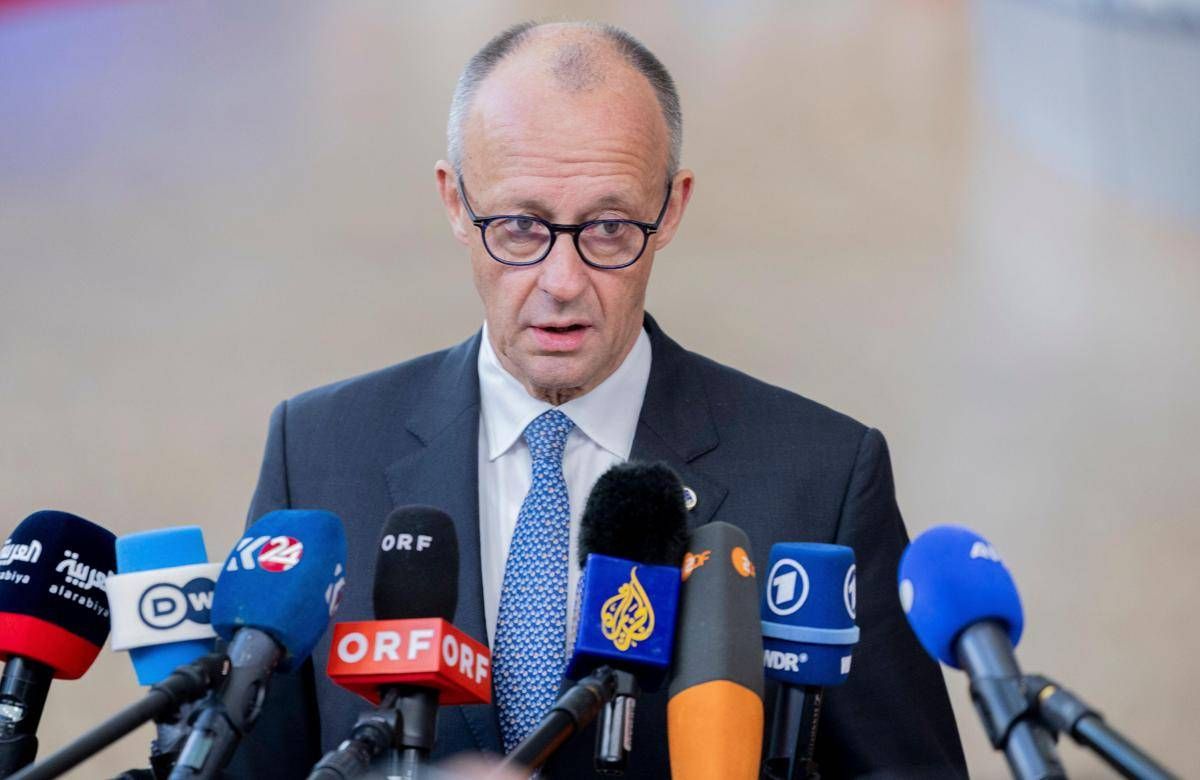
Friedrich Merz is pushing for an agreement before the end of 2026, but France is resisting further cuts and disagreements over new revenue sources remain unresolved
European Union leaders left a special summit in Brussels without an agreement on the bloc’s next seven-year budget, exposing divisions over spending priorities, national contributions and how to raise new revenue. German Chancellor Friedrich Merz is still pressing for a deal before the end of the year, but the positions of the 27 member states remain far apart.
The negotiations are now heading toward a decisive meeting on December 17 and 18. Merz said Thursday that reaching an agreement in 2026 was essential, partly because elections scheduled in several European countries next year could make a compromise harder to secure.
The urgency is not shared in the same way by every government. French President Emmanuel Macron has also called for an agreement before the end of the year, but warned that France will not accept a settlement at any cost. Portuguese Prime Minister Luis Montenegro, meanwhile, said the member states remain a long way from agreement on the proposed new sources of revenue for the EU budget.
The special European Council meeting on November 26 and 27 was intended to advance negotiations on the Multiannual Financial Framework for 2028-2034. After more than 12 hours of discussions, however, leaders failed to reach a breakthrough. The Associated Press reported that the talks exposed persistent disagreements over the size of the budget, the distribution of funds and a proposed loan for Ukraine.
Merz wants a deal before elections complicate negotiations
Merz acknowledged that the differences between national governments remain substantial, but said there had been some movement toward a compromise. Speaking to reporters in Brussels, he said he remained confident that an agreement could be reached by the end of the year.
“If we can bring our ideas closer together on the basis of these simple principles, I am confident that we can reach an agreement by the end of the year,” the German chancellor said.
He pointed to the risk that elections in 2027 could complicate negotiations if the member states fail to reach an understanding in December. That is why, he argued, governments are working to settle the main disagreements before the end of 2026.
Merz also outlined two principles guiding Germany’s position. The first is the condition of public finances across the bloc. Governments, he said, cannot make spending commitments at the European level that they will be unable to honor. Excessive borrowing, he warned, would threaten not only economic stability but also Europe’s sovereignty.
The second principle is security. Merz described Russia’s war against Ukraine as the greatest external threat facing Europe and argued that the EU must strengthen both its economic capacity and its ability to defend itself.
His remarks reflect Germany’s push to contain the overall cost of the next budget while ensuring that European spending supports strategic priorities. According to Reuters, Berlin and other net contributor countries have pressed for a smaller budget, while seeking to redirect resources toward competitiveness and security.
Macron draws a political line at December 31
France is also seeking an agreement before the end of the year, but Macron has made clear that Paris will not endorse a compromise simply to meet the deadline.
“We will be constructive and demanding,” the French president said, adding that an agreement on the 2028-2034 budget was “not an end in itself.” France, he said, would not sign a deal if the necessary conditions were absent.
Macron also warned that he would not be in a political position to conclude negotiations after December 31. The approaching French presidential election is central to his position: if the deadline is missed, political negotiations could be pushed into the second half of 2027.
The French president has also opposed further reductions to the proposed budget. Speaking in Brussels, he described the cuts already made to the European Commission’s original proposal as a strategic mistake and argued that the EU needs sufficient resources to compete with the United States and China.
The budget proposed by European Council President António Costa amounts to €1.582 trillion. It is 10.2% smaller than the European Commission’s original proposal, according to the European Council’s published figures.
New EU revenue sources remain a major obstacle
One of the most difficult issues is how the bloc should finance its next long-term budget. The European Commission has proposed new sources of revenue intended to reduce pressure on national contributions, but governments have yet to agree on the package.
Montenegro said the 27 member states remain “very far” from reaching an agreement on the new own resources proposed for the 2028-2034 framework. His assessment underlines the scale of the remaining differences, even as leaders seek to preserve the possibility of a December deal.
The European Council’s proposal includes a revised combination of revenue sources, among them contributions linked to digital services, emissions trading, the carbon border adjustment mechanism, tobacco-related products and electronic waste. The package is intended to help finance the EU’s priorities while keeping national contributions within what Costa has described as reasonable limits.
The next round of negotiations will take place at the European Council meeting scheduled for December 17 and 18. Merz hopes the two-day gathering will provide enough time to bridge the differences. But after the failure to reach an agreement in Brussels, the outcome remains uncertain.
(Photo: © AndKronos)







You must be logged in to post a comment Login