
International-News
Alice Huang Nvidia Probe Finds No Evidence China Ordered Affair With CEO
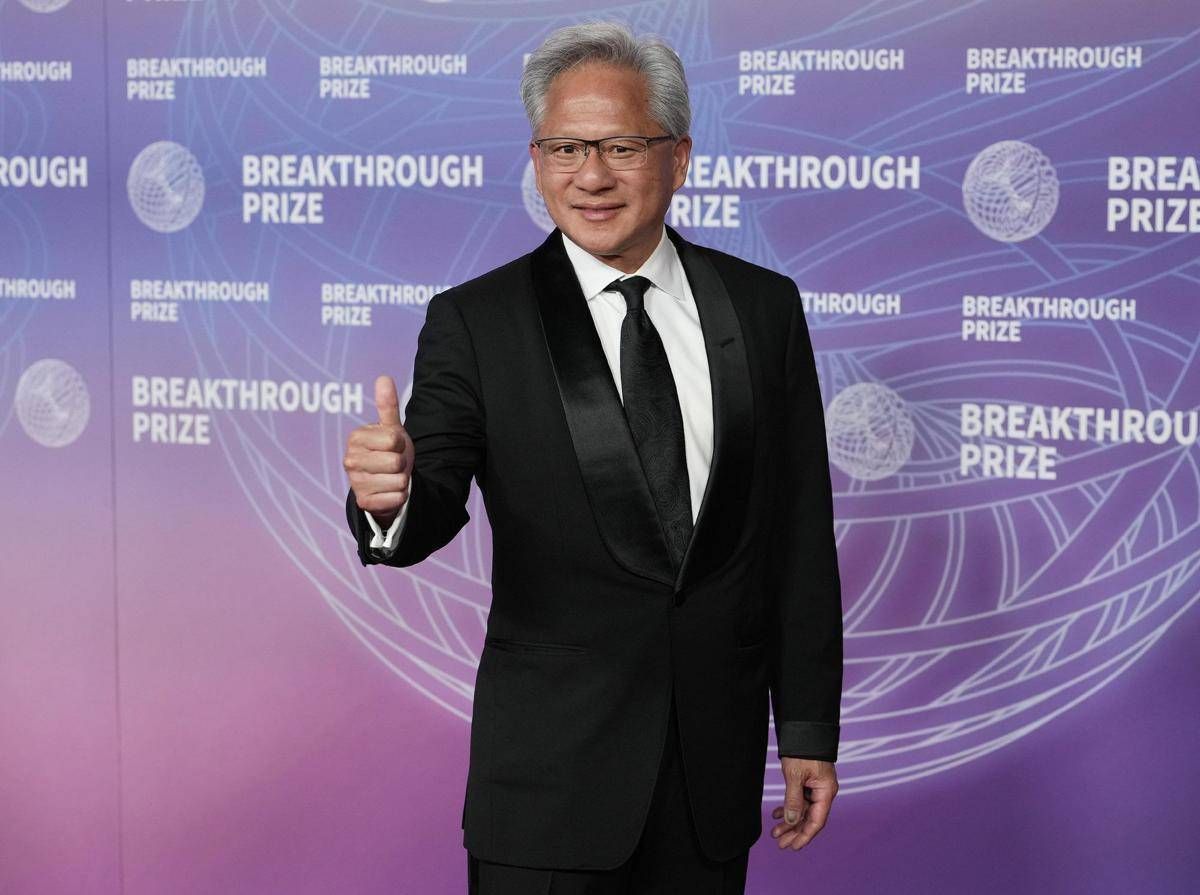
U.S. intelligence officials told congressional staff they found no evidence Beijing directed Alice Huang to begin her relationship with Jensen Huang, but did not rule out that she later passed information to Chinese intelligence
U.S. intelligence agencies have found no evidence that China directed Alice Huang to begin a romantic relationship with Nvidia founder Jensen Huang as part of an espionage operation, according to information presented to congressional staff during a classified briefing Tuesday. But intelligence officials did not rule out the possibility that Alice Huang subsequently shared information with Beijing, leaving critical questions about the extent of China’s access to one of America’s most influential technology executives.
Officials from the FBI, CIA and Office of the Director of National Intelligence (ODNI) outlined what U.S. agencies know about Alice Huang’s contacts with China’s Ministry of State Security, the country’s principal civilian intelligence service. The briefing, reported by The New York Times, was attended by staff members of the House and Senate intelligence committees and aides to congressional leaders.
The distinction emerging from the meeting is significant: investigators have not established that the relationship itself was orchestrated by Chinese intelligence, but neither have they ruled out intelligence gathering after it began.
The disclosure comes as Nvidia faces mounting scrutiny over its handling of the scandal, the national security implications of its business dealings in China and the board’s decision to reverse course and restore Jensen Huang as chief executive after his resignation.
The intelligence briefing leaves the central question unanswered
According to The New York Times, intelligence officials told congressional staffers they had found no evidence that China’s Ministry of State Security instructed Alice Huang to pursue a relationship with Jensen Huang.
However, the briefers did not dispute the possibility that she had subsequently passed information to Chinese intelligence once the relationship was underway.
The agencies also acknowledged that they do not yet fully understand her role or the extent of her activities. Alice Huang was a senior executive at Megaspeed International, a Singapore-based technology company that has come under investigation over suspicions that advanced Nvidia artificial intelligence chips were diverted to Chinese customers in violation of U.S. export restrictions.
The latest intelligence disclosures therefore leave two separate questions: whether Alice Huang was acting under direct instructions from Beijing when she became involved with Jensen Huang, and whether information obtained through that relationship was later transmitted to Chinese authorities.
The briefing did not establish either that she had been tasked with initiating the affair or that the relationship was unrelated to subsequent intelligence gathering.
There was also particular interest in another figure in her professional and personal circle. According to the New York Times, intelligence officials described Kang Wei, a man frequently introduced as Alice Huang’s husband, as a more significant figure in the Chinese intelligence network. He had reportedly served at times as an asset of the Ministry of State Security and maintained more substantial contacts with the agency.
That assessment adds another dimension to the investigation, which extends beyond Alice Huang’s personal relationship with the Nvidia founder to the wider network surrounding Megaspeed.
The March 30 classified memorandum remains at the center of the dispute
The congressional briefing did not include the most sensitive intelligence gathered by U.S. agencies about Alice Huang.
Nor did officials present a highly classified memorandum dated March 30, prepared under the supervision of Secretary of State and national security adviser Marco Rubio. According to the New York Times, the document addresses Jensen Huang’s relationship with Alice Huang and her connections to Chinese intelligence services.
The House and Senate intelligence committees have requested access to the memorandum, seeking a fuller account of the information available to the administration and the assessments made by intelligence agencies.
Its omission is particularly significant because the congressional staffers received only a general overview of the intelligence picture, rather than the most sensitive material underpinning the government’s investigation.
The distinction between what officials presented and what remains classified is likely to fuel further questions about the administration’s handling of the case and the extent to which lawmakers have been given access to the evidence.
Nvidia’s board reversed course after Trump’s intervention
The intelligence disclosures have also intensified scrutiny of Nvidia’s corporate governance.
Initially, the company’s board appeared to be following a conventional response to a serious executive-level controversy. Directors commissioned a thorough and independent investigation by Wachtell, Lipton, Rosen & Katz, a prominent law firm specializing in corporate and financial matters, established a new board committee focused on national security and indicated that Jensen Huang would not return as CEO.
That position changed dramatically on Monday, November 23, when the board reinstated Huang, reversing its earlier decision.
The move followed extraordinary intervention by President Donald Trump, who reportedly contacted a board conference call to press directors to bring the Nvidia founder back.
The decision prompted criticism of the company’s leadership and renewed calls for members of the board to resign. It also raised questions about whether directors had been able to exercise independent judgment in a case involving both corporate oversight and potential national security concerns.
The reversal is particularly contentious because the independent investigation commissioned by the board had only just begun. Huang had not been formally cleared by that investigation when directors decided to restore him to the company’s top position.
Governance experts question the board’s credibility
The board’s handling of the controversy has become a separate issue from the underlying intelligence investigation.
Fred Ashton, director of competition policy at the American Action Forum, said the directors had been placed in an exceptionally difficult position because of the political pressure surrounding Huang’s future.
“The board was put in an impossible position,” Ashton said, arguing that the White House could have made it extremely difficult for directors to keep Huang away from the company if they had resisted his return.
Nevertheless, Ashton believes the board should resign.
His argument is that the independent investigation remains incomplete and that the decision to reinstate Huang risks undermining the credibility of the entire process.
“I don’t know how you run a company with so little credibility,” he said.
Ashton also warned that the administration’s intervention could ultimately damage America’s competitive position in artificial intelligence by weakening confidence in the institutions and corporate oversight mechanisms surrounding the sector.
The controversy comes at a particularly sensitive moment for the industry. Nvidia remains a central player in the global AI market, but its position does not make it immune to competition or the consequences of a loss of institutional credibility.
Ashton pointed to OpenAI as an example of how quickly the balance of power in artificial intelligence can change. Once widely regarded as the sector’s leading company, it now faces substantial competition from Google and Anthropic.
A national security investigation with consequences beyond Nvidia
The Alice Huang investigation has become part of a broader dispute over the security of America’s artificial intelligence supply chain and the risks associated with advanced semiconductor exports to China.
According to Reuters, U.S. intelligence agencies have been examining Alice Huang’s contacts with China’s Ministry of State Security, including communications reportedly maintained from the spring of 2025 through the fall of 2026. That period overlaps with at least part of her relationship with Jensen Huang.
The investigation also extends to Megaspeed and concerns that the company may have helped channel advanced Nvidia chips to Chinese customers despite U.S. export restrictions.
The Chinese government has rejected the espionage allegations, while U.S. officials have yet to establish publicly that Alice Huang acted as a Chinese intelligence operative.
The latest congressional briefing has narrowed one part of the controversy without resolving the larger issue. There is no evidence presented to lawmakers that Beijing ordered Alice Huang to initiate the relationship. Whether information subsequently reached Chinese intelligence, and what that information may have contained, remains an open question.
Meanwhile, Nvidia’s board has restored Jensen Huang to the position of CEO before its independent investigation has reached a publicly disclosed conclusion, leaving the company’s governance and national security questions unresolved.









You must be logged in to post a comment Login