
International-News
Netanyahu-Eisenkot Rotation Deal Could Fail Before It Begins
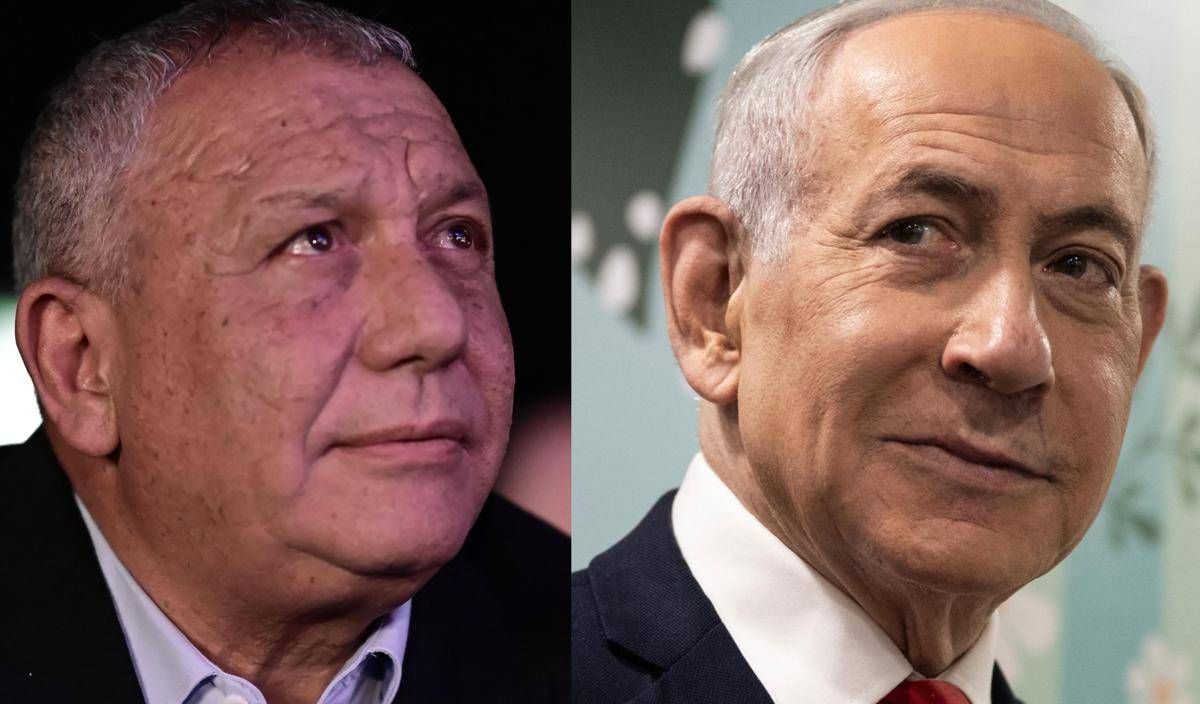
Netanyahu is reportedly prepared to let his rival take the premiership first, but Eisenkot is moving closer to building a government without Likud. With negotiations advancing on several fronts, the offer risks arriving too late to change the political equation
Benjamin Netanyahu may be willing to give up the first turn as Israel’s prime minister. The problem is that Gadi Eisenkot may no longer need him.
The Israeli prime minister is reportedly preparing to offer his political rival an unprecedented power-sharing arrangement under which the leader of Yashar would take office first, with Netanyahu returning to the premiership in the second phase. But the proposal is emerging just as Eisenkot is making progress toward assembling a government without Likud, potentially undermining the very purpose of Netanyahu’s initiative.
The timing is significant. After weeks of negotiations, Eisenkot has secured coalition agreements with Avigdor Liberman’s Yisrael Beytenu and Yair Golan’s Democrats, while discussions with the ultra-Orthodox United Torah Judaism party have advanced. According to The Jerusalem Post on November 28, his representatives are now working through details concerning military conscription and funding for ultra-Orthodox educational institutions. Eisenkot is reportedly aiming to swear in a government as early as December 2.
That prospect helps explain why Netanyahu’s willingness to serve second in a rotation has become politically relevant. The outgoing prime minister is facing the possibility of losing power to a coalition that could bring together parties previously divided over military service, relations with religious factions and the future of Israel’s political leadership.
A last-minute attempt to keep Likud in power
The rotation proposal was reported on Friday evening by Channel 13, which cited officials in the Prime Minister’s Office. According to the broadcaster, Netanyahu’s inner circle is divided over whether to pursue the arrangement.
Israel’s public broadcaster Kan reported that the offer had already been communicated through unofficial channels, allowing Likud to explore the possibility without making a formal public commitment.
Under the reported arrangement, Eisenkot would become prime minister first, while Netanyahu would take over later. The proposed duration of each term and the other conditions have not been officially disclosed.
The political significance goes beyond the order in which the two leaders would occupy the prime minister’s office. A unity government would allow Netanyahu to remain part of the country’s political leadership rather than face exclusion from power after an election that failed to produce a parliamentary majority for his bloc.
But Eisenkot has little incentive to accept an agreement that could jeopardize the coalition he has spent weeks trying to build.
In its November 28 coverage, The Times of Israel reported that Eisenkot remains highly skeptical of Netanyahu’s approach and is continuing preparations to form a government without Likud.
Liberman warns Netanyahu could be preparing another election
The strongest objection has come from Liberman, who believes the proposal could be designed to prevent an alternative government from taking shape.
On Friday, the Yisrael Beytenu leader warned on X that Netanyahu might offer Eisenkot the second position in a rotation agreement simply to prolong negotiations and eventually force another election.
“The change government is taking shape,” Liberman wrote. He acknowledged that Netanyahu could offer Eisenkot the first term, with the Likud leader taking over afterward, but added: “Everyone needs to understand: this is merely a ploy.”
As reported by The Times of Israel, Liberman believes Netanyahu could keep unity negotiations going until the last possible moment before finding a reason to abandon them. Even if an agreement were reached, he fears the prime minister could provoke a political crisis within months and return the country to the polls.
The warning reflects a deeper problem for Netanyahu: the negotiations are no longer taking place between two equally positioned political camps. Eisenkot is developing alternative routes to a majority, reducing Likud’s leverage.
Eisenkot’s alternative is taking shape without Netanyahu
The parliamentary arithmetic remains complicated, but the negotiations have produced concrete developments.
Eisenkot’s four-party bloc has 48 seats in the 120-member Knesset, compared with 53 held by Netanyahu’s right-wing and ultra-Orthodox alliance. Neither side has the 61 lawmakers required for an outright majority.
The 19 seats held by Arab-led parties could prove decisive. However, Liberman and Bennett have opposed relying on their support, making an agreement with the ultra-Orthodox factions particularly important.
This is where the latest negotiations could change the balance.
According to The Jerusalem Post, Eisenkot’s representatives have made progress with United Torah Judaism, whose seven seats could bring his bloc to 55. The party’s representatives have been discussing education funding, employment conditions and the terms of a possible arrangement on military service.
There is, however, a fundamental contradiction. Eisenkot has insisted that military or national service must become obligatory for all citizens, challenging the extensive exemptions historically granted to ultra-Orthodox men.
United Torah Judaism, meanwhile, is seeking guarantees for full-time religious students, including protection from military recruitment and the removal of sanctions against those who have not enlisted.
The disagreement is substantial enough to threaten the negotiations. Eisenkot has made clear that he will not abandon his principles on compulsory service, while Liberman insists that any arrangement must meet the military’s requirements and withstand judicial scrutiny.
Even so, the fact that discussions have reached detailed legislative and financial questions suggests that Eisenkot is exploring a viable alternative rather than relying exclusively on negotiations with Netanyahu.
Bennett’s position complicates the final agreement
Naftali Bennett remains another important variable.
The leader of B’Yachad has publicly advocated a unity government involving Likud and has supported the possibility of a rotational premiership with Eisenkot taking office first. Unlike Liberman and Golan, however, Bennett has not yet signed a coalition agreement with Yashar.
His position creates an unusual situation: he supports the idea of Eisenkot becoming prime minister but has also argued for continuing negotiations with Netanyahu before establishing an alternative government.
According to The Times of Israel, senior figures in Eisenkot’s camp believe Bennett could vote against an Eisenkot-led administration if it were formed before talks with Likud had been exhausted.
Bennett has nevertheless said he would consider other, less desirable options if negotiations with Netanyahu failed.
The disagreement matters because Eisenkot cannot afford to lose potential partners while attempting to secure the additional parliamentary support needed to govern.
The real dispute goes beyond who becomes prime minister
For Eisenkot, the central obstacle to a unity government is not simply Netanyahu’s insistence on retaining a future claim to the premiership.
The two camps have also failed to agree on the substance of the next government’s agenda.
In his November 27 statement, Eisenkot said negotiations had produced no agreement on three fundamental issues: an independent state commission of inquiry into the failures surrounding Hamas’s October 7, 2023, attack; the removal of figures he considers extremist from the government; and legislation establishing compulsory military or national service.
He accused Likud of refusing to present concrete proposals despite five meetings between the negotiating teams over two weeks.
The criticism suggests that even a concession over the premiership would not automatically resolve the disagreements preventing a unity government.
Eisenkot has indicated that he remains open to compromises over the commission of inquiry and certain judicial reforms. But he has rejected an arrangement that would preserve the existing government and its political partners without addressing the issues that have dominated the negotiations.
December 6 could determine Netanyahu’s political future
The immediate deadline is approaching. Herzog gave Eisenkot the mandate to form a government on November 8, after 67 lawmakers recommended him for the task. The initial 28-day period expires on December 6, although the president can grant an extension of up to 14 days.
The latest developments put Netanyahu in an increasingly difficult position. If Eisenkot manages to assemble a coalition without Likud, the incumbent prime minister could lose power without securing the rotation arrangement reportedly under consideration.
If Eisenkot fails, Herzog could give another lawmaker the opportunity to form a government. Netanyahu could then attempt to regain the initiative. Should the process collapse altogether, another election would remain a possibility.
For now, the central question is whether Netanyahu’s reported offer can persuade Eisenkot to abandon the alternative coalition taking shape around him. The more progress Yashar makes with Liberman, Golan and the ultra-Orthodox factions, the less attractive a unity agreement with Likud may become.
The rotation proposal could still change the negotiations. But Netanyahu is no longer simply trying to convince Eisenkot to share power. He may be trying to prevent his rival from taking it without him.
(Photo: © AndKronos)









You must be logged in to post a comment Login