
International-News
Spain’s election puts Sánchez’s political survival on the line as the right closes in
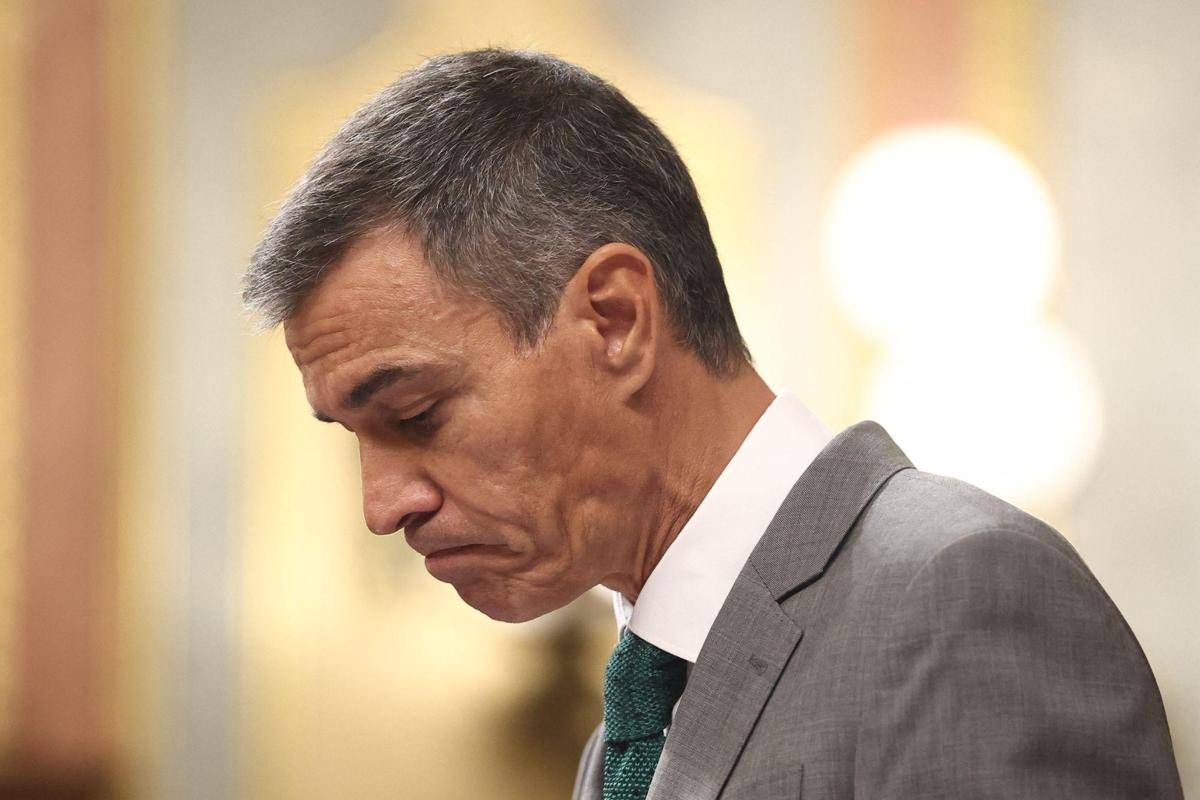
A snap vote called after a parliamentary defeat has become a referendum on the prime minister’s record, with the Popular Party and Vox seeking a majority and a series of scandals weighing on the Socialist government
Spain is heading into a general election that could end Pedro Sánchez’s eight-year run as prime minister, with the conservative Popular Party (PP) and the far-right Vox seeking to turn growing voter discontent into a parliamentary majority.
The vote, scheduled for Sunday, November 29, follows Sánchez’s decision to bring forward the election after his government suffered a major defeat in Congress over a package of housing measures. But the campaign has evolved into a broader judgment on his leadership, shaped by corruption investigations, the cost of living, immigration and two deadly railway disasters.
The latest polling averages published before the final days of the campaign put the PP ahead of the Spanish Socialist Workers’ Party (PSOE), although the gap has narrowed. The PP was polling at around 31.5%, against approximately 29% for the Socialists, while Vox was close to 18%.
The decisive question is whether PP leader Alberto Núñez Feijóo can secure enough seats to govern with Vox. Most projections have suggested that the two parties could exceed the 176 seats required for an absolute majority in the 350-member Congress of Deputies. That would leave Sánchez facing a difficult path to remain in office, even if the PSOE finishes closer to the PP than earlier forecasts suggested.
A snap election triggered by a parliamentary defeat
Sánchez announced the early election on October 5, after Congress rejected a series of housing decrees two days earlier. The measures included provisions intended to limit rents, extend protections against evictions and restrict certain property purchases by companies.
The defeat exposed the fragility of the parliamentary arrangements that have sustained his government. The decrees were opposed by the PP, Vox and Junts, the Catalan separatist party whose support has been important to Sánchez’s legislative strategy.
The prime minister had taken office in June 2018 after winning a no-confidence motion against Mariano Rajoy’s government, in the aftermath of the Gürtel corruption scandal. Since then, he has repeatedly relied on agreements with smaller parties and regional formations to maintain power.
The 2023 election again produced a fragmented parliament. Although the PP emerged as the largest party, the right failed to secure a majority. Sánchez was re-elected prime minister in November that year with 179 votes, thanks to the support of Sumar and several regional and nationalist parties.
This time, however, the balance could shift. A PP-Vox majority would give Feijóo an opportunity to form a government, potentially bringing Vox into national executive power or making it an essential parliamentary partner.
Corruption allegations have become a central issue
The campaign has been overshadowed by a series of judicial proceedings involving figures close to the Socialist government.
José Luis Ábalos, who served as transport minister from 2018 to 2021, has been sentenced to 24 years in prison in connection with a corruption case involving public contracts for medical supplies during the pandemic.
Sánchez’s wife, Begoña Gómez, has also been sent to trial over allegations including influence peddling and embezzlement. The case remains a legal proceeding, not a conviction, and prosecutors have called for her acquittal.
The prime minister’s brother, David Sánchez, has received a nine-year disqualification from public office for administrative prevarication. The ruling is not final and has been appealed.
Former Socialist prime minister José Luis Rodríguez Zapatero is also under investigation in connection with the bailout of airline Plus Ultra and other alleged offences. Former PSOE secretary of organisation Santos Cerdán has faced a separate investigation and spent five months in pretrial detention.
For the opposition, these cases have become evidence of a government whose political credibility has been badly damaged. Sánchez has rejected the attacks and sought to present the election as a choice between his government’s economic and social policies and a conservative alliance dependent on Vox.
Railway disasters intensify scrutiny of the government
The campaign has also been marked by two major railway accidents.
On October 28, a high-speed train collision near Urda, in the province of Toledo, left at least 69 people dead and around 80 injured. The crash involved an AVE train and a stationary Iryo service on the Madrid-Seville line.
A separate accident near Adamuz, in Córdoba province, on January 18, killed 46 people.
Together, the two disasters have intensified public scrutiny of railway safety, infrastructure management and the government’s responsibility for the condition of the national rail network.
The accidents have become more than a transport issue in the election campaign. They have reinforced wider concerns about the performance of public institutions and the ability of the state to deliver essential services.
Spanish economist Luis Garicano, speaking to The Economist, described the psychological impact of the railway tragedy as a symbol of broader problems in the country, including political polarization, corruption and the housing crisis.
Immigration and housing remain major dividing lines
Immigration has emerged as another major point of confrontation, particularly after the crisis in Ceuta in July.
Spanish authorities subsequently reported around 72,000 illegal arrivals from Morocco during the episode, including approximately 3,560 unaccompanied minors. Many were returned to Morocco within days, while thousands remained in the Spanish enclave in the following weeks.
The episode has strengthened Vox’s focus on border controls and migration policy, putting pressure on the PP to take a tougher position without alienating more moderate voters.
The government’s regularization program has also become a campaign issue. More than one million applications have been submitted, although that figure should not be confused with the number of people who have actually received legal status. The program was expected to benefit around 500,000 people, with a smaller number of applications initially deemed admissible.
Housing, meanwhile, remains one of the most politically sensitive issues for younger voters and lower-income households. High rents, limited supply and difficulties accessing home ownership have become central concerns, helping explain why the government attempted to push through its housing decrees before calling the election.
Sánchez makes the economic case for another term
Sánchez has sought to counter the political damage by emphasizing Spain’s economic performance, employment and social spending.
The prime minister has repeatedly argued that Spain is among Europe’s strongest-performing economies and has presented rising wages and purchasing power as evidence that his policies are working. Some of the comparisons he has used during the campaign, including claims about purchasing-power growth relative to France and Germany, are political assertions and should be treated as such rather than as independently established conclusions.
The government has also approved more than €1.5 billion in welfare measures in the month before the election, according to Reuters. The package included support for vulnerable households, disaster victims and housing subsidies.
The strategy is clear: Sánchez wants voters to weigh the government’s economic and social record against the scandals and controversies that have dominated the campaign.
A decisive test for Spain’s political balance
The election is also a test of the political strategy that brought Sánchez to power and kept him there through a succession of fragmented parliaments.
His career has been marked by repeated political comebacks. In 2016, he was forced out as PSOE leader after refusing to allow the party to abstain in a parliamentary vote that would have enabled Rajoy to remain prime minister. He returned the following year by winning the party leadership contest against Susana Díaz and Patxi López.
In 2018, he became prime minister through the first successful no-confidence motion in modern Spanish democracy. Since then, he has survived difficult elections and relied on complex parliamentary agreements to govern.
But the November 29 vote could produce a different outcome. If the PP and Vox win a majority, Sánchez’s political future will be in serious doubt. If they fall short, the Socialists may still have an opportunity to negotiate another parliamentary arrangement, although the arithmetic could prove considerably more difficult than in 2023.
The result will therefore determine not only who governs Spain, but also whether the country moves toward a government supported by the right and far right or remains under the leadership of a Socialist prime minister whose political survival has repeatedly depended on his ability to assemble a majority from a deeply divided parliament.
(Photo: © AndKronos)









You must be logged in to post a comment Login