
International-News
Jensen Huang’s Return Puts Nvidia’s Board and Trump Under Scrutiny
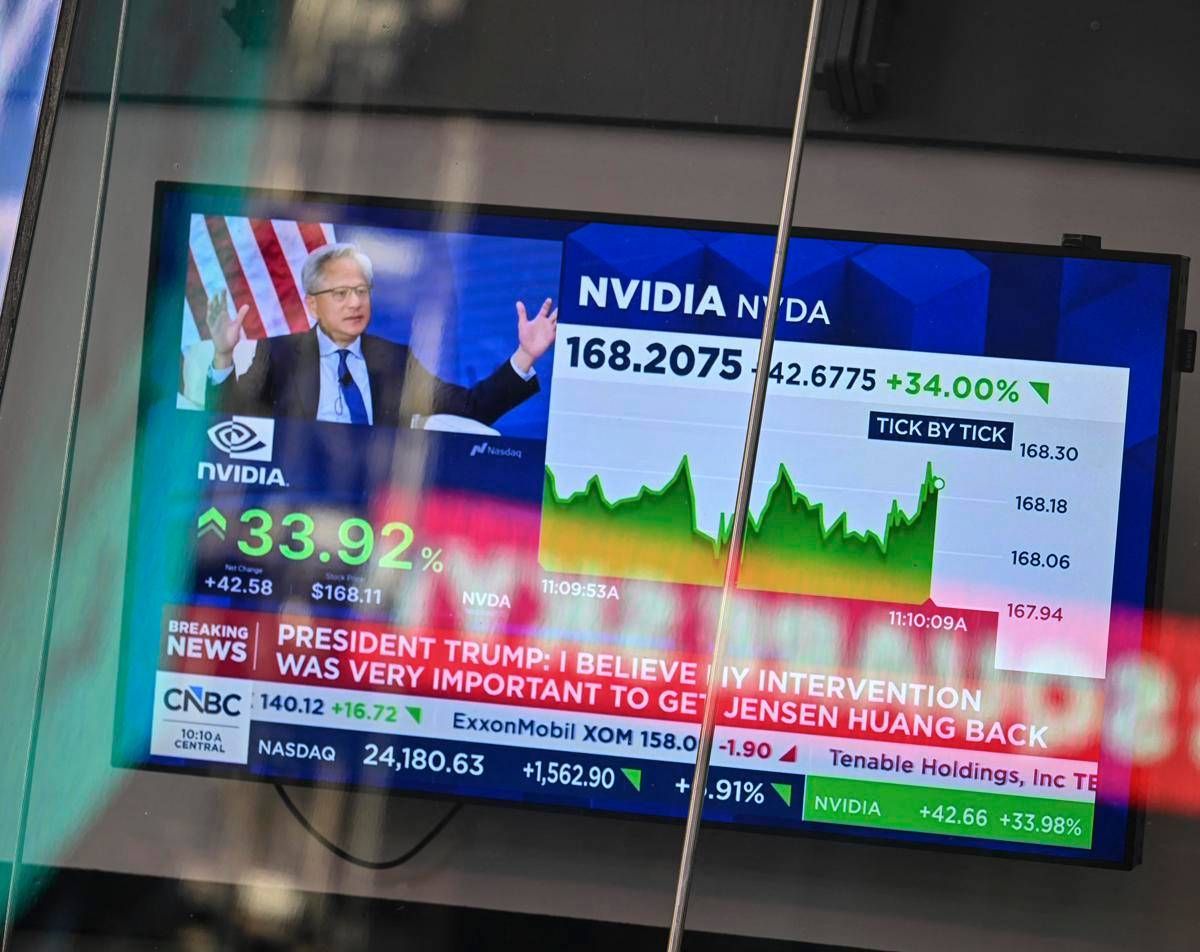
The president helped reverse a decision the board had described as final, while new congressional hearings, federal probes and a trade blacklist targeting a company linked to the scandal keep national security questions unresolved
Jensen Huang is back in charge of Nvidia, but the circumstances of his return have turned a corporate leadership crisis into a broader confrontation over national security, political influence and America’s control of the technology powering the artificial intelligence race.
The company’s board voted unanimously to reinstate Huang as president and chief executive on Monday, Nov. 23, less than two weeks after accepting his resignation. The reversal followed an intensive push by President Donald Trump, who publicly advocated for Huang’s return and later said he had persuaded the board to bring back the executive who built Nvidia into one of the most consequential companies in the global technology industry.
The decision immediately sent Nvidia shares soaring. The stock closed up more than 31% at $165.05, helping fuel a broad Wall Street rally after a punishing week for technology stocks. But the market reaction was only one part of the story. Huang’s reinstatement has intensified questions about how much influence the White House exerted over a private company’s board, and whether assurances from the administration are sufficient to resolve concerns about potential Chinese intelligence activity and the movement of advanced AI chips to China.
Those questions are now moving directly to Capitol Hill. Huang is still expected to face congressional questioning in December, while Nvidia and several government agencies remain under scrutiny.
Trump’s intervention changed the outcome
The speed of the reversal is striking. On Nov. 17, Nvidia chairman Harvey C. Jones told investors that the board had unanimously accepted Huang’s resignation and did not intend to reinstate him. The company appeared to be preparing for a permanent leadership transition, with Chief Financial Officer Colette Kress serving as interim CEO.
Within days, that position collapsed.
Trump had already signaled his support for Huang, arguing that Nvidia needed the executive’s leadership and that his departure could damage the American economy. On Sunday night, the president renewed his appeal for the board to bring Huang back. The following day, he told CNBC that he had spoken to directors, directly and indirectly, and had convinced them that reinstatement was the right decision.
“The board decided to do what we wanted them to do,” Trump said, taking credit for the outcome. He also said he had spoken with Huang on Sunday, before the company announced the decision.
New reporting by Axios and The Associated Press has shed light on the behind-the-scenes effort. Vice President JD Vance became more involved over the weekend, according to a person familiar with the discussions cited by AP. The White House viewed Vance, who has longstanding connections in Silicon Valley, as an effective intermediary who could help overcome reservations among board members.
Axios reported that Huang’s allies portrayed him to Trump as a victim of an intelligence and political campaign, appealing to the president’s distrust of parts of the intelligence community. The argument, according to sources cited by the publication, was that Huang had become too important to the American economy to lose.
The dispute also exposed divisions within the administration. Secretary of State Marco Rubio had circulated intelligence concerning Huang’s relationship with Alice Huang, the Chinese businesswoman at the center of the controversy, to senior officials earlier this year. Axios reported that Rubio was angered when a memo bearing his name became public. Treasury Secretary Scott Bessent had also criticized the Commerce Department’s handling of restrictions involving Megaspeed, the Singapore-based company linked to Alice Huang.
The administration ultimately backed Huang’s return. Trump said officials had provided Nvidia’s board with assurances that reinstating him posed no national security risk. The president also cited Attorney General Todd Blanche’s position that the government had no evidence Huang had engaged in unlawful conduct.
Nvidia’s formal announcement used similar language. The board said it had received input from senior levels of the U.S. government and was confident that Huang’s return did not create a national security risk.
The intelligence questions have not been settled
The central allegations remain unresolved. Huang resigned after reports of extramarital relationships, including one with Alice Huang, an unrelated Chinese businesswoman and former executive of Singapore-based Megaspeed. U.S. intelligence agencies have examined her alleged connections to China’s Ministry of State Security and whether information may have been passed to Beijing.
Huang has acknowledged being unfaithful to his wife and apologized, but has not publicly addressed the reported relationships in detail. China has rejected the espionage allegations as groundless. Reuters has said it could not independently verify the intelligence claims.
The Justice Department has not reached a conclusion on whether Alice Huang was a Chinese intelligence asset. Attorney General Blanche has said the FBI is investigating her, while Trump previously confirmed that federal authorities were looking into the matter.
Nvidia’s board has not closed its own investigation, either. The company said an independent committee, made up entirely of outside directors and assisted by the law firm Wachtell, Lipton, Rosen & Katz, will continue examining whether Huang was targeted by a foreign intelligence operation.
The company has also established a separate National Security and Export Control Committee and begun searching for a chief compliance officer. That position is intended to strengthen oversight of regulatory obligations and report to the board’s governance committee.
The distinction is important: the board’s decision to reinstate Huang is not a finding that every allegation has been disproved. Nor does the administration’s assurance amount to a public conclusion by investigators that all national security concerns have been resolved.
Megaspeed added to the U.S. trade blacklist
One of the most consequential developments came on Monday, when the Commerce Department added Megaspeed and several affiliated companies to the U.S. government’s Entity List.
The designation restricts their access to American technology, including advanced semiconductor products, without a federal license. Such licenses are generally subject to a presumption of denial.
Megaspeed has attracted scrutiny over allegations that it helped Chinese customers obtain advanced Nvidia chips despite U.S. export restrictions. The company has denied wrongdoing. Its links to Alice Huang have made it a central part of the wider investigation into the Nvidia chief’s relationships and the potential diversion of sensitive technology.
The action creates an immediate contradiction at the heart of the story: Washington has accepted Huang’s return to the helm of Nvidia while simultaneously tightening restrictions on a company connected to the allegations that helped force him out.
The issue goes beyond personal relationships. The United States has imposed controls on exports of advanced AI chips to China since 2022, seeking to prevent Beijing from accessing technology considered strategically important. Congress is examining whether Nvidia products have reached unauthorized Chinese customers, including companies with links to the country’s military.
Congress is keeping Huang on the agenda
Huang’s return has not changed the schedule for congressional scrutiny.
He is expected to take part in transcribed interviews on Dec. 1 with three House panels: the Intelligence Committee, the Foreign Affairs Committee and the Select Committee on the Chinese Communist Party. Nvidia general counsel Tim Teter is scheduled to appear the following day.
Huang is also due to testify publicly before the Senate Banking Committee on Dec. 3. The committee’s chairman, Republican Sen. Tim Scott, confirmed the hearing, while Democratic Sen. Elizabeth Warren said the reinstatement did not remove the company’s obligation to answer questions about its business and national security exposure.
Lawmakers from both parties have challenged the administration’s assurances. Their questions include who provided the government’s assessment to Nvidia’s board, what intelligence was considered and whether advanced chips were transferred to Chinese entities in violation of export restrictions.
The controversy has also raised questions about Commerce Secretary Howard Lutnick’s relationship with Nvidia and the administration’s handling of export licenses. Several lawmakers have called for a wider investigation into the government’s role in the reinstatement.
The legal exposure extends beyond the spy allegations
The investigations facing Nvidia are not limited to the intelligence concerns surrounding Alice Huang.
Reuters reported that the Securities and Exchange Commission is examining Nvidia’s accounting practices, although the precise focus and timing of the inquiry have not been publicly established. The Justice Department is also reviewing Nvidia’s acquisitions, investments and sales practices as part of a broader antitrust investigation.
Separately, federal authorities are investigating potential export-control violations involving Megaspeed. State-level inquiries are also continuing. California Attorney General Rob Bonta’s office has served Nvidia with an investigative subpoena seeking information about whether advanced chips or confidential information reached China and whether the company misled the public. Missouri Attorney General Catherine Hanaway has said her office will continue examining whether Huang’s conduct harmed state pension funds.
The company also faces a shareholder derivative lawsuit filed in federal court on Nov. 11. The investor alleges that Nvidia’s directors failed to exercise adequate oversight and allowed the company to make repeated assurances about Huang’s relationship with Alice Huang and Megaspeed before the allegations became public.
The return of the CEO does not automatically resolve those claims. Legal experts cited by Reuters said the administration’s assurances could help the board defend its decision, but the shareholder’s lawyers argue that the dispute involves broader issues of corporate governance, compliance and succession planning.
A dramatic homecoming, with the investigation still open
Huang returned to Nvidia’s Santa Clara headquarters on Monday, where employees gathered in the company’s atrium to welcome him with applause and chants of his name.
“Thank you for giving me a second chance. I will be a better CEO this time,” he told the crowd, according to a video circulated on social media. One employee shouted: “We love you, Jensen!”
The executive’s return was also celebrated by Elon Musk, who wrote that the mistake had been corrected.
Trump, meanwhile, posted an AI-generated image of Huang holding a red bra, modeled on the photograph of the president raising his fist after the 2024 assassination attempt. The image added a personal and theatrical dimension to a controversy that has become increasingly entangled with the administration’s political messaging.
For Nvidia, the immediate leadership question has been settled. Colette Kress will return to her role as chief financial officer, while Huang resumes control of the company he co-founded and led for more than three decades.
But the more difficult questions remain. The board has restored its most influential executive, the administration has publicly backed that decision and investors have responded with a powerful rally. Congress, federal investigators and state authorities, however, have not closed their inquiries.
Huang’s return may have ended Nvidia’s leadership vacuum. It has not ended the fight over who had access to the company’s technology, how effectively its board exercised oversight and how far the White House should go in shaping the decisions of a private corporation at the center of the AI race.
(Photo: © AndKronos)





You must be logged in to post a comment Login