
International-News
Russian Corvette Merkury Sinks After Suspected Drone Strike in Libya
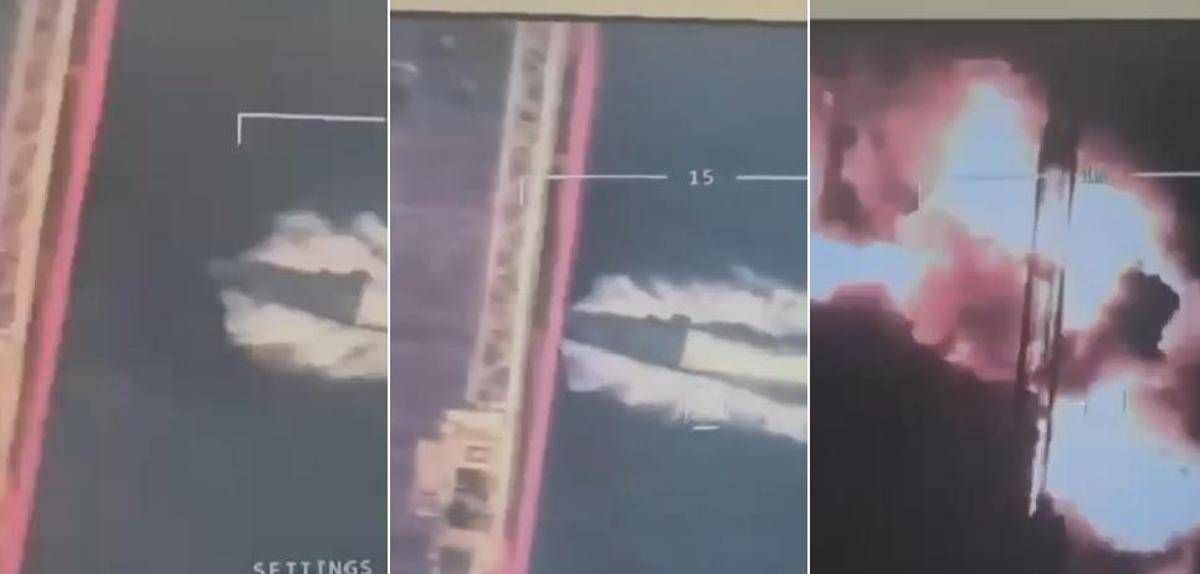
The Russian warship capsized at Benghazi’s naval base, where it had stopped for fuel and supplies. Libyan officials suspect Ukrainian sea drones were involved. A second vessel was hit offshore, raising fears that the war in Ukraine is expanding into the Mediterranean
A Russian warship has sunk at a naval base in eastern Libya after an explosion and fire that authorities suspect were caused by a drone attack, in a potentially significant extension of the war between Russia and Ukraine into the Mediterranean. The vessel, identified as the Russian Navy corvette Merkury, capsized at the port of Benghazi, where it had stopped to refuel and replenish supplies on its return journey to Russia. Ten people, including Russian and Libyan nationals, suffered minor injuries, according to medical sources cited by Reuters.
Satellite imagery released by Vantor and examined by Reuters showed that most of the warship had overturned and sunk, leaving only its bow visible above the water. Smoke was still rising from part of the vessel’s superstructure, while substantial debris had been scattered along the pier. The images provided the clearest indication of the extent of the damage, suggesting that the incident had effectively destroyed a modern Russian naval asset far from its home waters.
The eastern Libyan administration said a preliminary investigation pointed to a possible drone attack. Two Libyan military officials affiliated with the forces led by Khalifa Haftar told the Associated Press that several Ukrainian naval drones had been launched against the vessel from a base operated by Ukrainian forces in western Libya. At least four were reportedly intercepted and destroyed, while two struck the corvette.
Those allegations have not been independently established. No group has claimed responsibility, and neither Moscow nor Kyiv had issued an immediate official comment.
The Merkury, a Project 20380 Steregushchiy-class corvette commissioned in 2023, measures 104.5 meters and carries anti-ship missiles, torpedoes and a crew of approximately 90. According to reporting by United24 Media and Naval News, the vessel had also been involved in escorting Russian government-linked ships transporting military equipment. In April 2024, it accompanied two Russian landing ships from Syria to Libya.
Its presence in Benghazi was linked to maritime cooperation between Moscow and the eastern Libyan administration. The government said the ship had called at the port for fuel and supplies while heading back to Russia. A joint investigation with Russian authorities has been launched to establish the circumstances of the explosion, identify its source and determine who was responsible.
A second vessel hit, more drones intercepted
The incident did not end with the attack on the Russian warship. Later on Sunday, a separate commercial vessel flying the Maltese flag was struck by an unmanned explosive boat off the coast of Benghazi, according to two Libyan military sources cited by Reuters.
Libyan naval forces rescued the merchant ship’s crew. The Health Ministry said some crew members had sustained minor injuries and were in stable condition.
The scale of the reported drone activity was also significant. Reuters reported that Libyan naval and air forces intercepted more than 20 additional drone boats off Benghazi on Sunday evening. The Almasar television channel had separately reported that at least 12 other naval drones were destroyed.
Prime Minister Osama Hamad, who heads the eastern-based administration, announced that his government had formally asked both the U.N. General Assembly and the Security Council to open an international investigation. The request specifically seeks clarification over suspicions that the drones were launched from western Libya, as well as verification of reports that Ukrainian military experts are present in the country. Hamad also called for formal explanations from Kyiv about their activities.
Libya caught between Moscow and Kyiv
The developments expose the risks posed by Libya’s fragmented political and military landscape. The country remains divided between the eastern administration backed by Haftar and the internationally recognized, U.N.-supported government based in Tripoli and led by Abdelhamid Dbeibah.
Russia has developed close military and political ties with Haftar’s forces, maintaining a presence in eastern and southern Libya. Western Libya, meanwhile, has been the subject of reports about Ukrainian military personnel and drone operations.
The government in eastern Libya condemned the suspected attack as a violation of national sovereignty and a threat to maritime security. It said it would pursue legal and diplomatic action against anyone found responsible, insisting that Libya was not a party to the war between Russia and Ukraine.
“The Libyan government will not allow Libyan ports, territory or territorial waters to be turned into an arena for settling scores or exporting international conflicts,” the administration said.
The government based in Tripoli also warned against dragging Libyan ports and civilian infrastructure into international conflicts, rejecting the use of the country as a battleground for external powers.
The Benghazi incident follows previous attacks on Russian-linked vessels in the Mediterranean. In March, Russia accused Ukraine of targeting a Russian liquefied natural gas tanker with naval drones launched from the Libyan coast. Ukrainian forces have also repeatedly used naval drones and missiles against Russian warships and military facilities, primarily in the Black Sea.
The sinking of the Merkury, if confirmed as the result of a Ukrainian operation, would mark another significant blow to Russia’s naval capabilities and underscore how the conflict is increasingly reaching beyond the immediate battlefield.
(Photo: © AndKronos)








You must be logged in to post a comment Login