
International-News
Eisenkot Coalition Talks Face New Test as Bennett Rules Out Netanyahu
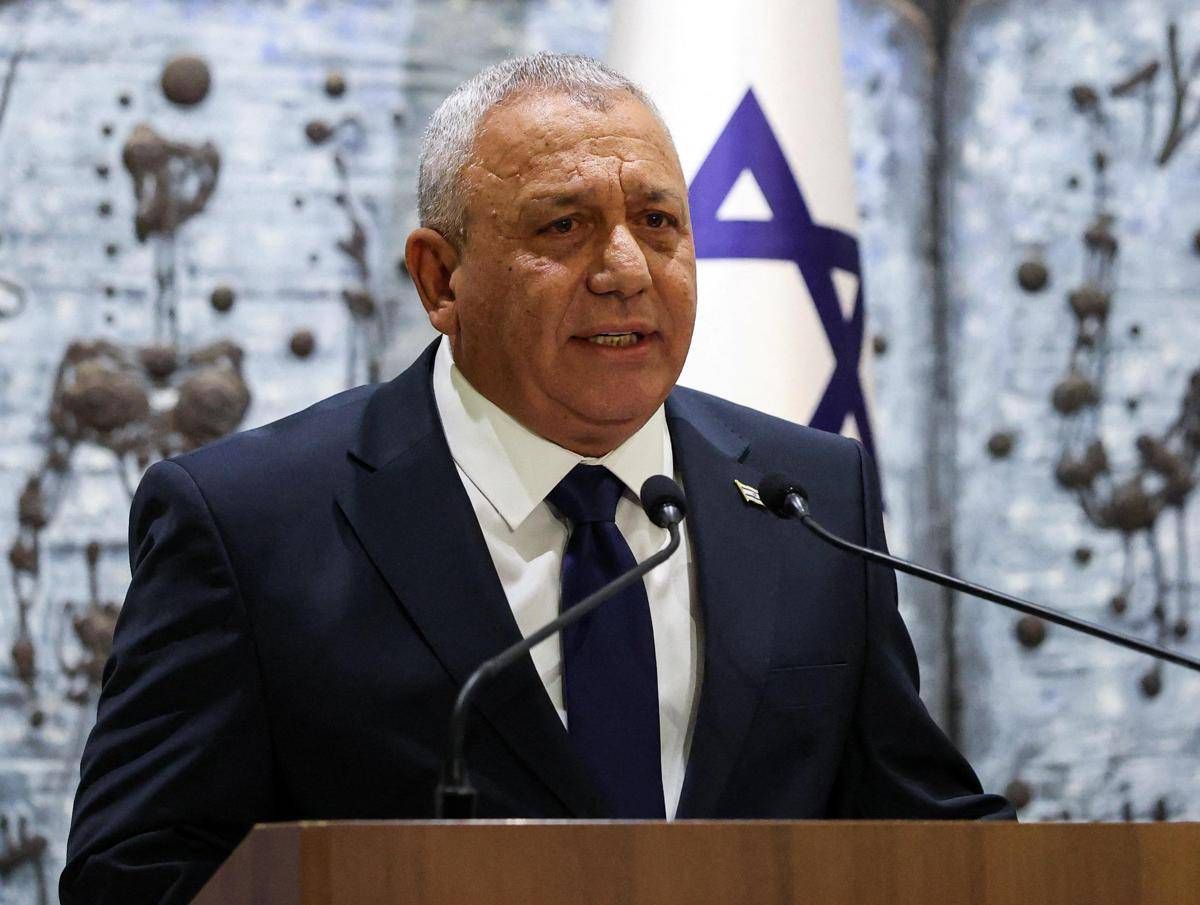
The former Israeli prime minister has reaffirmed his backing for a unity government led by Gadi Eisenkot, despite his meeting with Netanyahu earlier in the week. Likud has set conditions for negotiations, while divisions over ultra-Orthodox conscription and Arab-party support threaten to derail the effort
Israel’s attempt to form a new government is entering a decisive phase, with Gadi Eisenkot preparing for intensive negotiations with Benjamin Netanyahu’s Likud party and his political allies struggling to agree on what kind of coalition they are willing to support. The latest intervention came from Naftali Bennett, who on Saturday reaffirmed his commitment to an Eisenkot-led government and explicitly ruled out joining Netanyahu’s bloc under any circumstances.
Bennett’s statement was significant because it followed a two-hour meeting with Netanyahu on Wednesday that had fuelled speculation about a possible split within the opposition alliance. Both Likud and B’Yachad described the encounter as a security briefing, but figures in Eisenkot’s camp reportedly viewed the meeting as a breach of trust, particularly because the Yashar leader had not been informed in advance.
Bennett has now sought to put those doubts to rest. He said he remained committed to forming a government of national renewal under Eisenkot and insisted that Netanyahu must not return as prime minister. His party, he added, would not join Netanyahu or his political bloc.
The declaration comes as Eisenkot, who was formally tasked with forming the next government by President Isaac Herzog, attempts to break the political deadlock before his mandate expires on December 6. On Saturday evening, he instructed his negotiating team to invite Likud representatives to a new round of intensive talks, scheduled to begin on Sunday. The two parties had already held an initial meeting the previous weekend, but it produced no breakthrough.
The stakes are considerable. Eisenkot’s four-party bloc — comprising Yashar, Bennett’s B’Yachad, Avigdor Liberman’s Yisrael Beytenu and Yair Golan’s Democrats — won 48 seats in the 120-member Knesset. Netanyahu’s governing coalition holds 53, leaving it short of a parliamentary majority. The ultra-Orthodox parties, whose support could prove decisive, are at the center of the negotiations.
Likud sets conditions as Bennett draws a red line
The Likud has responded to Eisenkot’s initiative by publishing a set of conditions for a national unity government. The party is demanding an end to personal attacks, incitement and political boycotts targeting Netanyahu, his government and political parties. It also wants a joint commitment to forming a coalition exclusively with parties that recognize Israel as the nation-state of the Jewish people.
A further condition would require the abandonment of efforts to establish a government with parties that Likud accuses of supporting terrorism and seeking the destruction of the Jewish state. The demand is directed at the Arab-majority parties Ra’am and the Joint List, whose parliamentary support could become essential if Eisenkot turns to a minority government.
The document does not explicitly state that Netanyahu must remain prime minister. That omission, however, does not remove the central obstacle: Eisenkot has made clear that he would accept a unity government with Likud only if he serves as its sole prime minister, ruling out a rotation agreement with Netanyahu.
Likud has also outlined four principles for a potential coalition: recognition of Israel as the nation-state of the Jewish people; opposition to the creation of a Palestinian state; preservation of Israeli security zones in Gaza, Lebanon and Syria; and a broad agreement with ultra-Orthodox leaders over the status of yeshiva students.
The last issue is among the most difficult. The exemption from compulsory military service enjoyed by many ultra-Orthodox men has become a major point of contention in Israeli politics, particularly after years of debate over the distribution of military and national responsibilities.
Bennett has made the issue central to his proposed government’s agenda. He wants to end sweeping exemptions for yeshiva students and redirect economic incentives away from those who avoid military service toward people who serve, including reservists. He has also pledged to establish a state commission of inquiry into the failures surrounding Hamas’s October 7, 2023, attack and to impose an eight-year limit on the prime minister’s tenure.
He acknowledged that distrust of Netanyahu was justified, but argued that the negotiations would soon reveal whether Likud genuinely wanted a unity government or was simply trying to run down the time remaining in Eisenkot’s mandate. “We will not allow them to do that,” Bennett said.
Ultra-Orthodox parties complicate the search for a majority
The negotiations with the ultra-Orthodox parties offer another possible route to a coalition, but they are far from straightforward. United Torah Judaism is waiting for a revised proposal from Eisenkot on military-service exemptions for yeshiva students.
According to a report by the ultra-Orthodox news outlet Kikar Hashabbat, Rabbis Dov Landau and Moshe Hillel Hirsch, the spiritual leaders of the Degel HaTorah faction within United Torah Judaism, rejected an earlier proposal that would have preserved exemptions for 3% of each annual draft cohort. The rabbis reportedly instructed the party’s representatives not to negotiate any arrangement involving quotas or limits on the number of Torah scholars exempted from military service.
The dispute exposes a fundamental contradiction within Eisenkot’s alliance. Its members campaigned on ending mass exemptions and requiring ultra-Orthodox men to enlist, but the need to secure parliamentary support may force them to consider compromises.
Liberman has already shifted his position, saying he would accept a framework based on legislation he promoted in 2018, which was considerably more favorable to the ultra-Orthodox parties. He has argued that bringing Shas and United Torah Judaism into a coalition is the only realistic way to dismantle Netanyahu’s political bloc.
That approach has put him at odds with other members of the alliance. Liberman continues to oppose any government that depends on Ra’am or the Joint List, arguing that a coalition reliant on Arab parties would be unable to survive amid the unstable security situation in Gaza and the West Bank.
Golan has taken a different position. Speaking to Channel 12 on Saturday, the Democrats leader said he would not block the formation of a coalition with ultra-Orthodox parties, despite his previous calls for a government supported by the Arab-majority factions. He nevertheless rejected what he called a fake unity government that would preserve Netanyahu’s hold on power.
Minority government remains Eisenkot’s fallback option
The divisions have left Eisenkot trying to keep several political routes open at once. He is pursuing talks with Likud while negotiating separately with United Torah Judaism. If both efforts fail, he has indicated that he will seek to establish a national emergency government before his mandate expires, potentially relying on the support or abstention of Ra’am and the Joint List.
Eisenkot has said he does not intend to prolong the negotiations indefinitely and wants a new government brought before the Knesset for approval before December 6. The minority-government option would therefore become a test of whether members of parliament are prepared to replace Netanyahu even without a conventional majority coalition.
Mansour Abbas, leader of Ra’am, has reportedly remained confident that Eisenkot will succeed. In private conversations cited by Channel 12, Abbas dismissed concerns about Liberman’s opposition and Bennett’s meeting with Netanyahu, saying he did not believe the political process had reached a point of no return.
For now, the immediate test will come with Sunday’s renewed negotiations between Yashar and Likud. Bennett has drawn his line over Netanyahu’s return to power, Likud is demanding an end to political boycotts and cooperation with Arab parties, and the ultra-Orthodox factions remain unwilling to accept limits on military exemptions. Eisenkot must find a formula that can overcome all three obstacles before his time to form a government runs out.
(Photo: © AndKronos)

You must be logged in to post a comment Login