International-News
Paraguay Banking Crisis Pushes President Peña Toward Impeachment
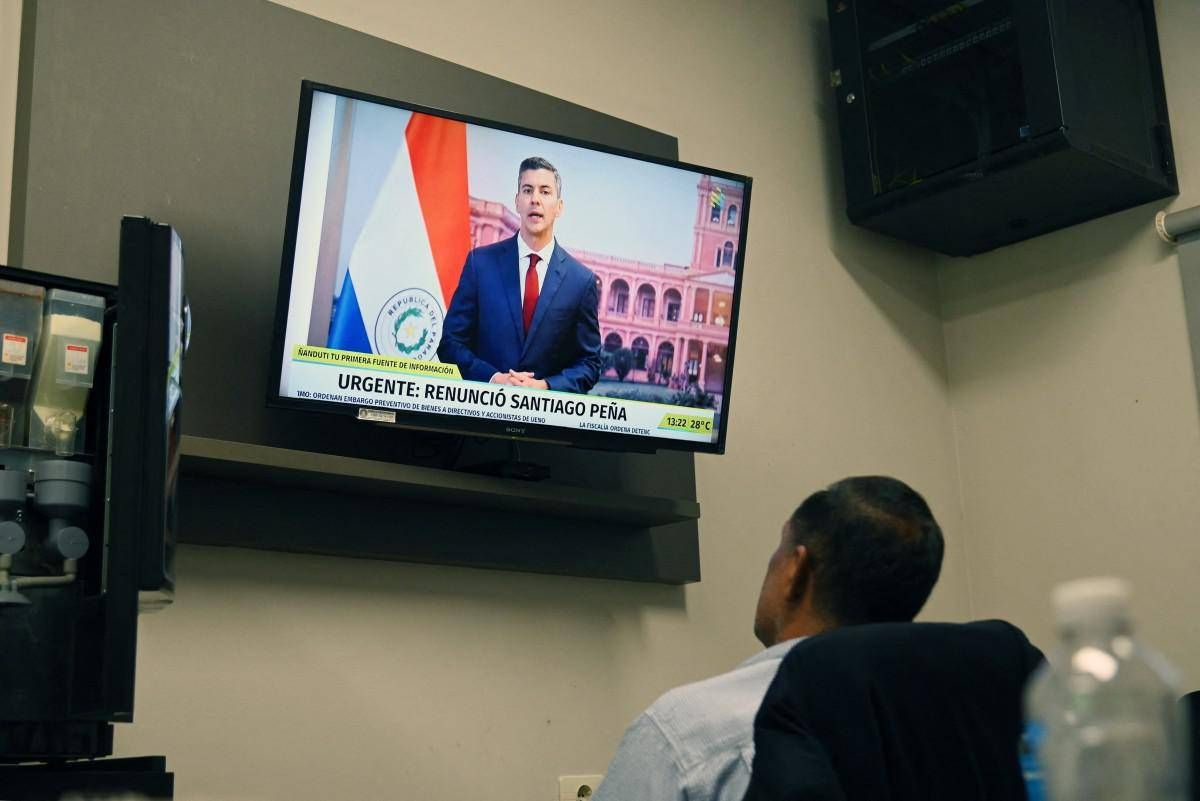
The collapse of Ueno Bank left roughly three million customers temporarily unable to access their money and triggered violent protests. Peña has announced his resignation, but Congress is pressing ahead with impeachment proceedings that could remove him from office as early as Friday
Santiago Peña has offered to step down as president of Paraguay, but his resignation has done little to contain the political crisis engulfing his government. As millions of customers struggle to regain access to their savings after the collapse of Ueno Bank, Congress is moving ahead with impeachment proceedings that could remove him from office as early as Friday.
The crisis has brought thousands of protesters into the streets of Asunción, where demonstrations have escalated into clashes with police. It has also exposed questions about the relationship between the failed lender and the country’s political leadership, placing Peña, a 47-year-old conservative, under mounting pressure over alleged conflicts of interest and the handling of the bank’s financial problems.
At the center of the turmoil are the deposits of approximately three million customers — nearly half the population of Paraguay. Their accounts, cards and transfers were temporarily frozen after the Central Bank intervened in Ueno Bank on Tuesday, triggering panic among depositors and long lines outside branches.
The bank’s rapid rise had once been presented as evidence of a changing financial system. Launched in 2021 as a fintech company, Ueno quickly expanded into one of Paraguay’s largest lenders, attracting customers with aggressive commercial offers, digital services and an extensive advertising campaign. It eventually managed approximately $850 million in public funds, including deposits belonging to state institutions and pension entities.
But behind its growth, regulators found increasingly serious weaknesses. Their inspections identified risky loans to companies connected to controlling shareholders, as well as irregularities in the accounting of certain assets. Once the accounts were corrected, the bank’s capital was found to be less than half the minimum required by law.
The Central Bank then stepped in, beginning a process to transfer deposits and recoverable assets to other financial institutions. The intervention was intended to contain the damage, but the immediate freezing of accounts and payment services left millions of customers unable to use their money.
A bank’s collapse becomes a political scandal
The financial failure has become a direct threat to Peña because of his previous business connections to the group associated with Ueno’s ownership.
The president, an economist and former International Monetary Fund official, was elected in 2023 as the candidate of the conservative Colorado Party. Until March 2025, he held shares in Grupo Vázquez, a company linked to the bank’s controlling interests. Opposition politicians now accuse him of a conflict of interest and have raised questions about the possible misuse of pension funds and an alleged effort to conceal Ueno’s financial problems.
Further scrutiny has focused on the appointment of Carlos Carvallo as head of the Central Bank. Carvallo previously led the financial company from which Ueno emerged, raising questions about the relationship between the lender and the authorities responsible for supervising it.
Prosecutors have opened three investigations into the affair, involving Peña and other public officials. Twenty-seven executives and people connected to the bank have been charged with offenses including breach of trust and attempted fraud.
Peña has denied any wrongdoing and pledged full cooperation with investigators.
The scandal has placed particular pressure on a president whose economic and foreign policies had made him a prominent conservative ally in the region. He has championed free markets, private investment and liberal economic policies, while maintaining close alignment with the United States and Israel. Paraguay has also continued to recognize Taiwan diplomatically, unlike most South American countries.
Just two weeks ago, Peña was in Washington, where he met U.S. Treasury Secretary Scott Bessent to discuss strengthening economic cooperation between the two countries. He is regarded as an ally of the Trump administration in Latin America. The banking crisis has now overshadowed that international profile with a domestic scandal threatening his presidency.
Millions await their money as protests spread
The consequences of Ueno’s collapse extend well beyond the political establishment. Paraguay’s Labor Ministry estimates that approximately 7,000 direct and indirect jobs have been affected, while depositors remain dependent on a government-backed plan to recover their funds.
Congress has approved an extraordinary reimbursement mechanism financed through a state guarantee fund. It is expected to cover the full deposits of 97% of Ueno’s customers, up to approximately $36,000 per person.
The measure has not been enough to calm public anger. Demonstrators have accused the president and state institutions of allowing the bank to expand despite warning signs about its financial condition. Police have responded to protests with tear gas and water cannons, as authorities attempt to prevent the banking crisis from spreading to the wider financial system.
For depositors, the immediate concern remains more basic: when they will be able to access their savings again.
Congress refuses to end impeachment proceedings
Peña announced his resignation in a video posted on X, presenting the decision as a move to protect the country’s stability and democratic institutions.
“I also want to apologize to the population if at any point I made a mistake. It was never my intention to betray the trust you placed in me,” he said. He added that ensuring the return of depositors’ money was his priority.
But Congress has not formally accepted his resignation and has chosen to continue with the impeachment process. The proceedings could end with his removal from office as early as Friday.
The distinction is more than procedural. Opposition lawmakers argue that accepting a resignation would allow Peña to retain the possibility of becoming a senator for life, a position that carries legal protections and could complicate future criminal proceedings. Impeachment, by contrast, would formally remove him from the presidency.
If Peña is ousted, Vice President Pedro Alliana, also a member of the Colorado Party, would take over. The party has governed Paraguay almost continuously since 1948, with the exception of the period between 2008 and 2013.
The immediate outcome will determine who leads the country. But the deeper questions raised by Ueno’s collapse — over political connections, financial oversight and the protection of depositors — are unlikely to disappear with a change at the presidential palace.
(Photo: © AndKronos)