
Violence, looting and mass arrests following nationwide cost-of-living protests have pushed the French government into emergency mode, with new demonstrations...
Read More
International-News
Macron’s Election-Year Crisis: France Imposes Curfews After Unrest
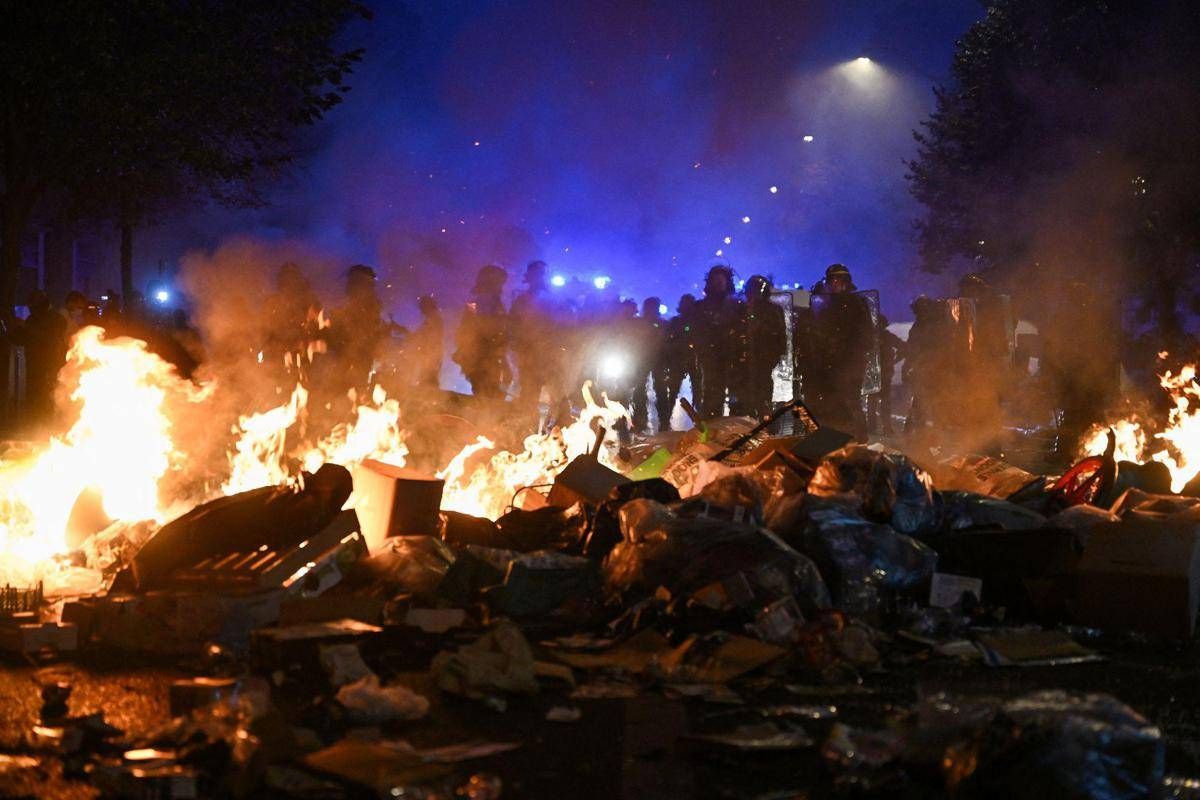
Violence, looting and mass arrests following nationwide cost-of-living protests have pushed the French government into emergency mode, with new demonstrations already planned and political tensions rising ahead of the presidential election
Six months before French voters head to the polls to choose their next president, Emmanuel Macron is facing the most dangerous domestic crisis of his election year.
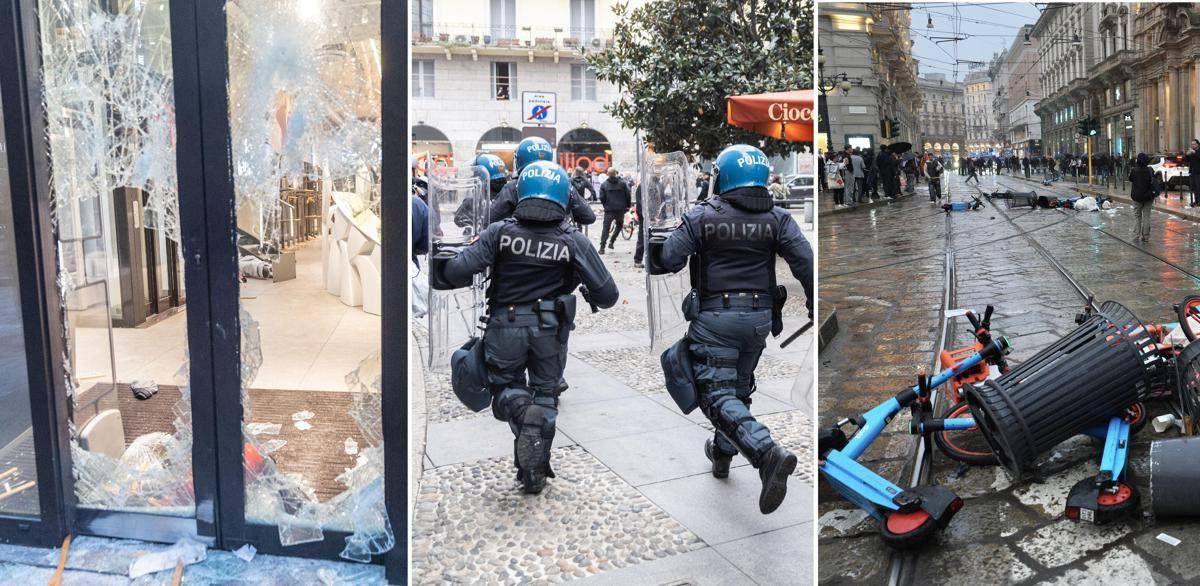
After a weekend marked by violence, looting, arson attacks and street clashes that eclipsed demonstrations over the rising cost of living, authorities have begun enforcing targeted curfews in several urban centers, an extraordinary measure that underscores growing concern inside the French government over the scale of the unrest.
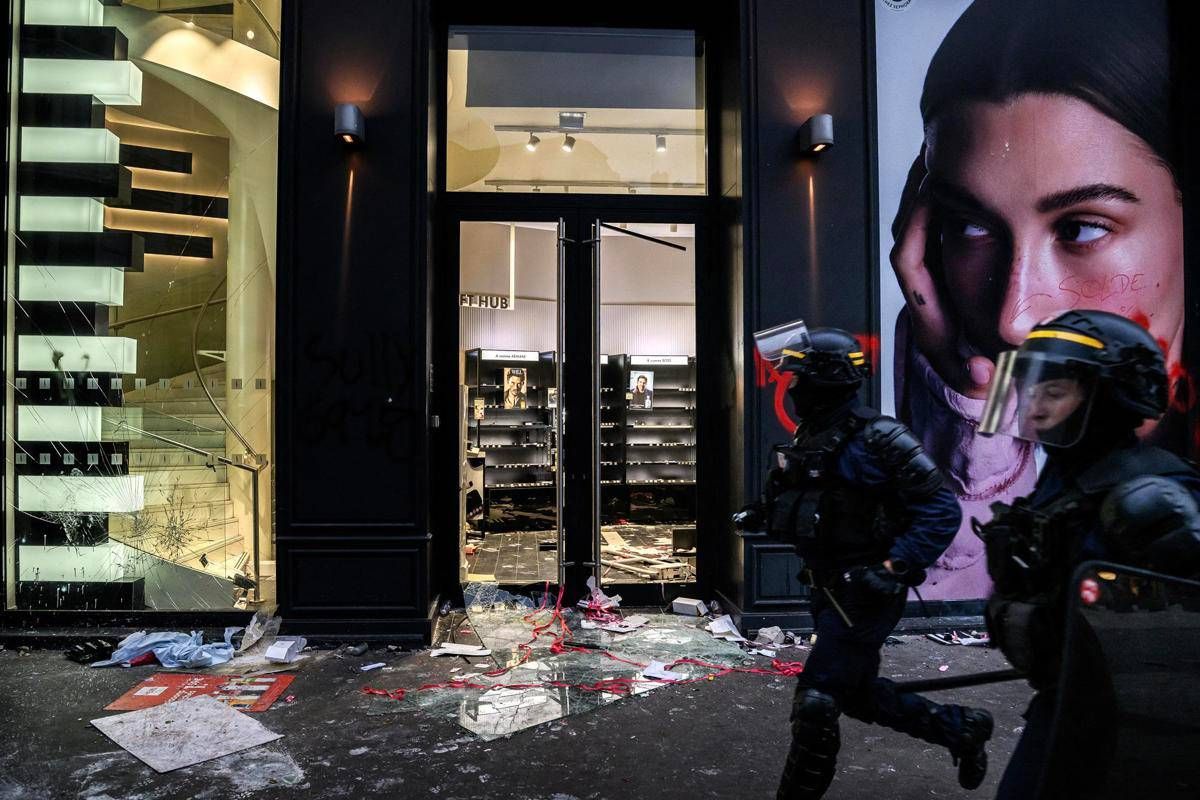
The scenes that emerged from Saturday’s protests reverberated far beyond France. Images of burning public buildings, vandalized infrastructure and confrontations with police circulated globally, transforming what began as a social protest movement into a political and security crisis.
Macron himself acknowledged shortcomings in the authorities’ response. The pressure became so intense that Interior Minister Laurent Nuñez offered his resignation. The president rejected the move, arguing that the security forces require continuity of command as the country braces for further demonstrations.
The government’s immediate answer has been a strategy of highly localized restrictions rather than nationwide emergency measures.
Prime Minister Sébastien Lecornu said declaring a state of emergency remains an option if conditions worsen, but argued that limited curfews are better suited to the current situation.
“French people think there is chaos everywhere. Fortunately, that is not the case. We have chaos that is very much concentrated in urban centers,” Lecornu said, explaining why authorities opted for what he described as “partial” and “very targeted” restrictions.
In Paris, a curfew is now in effect from 10 p.m. to 6 a.m. around Place de la République and neighboring streets near Les Halles. The measure applies to all residents, not only minors. Similar restrictions have been introduced in central Nice, while part of Lyon’s Presqu’île district is also subject to overnight limitations on movement.
Yet the security operation reflects a far broader challenge confronting the French government.
According to official figures, at least 550,000 people participated in Saturday’s demonstrations. Authorities reported 2,331 detentions, dozens of pretrial custody orders and nearly 1,000 injured protesters and police officers combined. The government also said that at least 3,000 businesses were damaged by looting or vandalism during the weekend.
Those numbers have intensified fears that the unrest could become a defining issue of the presidential campaign.
Marine Le Pen, the far-right candidate who currently leads opinion polls, stands to benefit from a political environment increasingly dominated by public order and security concerns. France is also facing close scrutiny from financial markets because of its debt burden, adding economic anxiety to an already volatile political climate.
The protests show little sign of subsiding.
Organizers associated with the Yellow Vest movement have already announced an “Act II” mobilization for Saturday, with additional demonstrations planned for Oct. 31 and Nov. 5. In Paris, students temporarily blocked access to the Louvre Museum, a symbolic reminder that the unrest is extending beyond traditional protest strongholds.
Authorities are preparing accordingly.
Nuñez said police and gendarmerie deployments will be reinforced further in the coming days, particularly over the weekend. At the same time, he dismissed suggestions that major sporting events should be postponed, including the scheduled match between Paris Saint-Germain and Barcelona.
As the confrontation moves from the streets into the political arena, both the left and the right are increasingly targeting Macron.
Opposition figures on the left accuse the president of ignoring the economic frustrations that fueled the demonstrations. Leaders on the right argue that the government has responded too weakly and too slowly.
Government officials have responded by directing blame toward the far left. Government spokeswoman Maud Bregeon accused La France Insoumise of bearing a “moral and political responsibility” for the climate surrounding the unrest. Lecornu went even further, accusing elements of the radical left of attempting to create “profound disorder” and even challenge the normal conduct of the presidential election.
Jean-Luc Mélenchon, La France Insoumise’s presidential candidate, said he was surprised by the accusations and denied hearing anyone advocate such a scenario. Raphaël Glucksmann, the Social Democratic candidate, argued that the current turmoil ultimately benefits Le Pen’s campaign.
The crisis has also become an international story.
U.S. President Donald Trump used social media to claim that immigrants had taken control of France and urged the country to close its borders. Kremlin spokesman Dmitry Peskov described the unrest as evidence of a broader European crisis, though he stressed that it remains an internal matter for European Union member states.
China advised its citizens in France to take additional security precautions. The European Union condemned looting and arson while calling on French authorities to safeguard the right to peaceful protest.
For Macron, the immediate challenge is restoring order. Politically, however, the stakes are considerably higher. With six months remaining before voters choose France’s next president, the battle over who is responsible for the unrest and who can contain it has already become part of the campaign itself.
THE LATEST NEWS
Trump Wants Ukraine Talks With Putin and Xi, Not Zelensky
20 October 2026
A potential trilateral summit in China would bring together the leaders of the United States, Russia and China while the...
Read More
Iran’s Nuclear Taboo Is Crumbling as Hardliners Push for the Bomb
20 October 2026
The death of Ali Khamenei, the war involving the United States and Israel, and uncertainty over the new supreme leader's...
Read More
Sahara Ray, Australian Model and Swimwear Founder, Dies at 34
20 October 2026
After building a career that spanned fashion, entrepreneurship and social media, Sahara Ray became a familiar name to millions. Her...
Read More

Ecuador Priest Killed by Falling Cross Moments After Speaking About Death
19 October 2026
A sermon on faith, mortality and the value of time took a tragic turn in Guayaquil when Father Patricio Alfredo...
Read More
Princess Anne Overtakes Kate Middleton as Britain’s Most Popular Royal
19 October 2026
A reputation built on decades of duty, discretion and loyalty has propelled King Charles' sister to the top of a...
Read More
(Photo: © AndKronos)


You must be logged in to post a comment Login