
Primo Piano
Israel Election Exit Polls Leave Power Balance Unresolved
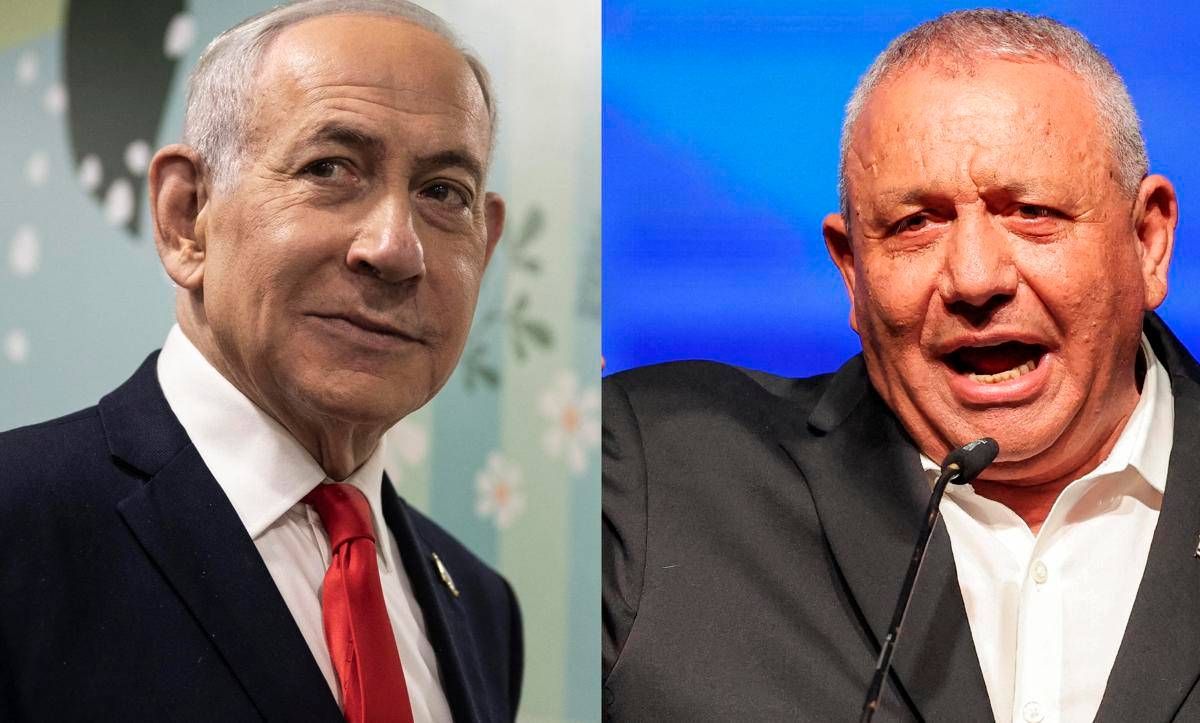
Conflicting projections show neither Benjamin Netanyahu nor Gadi Eisenkot with a clear path to a parliamentary majority as voter turnout reaches its highest level in nearly four decades
The race to form Israel’s next government remained wide open Monday night as competing exit polls pointed to a deeply fragmented Knesset and offered sharply different assessments of whether either political bloc can assemble a governing majority.
While former Prime Minister Benjamin Netanyahu’s Likud emerged as the largest party in several projections, none of the major television networks presented a decisive result. Instead, the first estimates suggested a prolonged battle over coalition-building, with candidate Gadi Eisenkot’s alliance and Netanyahu’s camp separated by only a handful of seats.
Projections released by N12 placed Eisenkot’s bloc at 52 seats in the 120-member Knesset, leaving it nine seats short of an outright majority. Netanyahu’s bloc was projected to win 50 seats, while Arab parties collectively were expected to secure 18.
Channel 13 reported a nearly identical overall balance of power, though with slight differences in seat allocation. Its exit poll gave Eisenkot’s camp 53 seats, Netanyahu’s bloc 50, and Arab parties 17.
Diverging Forecasts
A markedly different picture emerged from Channel 14, whose projection put Netanyahu’s alliance at 60 seats, bringing the outgoing prime minister’s bloc within a single seat of the 61 required to govern.
Additional estimates from Kan highlighted the fragmentation of the vote. The broadcaster projected Likud at 25 seats, with Eisenkot’s Yashar party taking 21. The United List and the Democrats were each estimated to win 10 seats, while Ra’am was projected to secure seven.
Taken together, the competing forecasts underscored the uncertainty surrounding the final outcome and left open multiple coalition scenarios as votes continued to be counted.
Highest Turnout Since 1988
Beyond the tight electoral contest, the election was marked by exceptionally strong voter participation.
According to figures released by the Central Elections Committee, turnout reached 74.3% by 8 p.m., an increase of eight percentage points compared with the 2022 election and the highest level recorded since 1988.
Din Livne, director general of the Central Elections Committee, noted that turnout at the same point during the previous election stood at 66.3%.
Committee data showed that 5,449,277 voters had cast ballots out of a total electorate of 7,331,981 registered voters, reflecting an unusually high level of engagement in an election that could reshape Israel’s political landscape but, based on early projections, has yet to produce a clear winner.
(Photo: © AndKronos)


ICE Arrests Father and Daughter at Seattle Airport During Boarding
Masked federal agents detained the two passengers at the gate of an Alaska Airlines flight to Los Angeles, triggering criticism...

Russian Corvette Merkury Sinks After Suspected Drone Strike in Libya
The Russian warship capsized at Benghazi’s naval base, where it had stopped for fuel and supplies. Libyan officials suspect Ukrainian...

Siria, esplode una mina a Idlib: cinque bambini morti
Dalla caduta di Assad registrati 1.337 incidenti con ordigni esplosivi. Secondo i dati delle Nazioni Unite, le persone coinvolte sono...

Tripletta Aprilia Bezzecchi, Martin e Fernandez a Portimao, ma la festa è tutta per Marc Marquez
Marc Marquez campione del mondo 2026: a Portimao chiude ottavo e conquista il decimo titolo in carriera Il Mondiale è...


Iran prepara un convoglio di 14 petroliere per sfidare il blocco Usa
Le navi si starebbero radunando vicino all’isola di Kharg. Washington rafforza i controlli e avverte: possibili sequestri e interventi con...

Verstappen vince a Las Vegas, Norris e Piastri sul podio
L’olandese della Red Bull domina la gara. Antonelli chiude quarto, Hamilton settimo e Leclerc decimo dopo una penalità Max Verstappen...
Eisenkot Coalition Talks Face New Test as Bennett Rules Out Netanyahu
The former Israeli prime minister has reaffirmed his backing for a unity government led by Gadi Eisenkot, despite his meeting...

Trump Seeks Wider Ukraine Truce After Oleshky Ceasefire
The humanitarian operation helped evacuate nearly 800 people from Russian-occupied territory. Kyiv has now proposed similar missions in 14 more...
Morto Gianni De Gennaro, l’ex capo della Polizia trovato senza vita in Maremma
L’ex dirigente è stato trovato nella sua casa di campagna a Montiano. Nei giorni scorsi era stato indagato a Caltanissetta...

MotoGP Portogallo, Marquez cade nella Sprint: Bezzecchi vince
La pioggia tradisce lo spagnolo a due giri dalla fine. Martin chiude quinto e il Mondiale resta aperto: domenica a...

Hacker violano il database dell’Fbi e attaccano il Dipartimento dell’Agricoltura Usa
Nel mirino il sistema che contiene informazioni su mandati e precedenti penali e la piattaforma per i pagamenti agli agricoltori....


Terremoto di magnitudo 6,7 in Perù, paura a Lima: evacuato il Congresso
La scossa ha colpito la regione centrale di Junín. Nessuna vittima confermata, ma le autorità stanno verificando alcune segnalazioni di...

MotoGp Portogallo, Marquez può vincere il Mondiale già oggi
Lo spagnolo arriva a Portimao con 60 punti di vantaggio su Jorge Martin e 74 su Marco Bezzecchi: la Sprint...

Verstappen in pole a Las Vegas, Antonelli il più veloce ma parte sesto (penalità)
L’olandese sfrutta la penalità di cinque posizioni inflitta al fresco campione del mondo della Mercedes. Russell e Norris completano la...


Allerta terrorismo negli Usa, Al Qaeda incita ad attacchi contro gli aerei
Fbi, Dipartimento per la Sicurezza interna e Tsa avvertono compagnie aeree, aeroporti e operatori cargo. Nel mirino interessi americani, israeliani...
Kryvyi Rih, doppio attacco russo: uccisi un bambino e un soccorritore
Missili balistici e droni hanno colpito la città ucraina a distanza di un’ora. Altre 52 persone sono rimaste ferite. Colpito...